





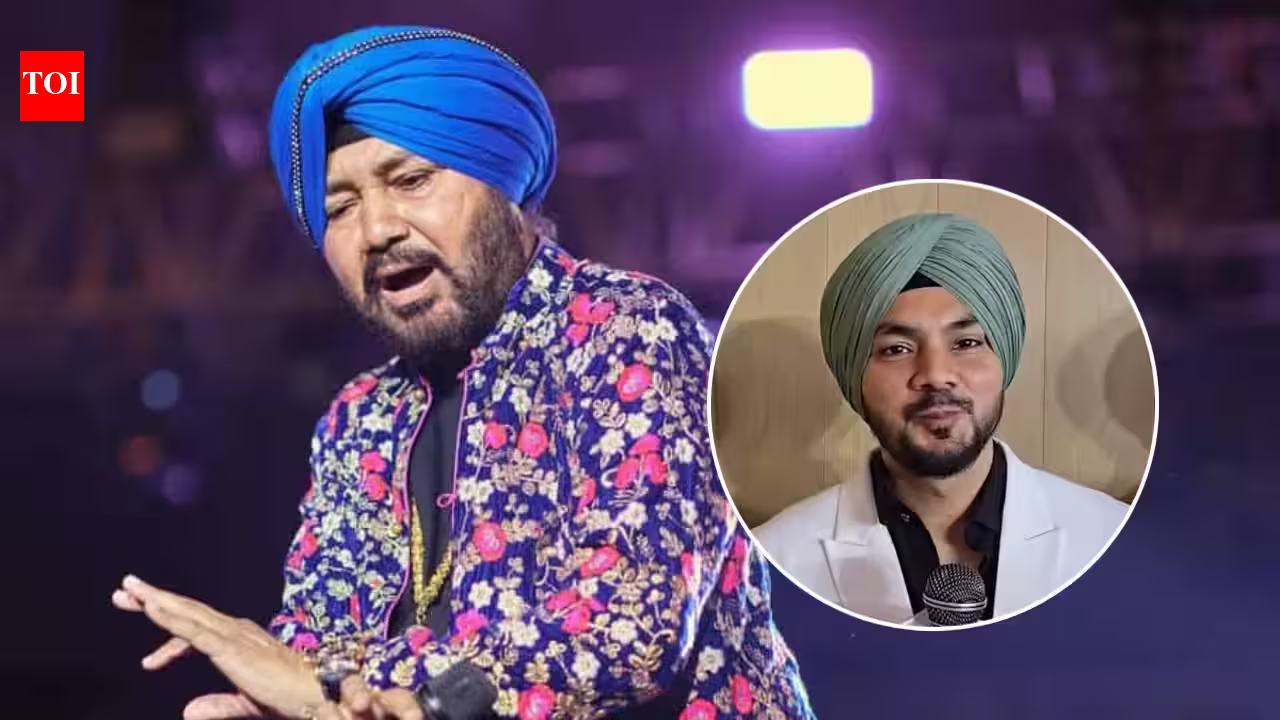
The high-octane world of live performance is often a delicate dance between the artist, the audience, and the organizers. However, that dance turned into a public spectacle this past week when legendary Punjabi pop icon Daler Mehndi found himself at the center of an unwanted controversy in New Tehri, Uttarakhand. What was supposed to be a celebratory performance at the Siddhpeeth Maa Kunjapuri Tourism and Development Fair quickly devolved into a heated exchange, leaving fans and the entertainment industry divided.
As clips of the incident circulated across social media, the narrative quickly hardened. Speculation regarding the singer’s sobriety and his commitment to the performance began to overshadow his decades-long contribution to Indian music. Now, with the dust beginning to settle, the industry is grappling with a much larger question: how should public officials handle their grievances with artists, and where does the line between professional oversight and public humiliation lie?
## A Son’s Defiant Silence Amid the Noise
Amidst the swirling allegations and the viral nature of the onstage footage, it was left to Daler Mehndi’s son, Gurdeep Mehndi, to navigate the PR firestorm. Eschewing the temptation to engage in a point-by-point rebuttal of the rumors—which included claims that his father was intoxicated on stage—Gurdeep kept his public statement brief, choosing instead to focus on the singer’s health and spirit.
“He is first class, fantastic, super hit, and best of luck,” Gurdeep told reporters, a pithy response that served as a firm boundary. By choosing not to address the specifics of the Uttarakhand row, Gurdeep effectively signaled that the family considers the allegations beneath notice. It was a strategic move, shielding the elder Mehndi from the indignity of defending his basic conduct while the digital jury continued to pass judgment online.
## The Anatomy of the New Tehri Incident
The spark for this conflict was ignited when Uttarakhand Cabinet Minister Subodh Uniyal chose to interrupt the performance. Uniyal, clearly displeased with the proceedings, stepped onto the stage to openly question the singer’s conduct. The minister’s grievances were twofold: he alleged that Mehndi was not performing live—claiming the singer was lip-syncing—and he openly suggested that the artist was in an intoxicated state, a claim that struck at the core of the singer’s professional reputation.
For a veteran like Mehndi, known for his relentless energy and massive stage presence, such a public reprimand is not merely a critique; it is a profound professional blow. Uniyal’s comments, which included a mention of the Rs 35 lakh fee associated with the event, served to weaponize the audience’s expectations. By framing the dispute around the public’s money, the minister effectively turned the crowd against the artist. To date, however, these claims of intoxication remain unverified, serving more as digital fodder than proven fact.
## FWICE Steps into the Fray
The entertainment industry rarely stands by when one of its own is targeted, and the Federation of Western India Cine Employees (FWICE) has acted swiftly to protect the veteran singer’s legacy. In a move that highlights the growing tension between artists and government representatives, the federation penned formal letters to both Prime Minister Narendra Modi and Uttarakhand Chief Minister Pushkar Singh Dhami.
The FWICE letter strikes a tone of measured indignation. It does not argue against the necessity of accountability in public events, but it demands that such accountability be exercised with “sensitivity and discretion.” The organization was quick to defend Mehndi’s character, explicitly stating that the singer is not known for alcohol consumption. Furthermore, the federation pointed to a crucial piece of context that had been ignored in the social media fallout: Mehndi is currently recovering from medical issues and recent surgery. By emphasizing his physical recovery, the federation effectively reframed the singer’s perceived “struggle” on stage not as intoxication, but as the potential physical limitations of an artist pushing through health challenges to honor a commitment.
## The Call for Dignity and Professionalism
Beyond the specific defense of Daler Mehndi, the FWICE letter serves as a manifesto for how the industry expects its artists to be treated. The federation noted that the public humiliation of such an established musical icon is “deeply distressing to the entire entertainment fraternity.”
The core argument is one of hierarchy and decorum. While public officials have a duty to ensure that taxpayers get value for money, the FWICE contends that a stage is not the place for an impromptu judicial hearing. The federation’s appeal to the country’s leadership is clear: they are seeking an advisory that mandates greater sensitivity when dealing with performers. For the industry, this incident is a bellwether. If a star of Mehndi’s magnitude can be publicly called out and questioned without prior private consultation, it sets a chilling precedent for how artists might be treated at public functions across the nation.
## The Aftermath: A Legacy Refuses to Dim
While the viral video of the Uttarakhand event may remain a permanent fixture of internet archives, the industry’s reaction suggests that Daler Mehndi’s stature remains largely unscathed. Support from his peers—most notably his brother and fellow superstar Mika Singh—and the firm stance taken by the FWICE suggests a concerted effort to move the conversation away from the minister’s accusations and toward a broader discussion about respect.
Ultimately, the row in New Tehri will likely be remembered not for the performance itself, but for the stark clash between official power and artistic pride. As the industry awaits a potential response from the higher authorities, one thing is certain: the conversation has shifted. The public may still debate whether the performance met the standards of the price tag, but the entertainment fraternity has made it clear that they will no longer tolerate the public shaming of their legends. For Daler Mehndi, the show goes on, backed by an industry that is seemingly more protective of its own than ever before.
Disclaimer: This content is auto-generated for informational purposes only.
Source: Read Original News