








Navigating Market Volatility: The Anatomy of Recent Index Fluctuations
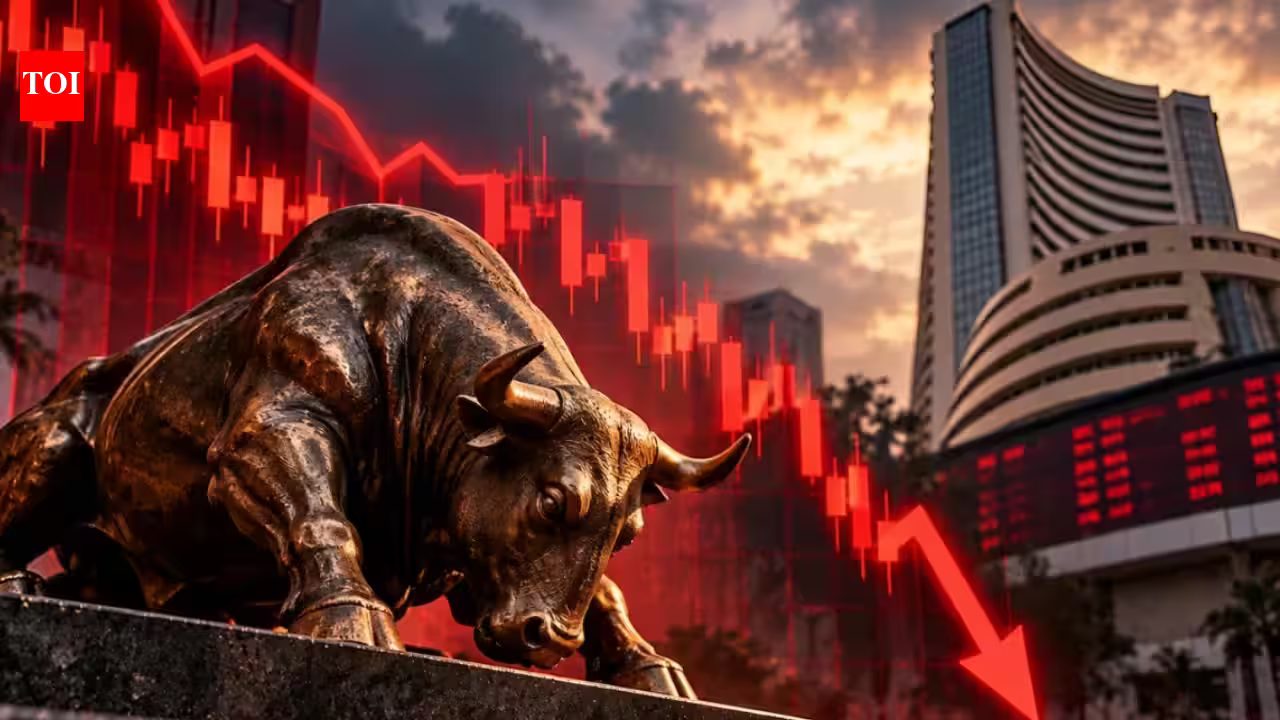
The recent performance of the Indian equity markets serves as a quintessential case study in the complex interplay between macroeconomic indicators and investor behavior. When the Sensex experiences an intraday swing of over 1,300 points, it reflects a marketplace caught between two competing forces: the resilient optimism of institutional buyers and the sobering realities of external economic pressures. Despite the indices closing with marginal losses, the underlying market structure revealed deep fissures, particularly within the midcap and smallcap segments.
This volatility is not merely a consequence of short-term trading patterns but is symptomatic of a broader adjustment in risk appetite. As foreign portfolio investors (FPIs) and domestic institutional investors (DIIs) navigate a landscape defined by geopolitical tensions and rising commodity prices, the primary indices have acted as a buffer, masking the significant drawdown occurring in the broader market. Understanding this disparity is essential for stakeholders looking to decode the current phase of the Indian investment cycle.
The Macroeconomic Drag: Crude Oil and Currency Depreciation
At the heart of the current market unease lies the surge in Brent crude oil prices, which have climbed toward six-month highs. For an import-dependent economy like India, high oil prices represent a direct threat to fiscal health and inflationary stability. The cost of crude directly impacts the current account deficit, forcing a defensive posture from the Reserve Bank of India and creating a challenging environment for corporate earnings margins.
Simultaneously, the weakening of the rupee against the dollar, pushing toward the 94-95 range, amplifies this pressure. A softer currency increases the cost of imported raw materials for manufacturers, putting downward pressure on operating profits. For global investors, a depreciating rupee also erodes the returns on their Indian equity holdings, which often triggers capital outflows or a shift into safer asset classes. This macroeconomic combination—high input costs via oil and currency-induced margin compression—provides a fundamental justification for the recent correction, even if the headline indices have remained relatively stable due to concentrated buying in large-cap stocks.
The Divergence Between Large-Caps and Broader Markets
One of the most critical insights from the recent trading session is the stark performance gap between the benchmark indices and the broader market. While the Nifty and Sensex managed to mitigate their losses, the BSE midcap and smallcap indices suffered significant double-digit percentage drops. This phenomenon is frequently referred to as a “valuation catch-up” or, more accurately, a forced deleveraging event.
The midcap and smallcap rally over the past several quarters had led to stretched valuations, with many stocks trading at price-to-earnings multiples that outpaced their historical averages. As market sentiment shifted due to negative global cues, investors sought to exit these over-leveraged positions. Because liquidity is generally lower in mid- and small-cap stocks compared to blue-chip companies, even moderate selling pressure can lead to outsized price declines. This technical correction serves as a necessary, if painful, recalibration of expectations. It highlights that while institutional money remains committed to India’s long-term growth narrative, the short-term focus has shifted toward high-quality, cash-generative companies that can withstand cyclical downturns.
Institutional Resilience Amidst Retail Caution
Data regarding net buying from institutional participants provides a counter-narrative to the negative market action. The fact that foreign funds net-bought equities worth nearly Rs 888 crore, coupled with substantial DII buying exceeding Rs 3,200 crore, indicates that long-term capital is not retreating from the Indian market. Instead, the current volatility is being utilized by savvy market participants to accumulate stocks at more reasonable valuation levels.
The contrast here is between the institutional investor, who is likely rebalancing portfolios with a long-term horizon, and the retail segment, which is often more reactive to news flow and short-term volatility. The persistent buying from domestic institutions acts as a critical floor for the markets. It signifies that the systemic liquidity in the Indian financial system remains robust, preventing the type of catastrophic decline often seen in markets with lower domestic participation. This institutional support is a defining feature of the current market structure, distinguishing it from previous decades where foreign sentiment dictated total directionality.
Geopolitical Risk and the Future of Market Sentiment
The current market environment is heavily influenced by external geopolitical developments, specifically the tensions in West Asia. In a globalized economy, regional conflicts rarely remain isolated; they quickly manifest in energy supply chain disruptions and risk-off sentiment in equity markets. Furthermore, the global equity sell-off, exacerbated by concerns surrounding the technology and AI-driven growth cycle, has created a secondary layer of pressure on the Indian markets.
Investors should anticipate that this volatility will continue to be a dominant theme in the near term. The rise in the India VIX (Volatility Index) is a statistical confirmation that traders are pricing in higher uncertainty. When the VIX rises, the cost of hedging increases, and the market becomes less predictable. In such times, business leaders and investors alike must prioritize capital allocation toward sectors that are less sensitive to energy prices and currency fluctuations. Identifying companies with strong pricing power and low debt-to-equity ratios will be the primary strategy for navigating this period of uncertainty.
Conclusion: Lessons for Sustained Growth
The recent market volatility provides a valuable lesson in risk management and portfolio diversification. While the headline figures of the Sensex and Nifty often capture the news cycle, the internal rotation—the shift of capital from speculative smaller stocks to stable, large-cap enterprises—is the real story of the current economy.
India’s growth trajectory remains fundamentally intact, supported by strong internal consumption and government infrastructure spending. However, the market is currently in a phase where it must digest the effects of global inflation and interest rate cycles. For investors, this period represents a transition from a phase of “liquidity-driven gains” to one of “earnings-driven growth.” Companies that can maintain profitability despite the challenges of expensive oil and currency volatility will likely emerge as the new leaders in the next bull cycle. By remaining focused on fundamental valuation rather than short-term price movements, market participants can successfully navigate the current turbulence and align themselves with the long-term potential of the Indian economic story.
Disclaimer: This content is auto-generated for informational purposes only.
Source: Read Original News