






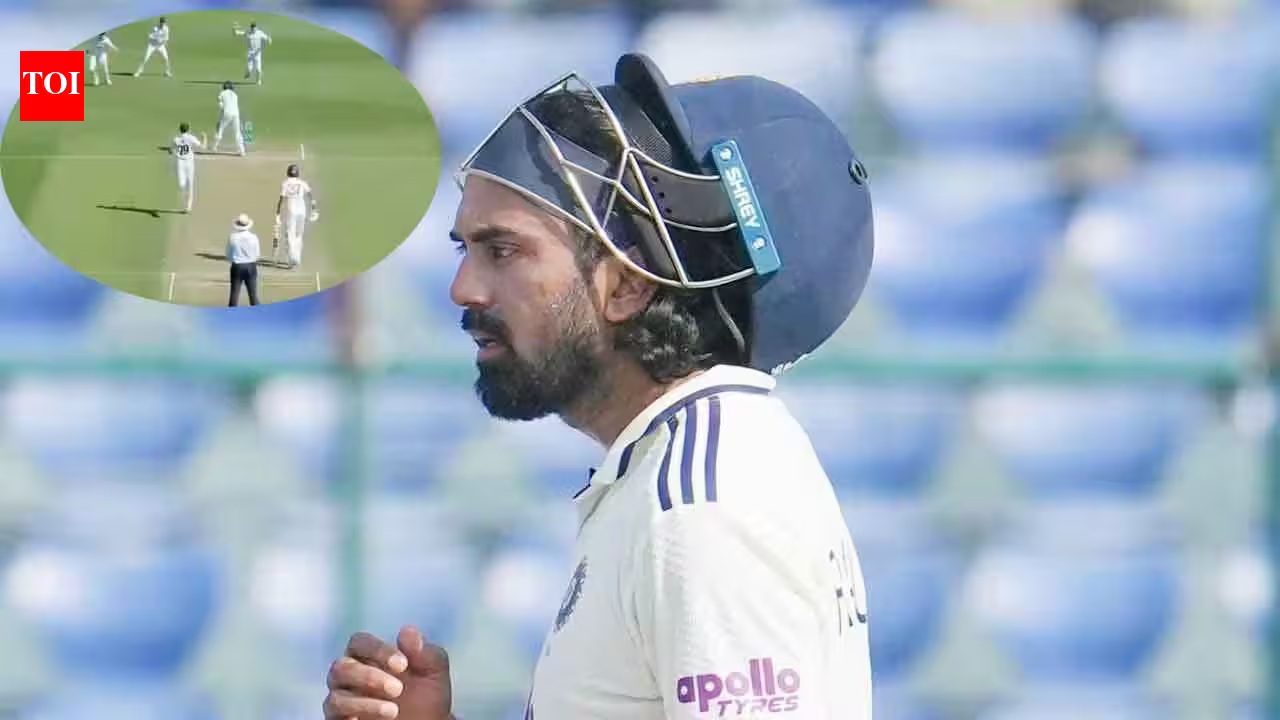
CRITICAL QUESTIONS surround the form of Indian batting mainstay KL Rahul following a disastrous outing in the first unofficial Test against New Zealand A at the Bert Sutcliffe Oval. In a performance that will undoubtedly spark debates regarding his rhythm and confidence, the seasoned campaigner managed a meager four runs across two innings, capping off the match with one of the most bizarre dismissals in recent memory.
For a player of Rahul’s stature, the assignment in New Zealand was supposed to be a platform for refinement and red-ball acclimatization. Instead, the match turned into a nightmare scenario, with the right-hander struggling to find his footing against a disciplined New Zealand A attack led by a relentless Fraser Sheat.
A Horror Show at the Crease
The tone for the match was set early during India A’s disastrous first innings. Tasked with anchoring the top order, Rahul faced just eight deliveries before finding himself walking back to the pavilion with a zero against his name. Sheat, exploiting the moisture and movement offered by the Bert Sutcliffe Oval surface, lured Rahul into a drive outside the off stump. With his footwork appearing sluggish and failing to reach the pitch of the delivery, Rahul could only manage a thick outside edge that drifted comfortably into the gloves of wicketkeeper Mitchell Hay.
The collapse that followed—with India A bundling out for a dismal 113—placed immense pressure on the top order to perform in the second essay. However, any hopes of a redemption arc were swiftly extinguished. Rahul faced 15 balls, laboring for four runs before a moment of sheer misfortune and technical error ended his stay in the middle.
The Bizarre Hit-Wicket Dismissal
If the first-innings duck was a case of technical struggle, the second-innings dismissal was a lesson in how quickly things can go south for a batter under pressure. Facing the persistent Fraser Sheat, Rahul attempted to navigate a delivery outside the off stump. The resulting contact saw the ball trickle back toward his own stumps.
In a split-second decision driven by desperation to protect his wicket, Rahul lunged toward the ball with his bat. While his intent was to defend, the execution failed spectacularly. His bat made contact with the off stump, dislodging the bails. Replays confirmed a heartbreaking reality for the Indian contingent: the ball itself was drifting away from the stumps and would have missed the woodwork entirely. It was an avoidable, self-inflicted end to a dismal performance, leaving Rahul to trudge off the field visibly frustrated as the crowd and opposition looked on in disbelief.
Fraser Sheat Claims the Spotlight
While much of the narrative will focus on Rahul’s struggles, credit must be given to Fraser Sheat, who proved to be the Indian side’s primary antagonist. By claiming Rahul’s wicket in both innings, Sheat showcased exemplary control and an understanding of how to exploit a batter’s lack of confidence. His ability to move the ball away from the right-hander and force errors proved fatal for India A, who were left chasing a gargantuan 204-run deficit by the time the dust settled on the first innings.
The collective failure of the India A batting unit further compounded the situation, leaving management with significant questions to answer regarding preparation and temperament ahead of the upcoming international fixtures.
The Path Forward: Pressure Mounts
With the unofficial Test series consisting of three matches, the clock is ticking for Rahul to find his groove. The second match is slated to begin on October 31, providing an immediate opportunity for the opener to silence his critics. The third and final match of the series will follow on November 7, serving as the last dress rehearsal before the senior team’s high-stakes international commitments.
Looking ahead, the senior Indian squad is set to face the New Zealand senior team in a grueling two-match Test series. The action moves to Wellington on November 19 for the series opener, with the second Test set to commence in Christchurch on November 27.
For the Indian team management, the challenge is clear: they must decide if Rahul requires further time in the middle to recalibrate his technique or if the current streak of low scores indicates a deeper need for tactical reassessment. In a game defined by fine margins, Rahul’s recent performance at the Bert Sutcliffe Oval has been a stark reminder that even the most talented players are only one bad series away from a period of intense scrutiny. All eyes will now be on the training nets and the upcoming second unofficial Test to see if the Indian star can turn the tide.
Disclaimer: This content is auto-generated for informational purposes only.
Source: Read Original News