







CHRISTCHURCH — The blistering pace of international T20 cricket can often be a ruthless baptism for even the most touted prospects, and during India’s recent second T20I against New Zealand, teenage sensation Vaibhav Sooryavanshi discovered that harsh reality firsthand. While the result went in India’s favor, the tactical deployment of the young batter has ignited a firestorm of debate, with veteran spin wizard Ravichandran Ashwin leading the critique of the team’s strategic handling of the youngster.
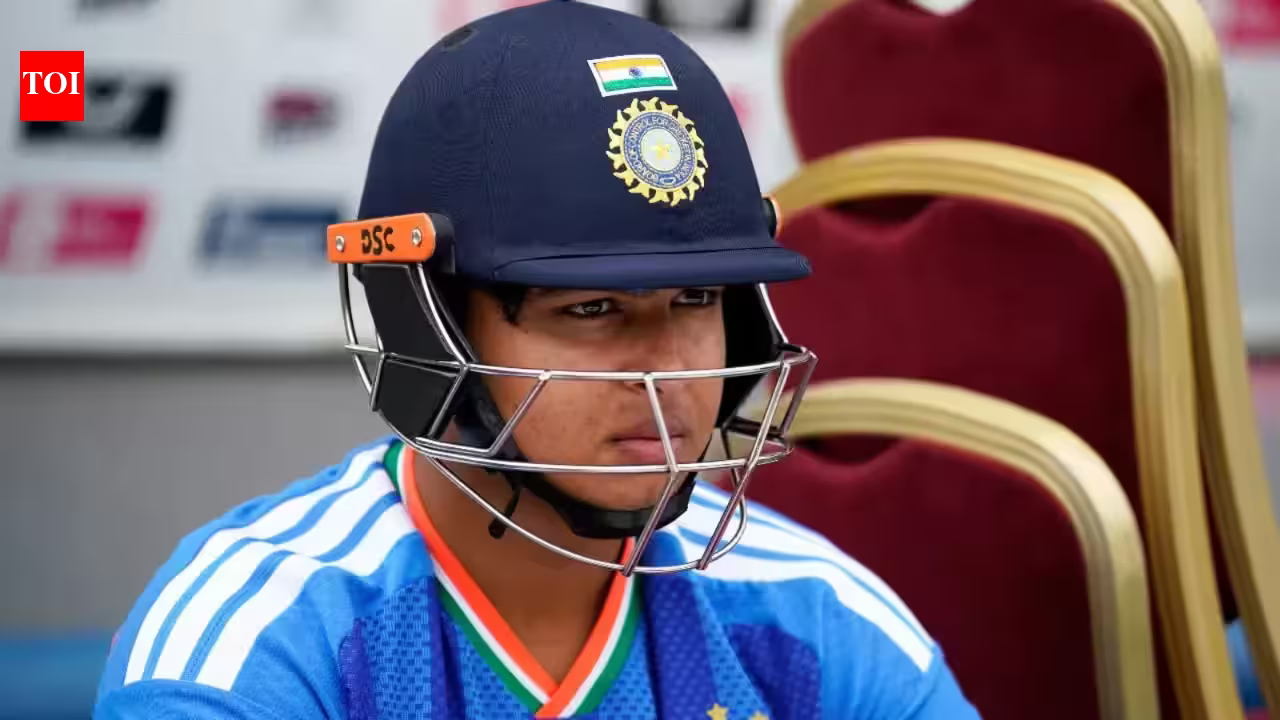
Stepping into the side to replace the injured Ishan Kishan, Sooryavanshi was thrust into the spotlight, entering the fray in the sixth over. However, the anticipated fireworks never materialized. The youngster struggled to find his rhythm, scratching out a mere four runs off eight deliveries before his innings came to an unceremonious end.
“A Fish Out of Water”
Ashwin, ever the analytical mind, did not mince his words when assessing the performance of the debutant. Describing the outing as a “miss,” the veteran spinner argued that the role itself—batting at No. 3—was fundamentally unsuited for a player of Sooryavanshi’s current experience level.
“For a young cricketer like Vaibhav, ‘miss’ is perhaps too early a judgment, but he simply found himself like a fish out of water,” Ashwin observed following the conclusion of the match in Christchurch. “He kept going hard, kept forcing the issue for those eight balls, and it never felt like he was truly timing the ball. That is the moment you desperately need a senior partner to walk down the pitch and provide that vital guidance: ‘Calm down, just hang in there, play close to your body, watch the ball.'”
Ashwin emphasized that the chaotic nature of an international T20 run chase can easily overwhelm a newcomer. Without a calming influence at the other end to tell him to refocus on the basics, the youngster was left to navigate the pressure alone. “Walking in during the sixth over is clearly not his cup of tea at this stage,” Ashwin added.
Tactical Reconfiguration Required
The crux of the selection dilemma lies in the current top-order configuration. With Sanju Samson and Abhishek Sharma entrenched as the opening pair, the team management opted to slot Sooryavanshi at first drop. Ashwin believes this is a tactical oversight that requires immediate correction if India intends to keep the current batting core intact.
“If they are determined to play this specific combination, I am not convinced that Vaibhav is the right man for the number three slot,” Ashwin stated. He suggested a more pragmatic approach: moving Sanju Samson—a seasoned campaigner with extensive experience at the first-drop position—into that role, thereby allowing the younger, less experienced batters to find their feet in more protected conditions.
Middle Order Depth Shines
While the top-order experiment faltered, the depth of the Indian side was on full display in the middle and lower-middle order. As India successfully tracked down New Zealand’s target of 180, it was the explosive trio of Tilak Varma, Nitish Kumar Reddy, and Ramandeep Singh who turned the tide.
Ashwin was effusive in his praise for this new-look middle order, which he believes has transformed into a dangerous weapon for the Men in Blue.
“India’s middle order is coming through nicely. Positions six, seven, and eight look pretty dangerous right now,” Ashwin noted. “All of them possess the ability to belt the ball, but what impresses me most is the variety of their skill sets.”
The veteran specifically highlighted the contribution of Ramandeep Singh, whose composure against high-caliber spin was a standout feature of the night. “Ramandeep is a very good hitter of pace, but he is showing that he can really club spinners as well. To stand and hit a bowler of Mitchell Santner’s pedigree for boundaries is no joke. It speaks volumes about his ability and, more importantly, his temperament. He looks completely unflappable at the crease.”
Regarding Tilak Varma, Ashwin noted a maturity that belies his age, and while he admitted he is still gauging the ceiling of Nitish Kumar Reddy’s temperament, the sheer power hitting potential of the unit is undeniable. “There is enough raw power in this group for opposing teams to be genuinely concerned. That middle-order solidity is a massive win for us,” he concluded.
As the series progresses, the spotlight will inevitably turn to the team management. Whether they heed Ashwin’s advice to shuffle the top order or persist with the current experimental setup remains to be seen. However, one thing is clear: while the talent is evident, the pathway to success at the international level requires more than just raw aggression—it requires the tactical wisdom to nurture it.
Disclaimer: This content is auto-generated for informational purposes only.
Source: Read Original News