





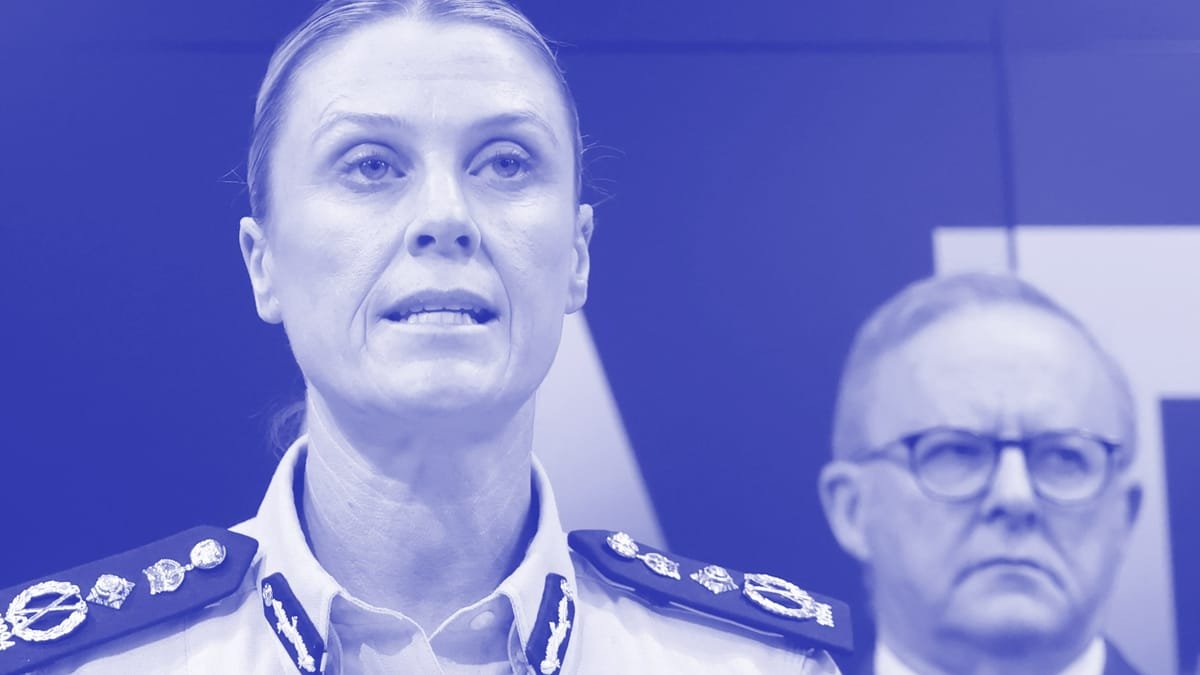
Australian Federal Police (AFP) Commissioner Krissy Barrett has issued a stark warning regarding the deteriorating state of public discourse in Australia, suggesting that the rise of toxic political rhetoric and online volatility is creating a “febrile and complex environment” that directly threatens the safety of elected officials.
Speaking on ABC’s Insiders program, Commissioner Barrett addressed the resurfacing of a controversial two-year-old One Nation cartoon depicting politicians being struck by a vehicle. The imagery has gained renewed attention following the alleged attack on independent MP Helen Haines. While Barrett emphasized that the AFP does not exist to police free speech or intervene in legitimate political debate, she drew a clear line between democratic expression and the criminal threats now flooding the offices of federal parliamentarians.
“I would challenge any Australian to read some of these threats and some of the abuse that is reported to us from federal parliamentarians, and for anyone to argue that that is free speech or political discourse,” Barrett said.
The Commissioner noted that the landscape of harassment has transformed significantly during her 25-year policing career. In the early 2000s, threats against public figures were typically delivered via handwritten letters—a medium that required intent, time, and physical effort. Today, the ubiquity of social media allows individuals to disseminate violent abuse instantaneously from behind a keyboard, significantly lowering the barrier for harassment.
Barrett observed that these outbursts often follow specific policy announcements or inflammatory media content. While the AFP reports that threats are received by both male and female parliamentarians in relatively equal numbers, the nature of the abuse is deeply gendered; threats against women in public life are frequently more personalized and disproportionately involve graphic descriptions of sexual violence.
Regarding the ongoing investigation into the incident involving Helen Haines, Barrett cautioned against assuming a singular motive. She acknowledged the complexities involved, noting that the suspect’s mental health and digital footprint—including potential alignment with various fringe social media movements—are currently under scrutiny. However, she emphasized that the broader impact of such violence remains the primary concern for national stability.
“Regardless of the motive, this has had an absolutely chilling effect, not just on federal parliamentarians, but indeed on Australia as a country,” Barrett stated. “If this is not the incident that really causes people to pause and have a think about what’s happening in this country and the impact, then what is?”
Central to the Commissioner’s strategy is a push for greater accountability from social media giants. Barrett identified the role of “Big Tech” as a major focus of her first year as Commissioner, calling for a more aggressive, collaborative approach to combatting online radicalization and criminal threats. She stressed that technology companies have a “moral obligation and social responsibility” to work with law enforcement, particularly when online abuse puts vulnerable populations or the democratic process at risk.
“We need to be collectively working together to look at how do we use tech to combat tech,” she said, adding that she remains “cautiously optimistic” following discussions with major platforms.
As the investigation into the attack on Haines continues, Commissioner Barrett’s comments serve as an appeal for a national reset. She concluded by urging all Australians to reflect on their own contributions to public discourse, warning that without a shift in tone and a commitment to civility, the democratic fabric of the nation remains at risk of further degradation.
Disclaimer: This content is auto-generated for informational purposes only.
Source: Read Original News