







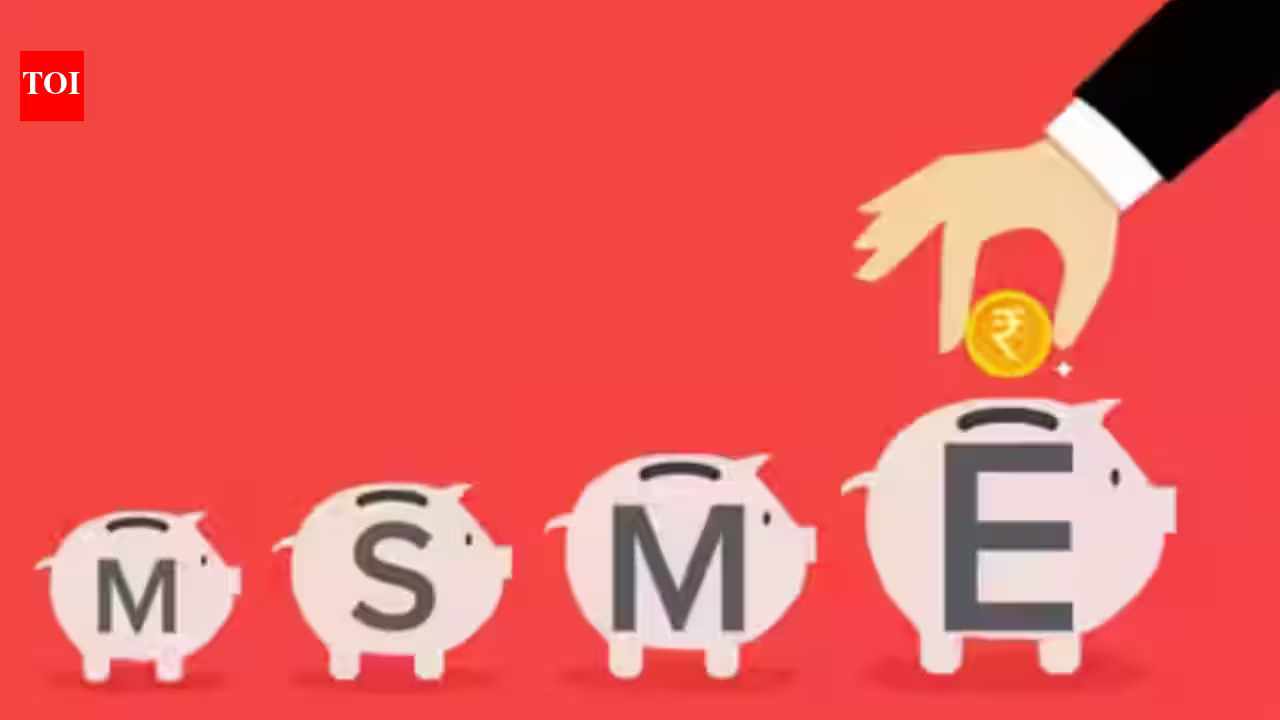
The Resilience of India’s MSME Sector: A Macro-Economic Perspective
The Indian economy is built upon the foundational strength of its Micro, Small, and Medium Enterprises (MSMEs). As the primary drivers of employment, domestic consumption, and industrial output, the health of this sector serves as a barometer for the nation’s overall economic trajectory. Recent data from the Small Industries Development Bank of India (SIDBI) indicates a robust improvement in business sentiment, with the MSME Business Confidence Index (M-BCI) climbing to 60.4 in the July-September 2026 quarter. This uptick, moving up from 59.3 in the previous quarter, confirms that the Indian MSME ecosystem is maintaining a trajectory of growth despite a challenging global and domestic inflationary climate.
The significance of this growth cannot be overstated. With nearly 49% of surveyed enterprises reporting improved business conditions, the sector is demonstrating a remarkable ability to navigate rising input costs. These costs, often driven by volatile global commodity prices and supply chain fluctuations, typically pose a threat to the thin profit margins of smaller businesses. Yet, the current data suggests that the sector has transitioned from a phase of defensive survival to one of proactive expansion. This resilience is supported by structural reforms, digitalization initiatives, and a broader shift in manufacturing capabilities that have allowed MSMEs to absorb external shocks more effectively than in previous years.
Manufacturing as the Engine of Industrial Optimism
Within the broader MSME landscape, the manufacturing sector has emerged as the clear frontrunner in terms of confidence and performance. With an M-BCI rising to 61.0, manufacturing enterprises are signaling that the government’s focus on industrial localization and capacity building is beginning to yield tangible results. A critical driver of this sentiment is the improvement in sales performance, with 43% of manufacturing entities reporting positive growth. This is a vital statistic, as it reflects a direct alignment between supply-side improvements and consumer demand.
The manufacturing sector’s optimism is not merely a short-term trend; it is deeply rooted in long-term expectations. The Manufacturing MSME Business Expectations Index (M-BEI) is projected to reach 64.8 by July-September 2027. This long-horizon forecasting suggests that business owners are committing capital toward infrastructure, machinery, and capacity expansion. As MSMEs continue to integrate into the global value chains of larger corporations, their ability to maintain consistent output quality and scalability is enhancing their competitiveness. The transition toward formalization, largely driven by the adoption of GST compliance and digital transaction platforms, has further empowered these businesses to access formal credit channels, thereby lowering the cost of capital and fostering a more stable environment for industrial growth.
Navigating the Challenge of Input Costs
While the prevailing mood is one of optimism, it is essential to acknowledge the fiscal pressures exerted by rising input costs. For small-scale manufacturing and service providers, raw material prices—ranging from steel and chemicals to energy—represent the largest share of operational expenditure. When these costs rise, MSMEs often find themselves in a precarious position, caught between protecting their margins and remaining price-competitive in a sensitive market.
The SIDBI survey highlights that despite these headwinds, business confidence remains well above the neutral threshold of 50. This indicates that MSMEs are successfully employing various strategies to mitigate cost escalation. These include optimizing operational efficiency through technology, diversifying supplier bases, and, in some cases, passing on a portion of the costs to the end-consumer due to sustained demand. The resilience shown by these firms suggests that the Indian market is currently characterized by strong pricing power, where consumers are willing to support domestic brands and service providers even amid inflationary pressures. For the MSME sector, this indicates that the domestic market remains a potent buffer against global economic volatility.
Services and Trading: Pillars of Secondary Growth
While manufacturing takes the spotlight, the services and trading sectors have demonstrated consistent and steady performance. A healthy economy requires a symbiotic relationship between production and distribution, and the performance of these two sectors confirms that the movement of goods and the delivery of essential services are keeping pace with manufacturing outputs. An M-BCI of 61.3 for the services sector underscores the diversification of India’s economic growth, which is no longer reliant on a single pillar.
The services sector in India, encompassing everything from logistics and maintenance to professional consulting and digital services, has benefited significantly from the ongoing digital transformation. As MSMEs across all sectors digitize their operations, the demand for business-to-business (B2B) services has surged. This creates a cycle of growth where one segment of the MSME ecosystem feeds into the needs of another. Furthermore, the positive outlook for trading—with expected indices hovering around 61.1—suggests that domestic supply chains are becoming more efficient. This efficiency is critical for smaller enterprises that rely on rapid inventory turnover to maintain cash flow. The sustained optimism in these sectors suggests that the broader Indian market is experiencing a period of synchronized growth across both production and service delivery.
Future Expectations and Economic Policy Implications
The forward-looking indices provided by the survey, specifically the MSME Business Expectations Index (M-BEI), offer a compelling narrative regarding the future of the Indian enterprise. Projecting a climb to 62.2 by September 2027, the data suggests that the current cycle of optimism is expected to continue for the next few years. For policymakers and financial institutions, this represents a window of opportunity to further strengthen the MSME ecosystem.
The current levels of confidence are an indicator that the regulatory environment is becoming more favorable for small-business growth. Initiatives aimed at improving credit access, simplifying compliance, and promoting “Make in India” have created a framework where businesses can plan for the long term. However, to sustain this trajectory, focus must shift toward skilling the workforce and investing in green energy for industrial processes, which would further insulate the sector from volatile energy costs.
In conclusion, the SIDBI report paints a picture of a robust, self-correcting, and increasingly confident MSME sector. Despite the burden of input inflation, the sector is not only surviving but is proactively positioning itself for future expansion. By balancing the immediate pressures of operational costs with a long-term focus on productivity and market penetration, Indian MSMEs are proving themselves to be the bedrock of the country’s economic future. As these enterprises continue to report high levels of confidence, the focus must remain on ensuring that credit liquidity, infrastructure support, and regulatory ease continue to support this momentum in the years to come.
Disclaimer: This content is auto-generated for informational purposes only.
Source: Read Original News