









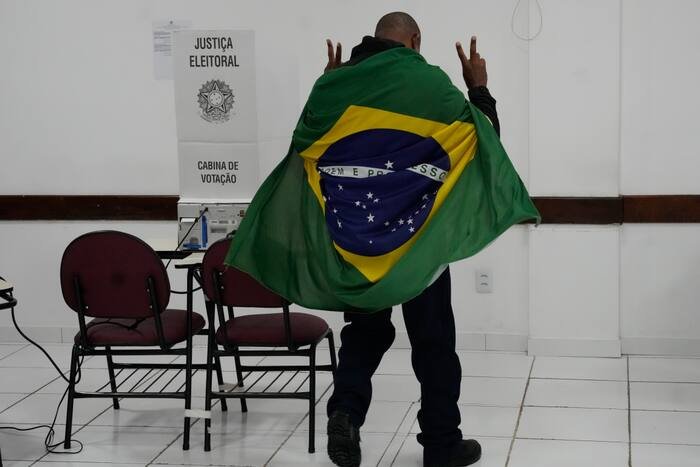
Brazilians headed to the polls Sunday in a high-stakes presidential runoff that marks a critical ideological crossroads for Latin America’s largest economy. The election pits leftist incumbent Luiz Inácio Lula da Silva against Sen. Flávio Bolsonaro, a staunch far-right challenger and ally of former U.S. President Donald Trump.
The runoff comes after a hard-fought first round earlier this month, where Flávio Bolsonaro—the son of the currently imprisoned former President Jair Bolsonaro—surprised observers by securing a lead of more than 2.2 million votes. The contest has centered on a stark divide between the two men regarding the nation’s economic path, social welfare, and international alignment.
For many voters, the choice is driven by a desire for a definitive shift. “The Workers’ Party has been in power for a long time, and the voice of the people is saying that we need change to see improvements in security and the cost of living,” said Fabianne Borges Santoro, a 45-year-old voter in Rio de Janeiro. Supporters of the Bolsonaro campaign have frequently cited inflation and lingering corruption scandals as primary motivators for their vote.
Conversely, supporters of Lula view the election as a chance to restore historical social programs and rectify what they see as the failures of the current right-wing leadership. After casting his ballot in São Bernardo do Campo, where he first rose to prominence as a union leader, an emotional Lula thanked his base, noting the massive turnout at a recent rally on Paulista Avenue. “It is a lot of generosity, a lot of care, a lot of love. I will be forever grateful,” he said.
The election’s outcome is being closely watched across the globe, as it could determine whether Brazil moves further into the orbit of conservative movements currently gaining momentum elsewhere in the region, such as in Colombia, Peru, and Chile. A victory for Bolsonaro would signal a significant pivot toward Washington, while a Lula win would align Brazil with other left-of-center governments in Latin America, notably Mexico.
A major variable in the election remains the high rate of abstention. More than 33 million registered voters skipped the first round of the election. While voting is technically mandatory for literate Brazilians between 18 and 70, the legal consequences for failing to participate—a fine of less than $1—have proven insufficient to force a total turnout.
As polls across the country continue to process the ballots, officials emphasized that Brazil’s fully electronic voting system is expected to deliver results rapidly. Each polling location utilizes encrypted digital tallying, with results transmitted securely to the electoral court in Brasília. Polls are set to close at 5 p.m. local time, with a new leader expected to be determined by the end of the night.
Disclaimer: This content is auto-generated for informational purposes only.
Source: Read Original News