








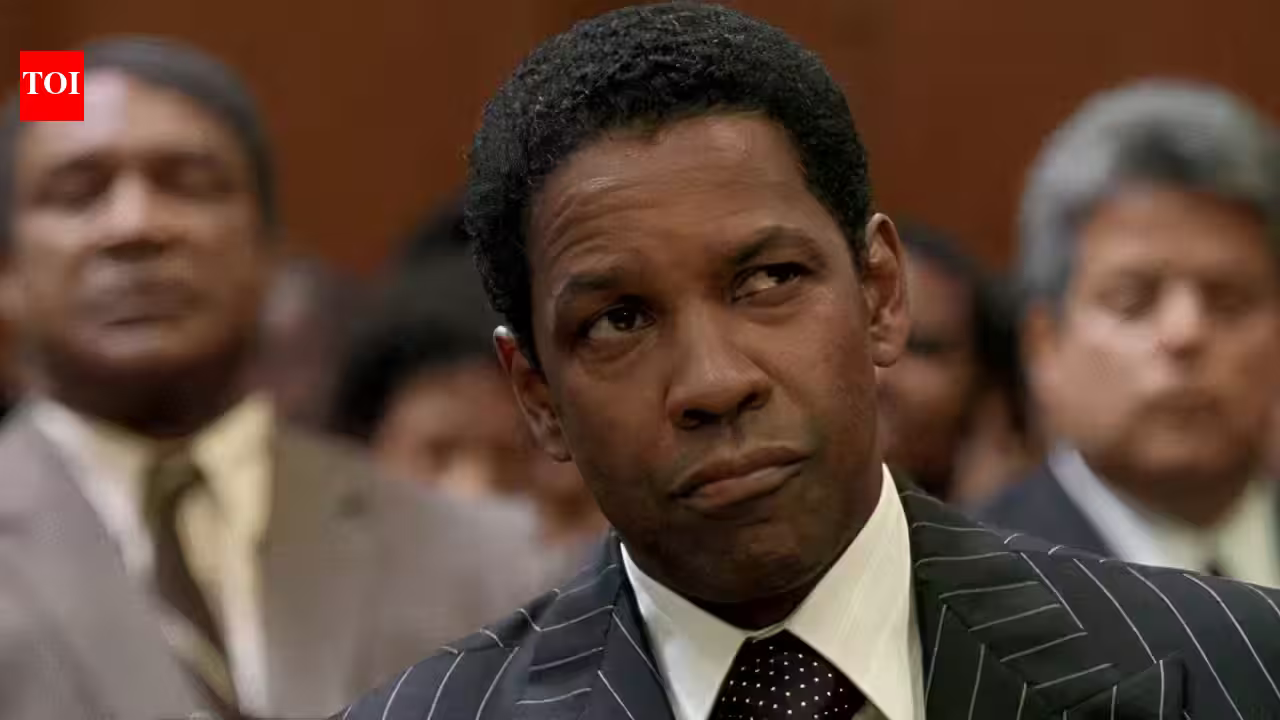
In the pantheon of Hollywood altruism, there are few stories as resonant as the long-term commitment Denzel Washington made to a small, historically Black college in Marshall, Texas. While many celebrities attach their names to charitable causes for a quick photo opportunity, Washington’s investment in Wiley College was a decade-long masterclass in quiet, sustained impact. It is a story that bridges the gap between the silver screen and reality, proving that when art mirrors truth, it can ignite a powerful transformation.
The tale begins with the 2007 film The Great Debaters, a project directed by and starring Washington that brought the near-forgotten history of the Wiley College debate team to a global audience. The film dramatized the team’s 1935 triumph over the University of Southern California—a feat that seemed impossible given the suffocating racial climate of the Jim Crow South. While the movie earned critical acclaim, for Washington, the credits didn’t mark the end of the story. They marked the beginning of his tenure as a patron for a new generation of scholars.
The Legacy of Melvin B. Tolson and Wiley College
To understand why Washington felt compelled to act, one must look at the roots of Wiley College. Founded in 1873, it stands as one of the oldest historically Black colleges in the United States. In the 1920s and 30s, under the guidance of the legendary poet and professor Melvin B. Tolson, the college became a hotbed of intellectual defiance. Tolson didn’t just teach debate; he taught his students how to dismantle the structures of systemic inequality using nothing but logic, rhetoric, and unshakable confidence.
Despite their brilliance, these students operated in a country that refused to acknowledge their humanity. They were famously barred from joining professional forensics societies, most notably Pi Kappa Delta, the prestigious national honorary fraternity that restricted membership based on the color of one’s skin. When Tolson eventually moved on in 1947, the fire he had stoked at Wiley slowly dimmed. For nearly six decades, the debate program sat in dormancy—a silent monument to a bygone era of excellence.
A Million-Dollar Catalyst for Change
When Washington stepped behind the camera to tell the story of these pioneers, he didn’t just walk away with a script and a paycheck. He walked away with a profound respect for the institution’s history and a clear vision for its future. Recognizing that the program was stagnant, he pledged $1 million to re-establish the debate society.
The structure of the donation was as deliberate as one of Tolson’s own arguments. Washington committed to $100,000 annually over ten years through the Washington Family Foundation. This wasn’t merely a “write a check and hope for the best” scenario; it provided the financial bedrock for scholarships, recruitment efforts, tournament travel, and the day-to-day operations required to compete at a high level. Renamed the Melvin B. Tolson/Denzel Washington Forensics Society, the program was given a new life, and under the watchful eye of head coach Christopher Medina, it began to dream again.
Breaking Barriers at the 2014 Championships
The true payoff of this investment arrived in 2014, seven years into Washington’s commitment. In a turn of events that felt ripped from a screenplay, the Wiley College team arrived at the Pi Kappa Delta National Tournament in Indianapolis. It was the largest gathering in the organization’s 101-year history, with over 80 colleges and universities competing for the top prize.
For the Wiley team, the setting carried immense symbolic weight. They were standing on the same national stage that had systematically excluded their predecessors for decades. When the results were tallied, it was Wiley College that stood at the top. The team didn’t just participate; they dominated. Across the 2013-2014 season, they secured a staggering 373 awards, effectively silencing any lingering doubts about their capabilities. It was a full-circle moment: the fraternity that had once shut its doors to Black debaters was now awarding the championship trophy to them.
The Broader Impact of Sustained Giving
What makes Washington’s contribution so noteworthy in the entertainment industry is the focus on “operational sustainability.” Often, donors focus on high-visibility infrastructure or flashy buildings. Washington’s model, however, focused on the human element—the scholarships that allowed students to attend college and the travel funds that allowed them to engage in the intellectual combat that had defined their school’s legacy.
By enabling students to travel, compete, and win, the donation didn’t just “revive a club”; it changed the culture of the campus. Students who might have never considered competitive debate were suddenly given the tools to excel on a national stage. Coach Chris Medina, who helmed the program during its most prolific years, noted that the infusion of resources allowed the students to focus entirely on their craft rather than worrying about the logistical barriers that had hindered previous generations.
Hollywood’s Role in Historical Preservation
In an era where the entertainment industry is often criticized for surface-level activism, the Wiley College story remains a standard-bearer for how celebrities can use their platform to foster real-world social mobility. Washington’s work with Wiley suggests that true advocacy is about listening to the needs of an institution and providing the oxygen it needs to breathe again.
The victory at the 2014 Pi Kappa Delta tournament was not merely a trophy on a shelf; it was a reclamation of history. It proved that the intellectual spirit of the 1930s wasn’t buried in the past—it was waiting to be reignited. Denzel Washington provided the spark, but the students of Wiley College, armed with their own grit and the legacy of Melvin B. Tolson, provided the fire. As the institution continues to move forward, the “Great Debaters” of the 21st century stand as a testament to the fact that when you invest in people, they don’t just meet your expectations—they rewrite the narrative entirely.
Disclaimer: This content is auto-generated for informational purposes only.
Source: Read Original News