








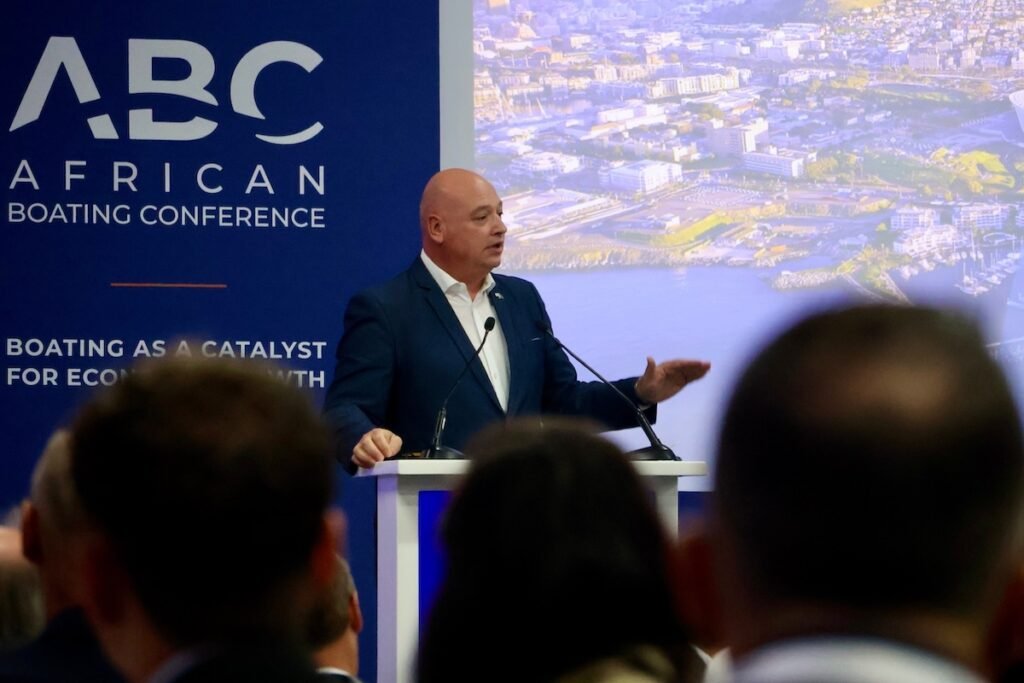
The African Boating Conference in Cape Town has emerged as a pivotal forum for aligning government policy with the high-stakes requirements of the marine manufacturing sector. As global trade tensions and economic volatility threaten traditional supply chains, the industry is increasingly turning toward structural transformation and technological integration to maintain its competitive edge on the international stage.
## Government Accountability and the “Ease of Doing Business”
A significant development from the conference was the tangible commitment from Western Cape leadership to bridge the gap between bureaucracy and industry success. Both Western Cape Premier Alan Winde and Alderman James Vos emphasized a shift toward performance-based governance. By utilizing a “Business Matrix and Dashboard,” the provincial government is moving away from abstract promises toward data-driven accountability.
This is particularly critical regarding international trade. Premier Winde highlighted active diplomatic efforts concerning U.S. trade tariffs, noting that the relationship is inherently symbiotic: South African boatbuilders rely on American technology and components, meaning that restrictive tariffs ultimately harm the U.S. suppliers as much as they hinder South African exports. This pragmatic approach to trade policy is setting a new standard for how local governments can support high-value manufacturing.
## Artificial Intelligence as a Core Utility
While marine engineering is traditionally viewed through the lens of physical craftsmanship, the conference signaled a seismic shift toward treating Artificial Intelligence (AI) as a fundamental utility rather than an experimental tool. Experts at the event argued that for an industry facing intense global competition, AI-driven efficiencies in design and supply chain management are now a commercial necessity.
Industry players are exploring how AI can optimize production workflows, from predictive maintenance in manufacturing to the complex logistics of global exports. By viewing AI with the same necessity as electricity, companies are preparing to use machine learning to mitigate the rising costs of raw materials and energy. This technological pivot is vital for keeping African boatyards competitive against emerging Asian manufacturers who are aggressively digitizing their assembly lines.
## Scaling Infrastructure for a Global Superyacht Market
Infrastructure development is proving to be the linchpin for growth, as evidenced by the V&A Waterfront’s strategic expansion. Data presented at the conference—showing a significant uptick in both the number and the average size of superyachts visiting Southern Africa—highlights the urgent need for a connected regional cruising network.
The vision championed by industry leaders, including Gulf Craft CEO Erwin Bamps, is to stop viewing individual marinas as isolated assets and start creating an interconnected ecosystem. By integrating world-class hospitality facilities like the new EDITION hotel with specialized superyacht berths at Quay 7, Cape Town is positioning itself as the primary gateway to a broader Indian Ocean cruising circuit.
This model of “integrated destination development” mirrors successful international hubs like Dubai and the Maldives. It requires more than just dry docks; it demands a seamless experience that combines technical repair capabilities with high-end luxury services. As the industry moves toward this model, the collaboration between private developers and local government becomes the primary engine for sustainable economic growth, turning regional potential into a robust, high-yield marine economy. Through better data utilization, targeted AI adoption, and synchronized infrastructure planning, Africa is solidifying its role as a key player in the global maritime market.
Disclaimer: This content is auto-generated for informational purposes only.
Source: Read Original News