






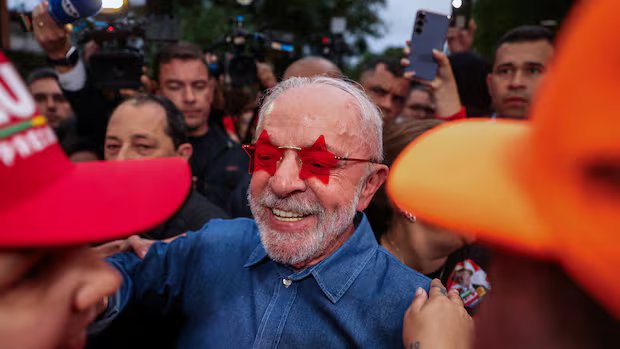
Brazilian President Luiz Inácio Lula da Silva has been re-elected, securing a hard-fought victory that keeps Latin America’s largest economy at a strategic distance from Washington. With 100 per cent of the vote counted, the electoral court confirmed on Sunday that the veteran leader, who turns 81 on Tuesday, captured 51.8 per cent of the vote—a lead of nearly 4.4 million ballots over his opponent, Flávio Bolsonaro.
The result marks a significant geopolitical pivot, bucking a broader trend in Latin America where a wave of right-of-centre, Trump-aligned candidates have recently ascended to power. By securing another term, which begins on January 5, 2027, Lula ensures that Brazil and Mexico, the two most populous nations in the region, remain under left-of-centre leadership. This positions Brazil to maintain its independence from the United States, despite ongoing pressure from trade tariffs imposed by the Trump administration.
In his victory address, an emboldened Lula framed his win as a triumph over misinformation and division. “This was a defeat for denialism and lies,” he told supporters. “I must confess that every time I attended a debate, I felt embarrassed.” He further pledged to defend the nation’s sovereignty, declaring, “This country will not accept being anyone’s backyard.”
The election conclusion was marred by chaos, following a last-minute decision by the Supreme Court to extend voting by two hours. The extension, triggered by transportation issues in pro-Lula regions and heavy rains in Bolsonaro-friendly areas, drew immediate ire from the incumbent’s camp. Flávio Bolsonaro has since demanded that the election be “annulled,” citing the procedural confusion and pointing to the fact that the presiding justice, Cristiano Zanin, is a former lawyer for the President-elect.
Across Brazil, reactions to the results were starkly divided. In São Paulo, red-clad supporters gathered to cheer for the veteran leader, while in Rio de Janeiro, celebratory roars were met with hostility from Bolsonaro supporters. Business leaders and voters favoring the right expressed deep concern, with many warning that a return to Lula’s policies would harm an already struggling economy.
This victory is likely the final chapter in the political career of Lula, a former union leader who founded the Workers’ Party and has dominated Brazilian politics for decades. After surviving a series of corruption investigations and 580 days in prison—convictions that were ultimately annulled by the Supreme Court—Lula’s return to power represents an unprecedented political comeback.
He now enters his fourth, non-consecutive term as president, joining a cohort of the oldest leaders in the Americas alongside Donald Trump and Daniel Ortega. Facing a deeply polarized nation, his administration must now address mounting public anxiety over the cost of living and national security, while navigating a global landscape increasingly defined by competition between major powers.
Disclaimer: This content is auto-generated for informational purposes only.
Source: Read Original News