








The Invisible Pipeline: Powering India’s Defence and Space Ambitions
Behind every satellite launch and precision drone strike lies a critical, yet often overlooked, infrastructure: the classrooms, research laboratories, and specialized degree programs that cultivate the next generation of engineers. While military operations like Operation Sindoor in May 2025 highlight India’s technological prowess—utilizing at least 10 standby satellites for surveillance and navigation—the sustainability of this capability hinges on a complex educational and recruitment ecosystem.
Specialized Education and Institutional Gateways
India’s military aerospace and drone development are fueled by a specific cluster of science and engineering disciplines. At the apex of this academic structure is the Indian Institute of Space Science and Technology (IIST) in Valiamala. As the country’s only dedicated space university, established under the Department of Space, it serves as a primary pipeline for the Indian Space Research Organisation (ISRO).
With a modest student body of approximately 1,356, IIST provides specialized undergraduate and postgraduate degrees in Aerospace Engineering, Electronics and Communication, and Spacecraft Systems. Parallel to this is the Defence Institute of Advanced Technology (DIAT) in Pune, a DRDO-managed deemed university. DIAT focuses on producing specialists in guided missiles and aerospace electronics, primarily catering to candidates already within the armed forces and DRDO, rather than the open civilian market.
However, these institutions cater to a niche audience. While Space Technology Cells (STCs) have been established at premier IITs and IISc, these represent only a fraction of India’s hundreds of engineering colleges, leaving the vast majority of engineering graduates with limited exposure to space-relevant research during their formative years.
The Recruitment Conundrum
The strength of India’s space program is currently facing a statistical strain. Data provided to the Lok Sabha in February 2026 revealed that the Department of Space is operating at approximately 85.6% capacity. Out of a sanctioned strength of 18,142 posts, 2,613 remain vacant. This 14.4% vacancy rate underscores a growing concern for an agency tasked with ambitious projects like the Gaganyaan mission and the development of a national space station.
For those entering the Defence Research and Development Organisation (DRDO), the path is highly segmented. Recruitment is split into distinct channels:
- The Technical Channel (RAC): Targeted at Scientist roles, requiring strong GATE scores or specialized academic credentials.
- The Technical Support Channel (CEPTAM): Focused on diploma and ITI holders for technical and administrative roles.
- Laboratory-Level Fellowships: A critical, decentralized stream where Junior Research Fellows (JRF) are recruited through walk-in interviews, effectively funneling postgraduate and doctoral talent directly into applied laboratory projects.
The Challenge of Grassroots STEM
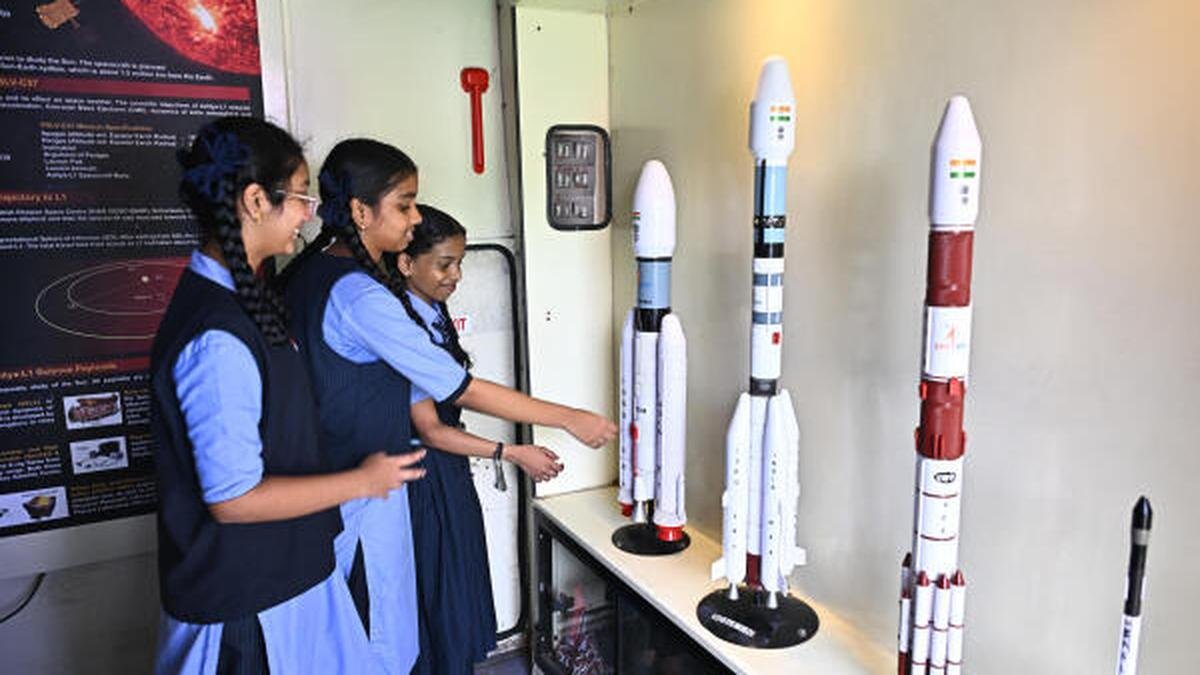
Efforts to expand the talent pipeline at the school level remain limited in scope. ISRO’s Yuva Vigyani Karyakram (YUVIKA) program is a high-quality residential initiative for Class 9 students, yet it operates more as a talent-scouting exercise than a mass STEM pipeline. By selecting only 350 students annually from a school-going population of 100 million, the program reaches a tiny fraction (0.00035%) of the potential student base.
This narrow focus is further compounded by India’s Gross Expenditure on Research and Development (GERD), which has stagnated between 0.6% and 0.7% of GDP for over a decade—a figure significantly lower than those of global peers like the U.S., South Korea, and China.
Bridging the Gap: Startups and Innovation
To overcome institutional bottlenecks, the government has increasingly turned to the private sector. Through the iDEX (Innovations for Defence Excellence) scheme, the government is pouring capital into startups and MSMEs to address specific “problem statements” in space and defence.
Currently, roughly 440 space-tech startups are registered, supported by government mechanisms such as the IN-SPACe Seed Fund and a dedicated ₹1,000 crore Venture Capital Fund. By formalizing Technology Transfer Agreements—whereby ISRO-developed technologies are licensed to the private sector—the state is attempting to diversify the ecosystem beyond government-led R&D.
Ultimately, as experts note, modern warfare is defined by the ability to fuse high-resolution satellite imagery with real-time drone data. Sustaining this advantage requires more than just hardware; it demands a robust, scalable pipeline of human capital. Addressing the current vacancies in the Department of Space, expanding the research footprint beyond select elite institutes, and nurturing a broader STEM culture will be the true determinants of India’s long-term strategic success.
Disclaimer: This content is auto-generated for informational purposes only.
Source: Read Original News