








The Indian film industry has seen its fair share of ambitious projects, but few have commanded the collective breath of the nation quite like Nitesh Tiwari’s Ramayana: Rise of a Legend. As the wheels of production turn toward its November 5, 2026, release date, the latest update from the project is less about the script and more about the strategic maneuvers behind the scenes. In a move that cements his dual role as both a performer and a powerhouse producer, Kannada superstar Yash has officially confirmed that his production banner will be the primary engine for the film’s distribution across Karnataka.
It is a savvy move that speaks to the changing tides of Indian cinema. In an era where “Pan-India” is no longer just a buzzword but a box-office requirement, Yash—the man who turned the KGF franchise into a global phenomenon—is ensuring that Ramayana hits the ground running in his home turf. By anchoring the Karnataka distribution, Yash isn’t just acting in the film; he is essentially putting his own reputation and professional infrastructure behind the project’s local success.
Yash’s Strategic Footprint in the ‘Ramayana’ Universe
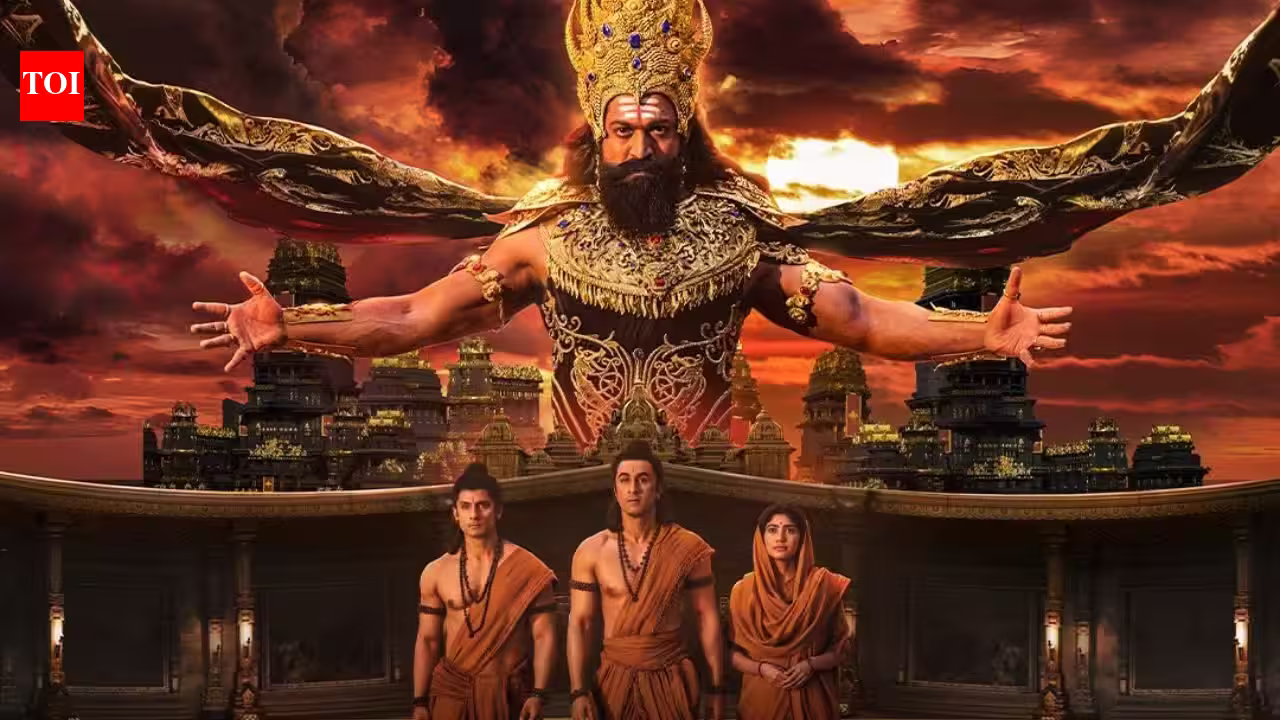
The official announcement, signaled by a minimalist yet striking poster shared by his production house, has sent ripples through the trade circles. While fans are eager to see the “Rocky Bhai” actor trade his gritty, gold-smuggling persona for the regal and formidable presence of the demon king Ravana, his involvement in the business side of things suggests he is deeply embedded in the film’s success.
The casting itself is a testament to the sheer scale Nitesh Tiwari is aiming for. With Ranbir Kapoor stepping into the shoes of Lord Rama and Sai Pallavi cast as Sita, the film boasts a lineup that bridges the gap between old-school mythology and modern stardom. Yet, it is the inclusion of powerhouse performers like Sunny Deol as Hanuman and Ravi Dubey as Lakshman that rounds out a cast list designed to pull in every demographic, from the hardcore cinephile to families waiting for a definitive cinematic retelling of the ancient epic.
The Power-Couple of Production: Namit Malhotra and Yash
Beyond the glamour of the star cast lies a production backbone that is aiming for international benchmarks. Namit Malhotra, the CEO of DNEG and a veteran of high-stakes visual effects, is co-producing the project alongside Yash. This partnership is fascinating—it pairs the tech-heavy, global expertise of Malhotra with the raw, mass-market intuition of Yash.
The ambition here is clear: Ramayana is not being positioned as a regional film dubbed for other languages. It is being mounted as a global event. By planning the theatrical rollout with premium cinema formats in mind, the production team is signaling that they intend to capture the international market with the same fervor they expect in India. The involvement of Yash’s banner in Karnataka is the first piece of this complex regional distribution puzzle, ensuring that the film’s domestic launch is fortified by a local player who knows exactly how to drive audience engagement in the Southern market.
A Sonic Clash of Titans: AR Rahman Meets Hans Zimmer
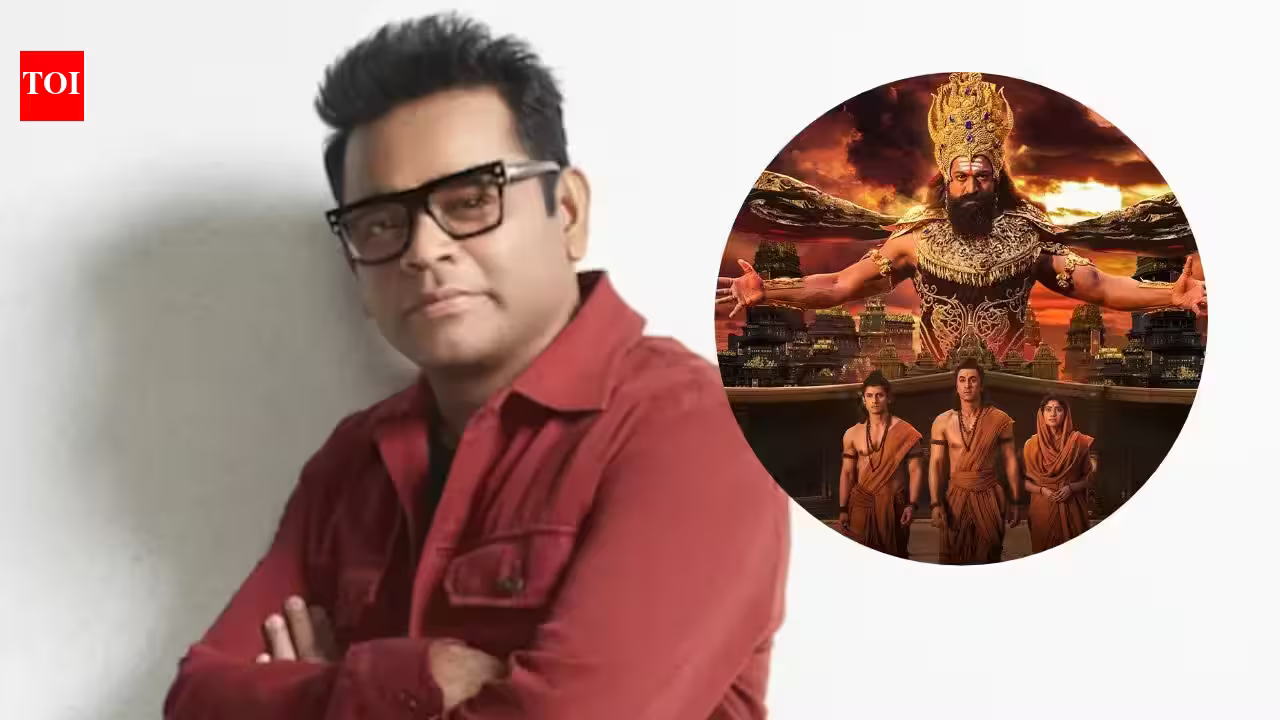
If the casting and production scale aren’t enough to entice the audience, the music certainly will. Perhaps the most intriguing detail regarding the film’s technical production is the collaboration between A.R. Rahman and Hans Zimmer. To have the Mozart of Madras working in tandem with the man who redefined the sound of modern Hollywood blockbusters is, frankly, unprecedented in the Indian context.
This synergy suggests that the sonic landscape of Ramayana will be a massive, orchestral experience—one that likely moves away from traditional song-and-dance numbers toward a more immersive, score-heavy narrative style. Given that the story requires a grand, epic scale, having these two musical titans ensures that the auditory experience will be just as breathtaking as the visual spectacle being rendered by DNEG’s visual effects teams. It is a high-stakes sonic experiment that underscores the film’s “Rise of a Legend” subtitle.
The Long Road to Diwali 2026 and Beyond
As we look toward the calendar, November 5, 2026, feels like an eternity away, yet for a project of this magnitude, it is barely enough time. Ramayana is being developed as a two-part saga, a format that has become the gold standard for high-fantasy storytelling in India. While the first part is locked for a worldwide release in 2026, the industry is already whispering about the delay of the second installment, which was initially penciled in for Diwali 2027 but is now widely expected to slide into 2028.
This delay is likely a strategic buffer, allowing the production team to fine-tune the VFX and ensure that the narrative weight of the second half hits as hard as the first. In a competitive market where audiences are increasingly critical of CGI quality—especially when dealing with mythological source material—taking the extra time to polish the product is a risk worth taking.
For now, the focus remains on the upcoming launch. Yash, Namit Malhotra, and Nitesh Tiwari are clearly building more than just a movie; they are constructing a cultural touchstone. Whether the final product can shoulder the weight of such immense expectations remains to be seen, but with Yash holding the reins of the Karnataka market and the combined creative genius of Rahman and Zimmer backing the audio, the momentum is undeniably in their favor. The Ramayana is coming, and it promises to be the kind of event that defines a generation of moviegoers.
Disclaimer: This content is auto-generated for informational purposes only.
Source: Read Original News