







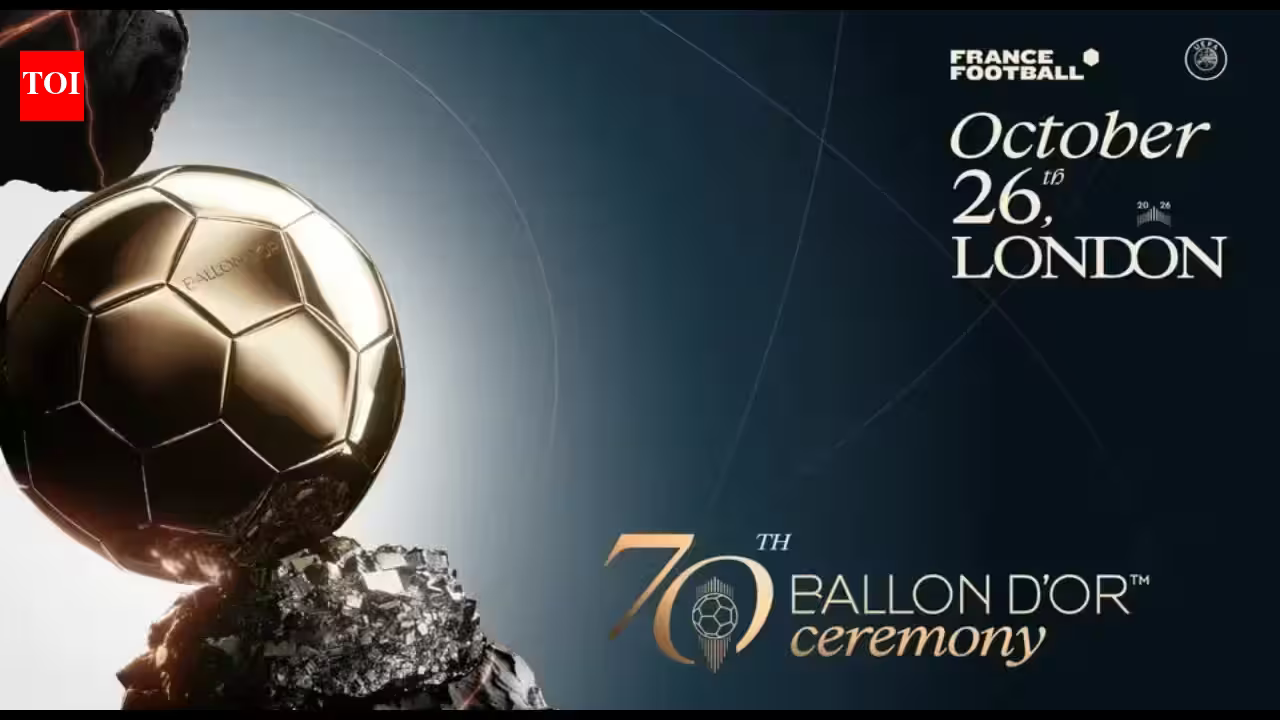
LONDON — The world of football turns its gaze toward the historic stage of the London Palladium this Monday night, as the 70th edition of the Ballon d’Or ceremony prepares to crown the game’s brightest stars. For the first time in its storied history, the glitz and glamour of the beautiful game’s most prestigious individual accolade shifts to the British capital, marking a new chapter for an award that has defined the legacies of legends for seven decades.
The stage is set for a night of high drama, where the elite of the sport will be judged not just on raw numbers, but on the defining moments that shaped the period between August 3, 2025, and July 19, 2026. As the clock ticks toward the 8 p.m. GMT start, the footballing world remains sharply divided over who deserves to lift the golden trophy.
The Men’s Race: A Four-Way Tactical Chess Match
In the men’s category, the debate centers on four distinct profiles, each presenting a compelling argument for supremacy. Leading the charge is Bayern Munich’s Harry Kane, whose statistical output this season reached astronomical heights. With a staggering 73 goals in 65 appearances, Kane has been the undisputed apex predator of European football. Having steered Bayern to both Bundesliga and DFB-Pokal glory, his trophy cabinet is well-stocked. However, his candidacy faces a subtle headwind: England’s third-place finish at the World Cup, a respectable result that nonetheless leaves some voters wondering if his lack of a major international title diminishes his claim compared to his rivals.
Contrast that with the meteoric rise of Lamine Yamal. At just 19 years old, the Barcelona prodigy has transcended the “wonderkid” label to become a bona fide superstar. With 25 goals and 20 assists in 57 appearances, Yamal’s influence on the pitch has been both creative and clinical. His ability to anchor the attack for both club and country has earned him a seat at the table with veterans twice his age.
Kylian Mbappé continues to operate at a tier of individual brilliance that few can replicate. Scoring 58 goals and providing 13 assists across 60 matches, the French forward remains an unstoppable force of nature. Yet, football is a team sport, and a lack of major silverware this season threatens to stifle his momentum. Voters are often hesitant to reward pure individual output when it isn’t accompanied by a crowning team achievement, leaving Mbappé in a precarious position.
Then, there is the ghost of the record books: Lionel Messi. Returning to the 30-man shortlist after a two-year hiatus, the eight-time winner has once again defied time. Despite plying his trade in Major League Soccer with Inter Miami, his sustained influence during Argentina’s World Cup campaign has kept him in the conversation. A ninth Ballon d’Or would be a staggering punctuation mark on an unparalleled career, though it would certainly ignite the most fervent debate in the history of the award.
A Changing of the Guard in the Women’s Category
While the men’s race is defined by established heavyweights and rising stars, the women’s category promises a historic moment of transition. For three consecutive years, Aitana Bonmatí has stood atop the podium, representing the pinnacle of midfield artistry. However, a cruel leg fracture has forced her off the shortlist, ensuring that a new name—or a familiar returning face—will hoist the trophy this year.
The vacuum left by Bonmatí’s absence has left the field wide open. Alexia Putellas, a two-time winner, enters the night as a primary favorite. Her resilience and continued dominance with Barcelona have cemented her status as one of the greatest to ever grace the pitch. Yet, she isn’t without competition; the explosive form of Khadija Shaw and the technical brilliance of Claudia Pina have made them dark-horse contenders who could easily upset the hierarchy. The decision will underscore the depth of talent in the women’s game, highlighting a new era of competitive parity.
The Jury’s Mandate
The Ballon d’Or is decided by a panel of specialist football journalists, tasked with a difficult balancing act. The criteria are tripartite: individual performance, team achievements, and the often-subjective “sporting conduct” and fair play. It is a formula designed to reward the complete footballer—someone who elevates their teammates while maintaining the highest standard of professionalism.
As the London Palladium prepares to welcome the global football elite, the air is thick with anticipation. From the tactical brilliance of the Bundesliga to the high-stakes theatre of the World Cup, the candidates have laid everything on the line.
“The Ballon d’Or isn’t just about who scored the most goals,” noted one analyst earlier today. “It is about the narrative of the season. Who defined the game? Who made us believe? Who was the protagonist in the matches that mattered most?”
Whether the voters opt for the historical narrative of a returning icon, the sheer statistical volume of a marksman, or the generational promise of a teenager, the choice will resonate for years to come. The ceremony is set to commence at 8 p.m. GMT, with fans in India tuning in at 1:30 a.m. IST on Tuesday, October 27. Follow our live coverage throughout the night for real-time updates, expert analysis, and the crowning of the 2026 Ballon d’Or winners.
Disclaimer: This content is auto-generated for informational purposes only.
Source: Read Original News