









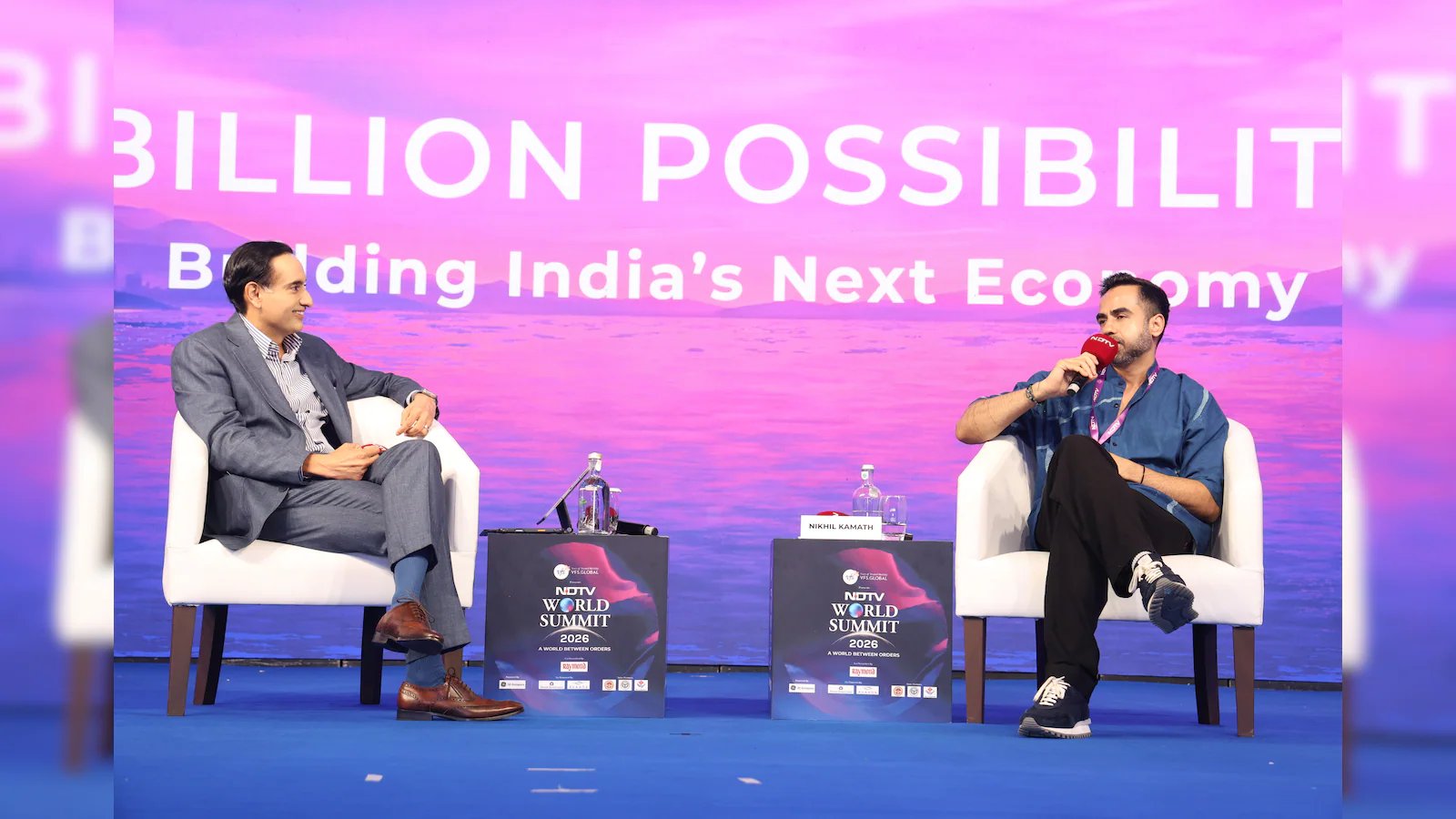
Nikhil Kamath: India’s AI Future Lies in Applications, Not Foundational Models
Billionaire entrepreneur and Zerodha co-founder Nikhil Kamath has outlined a strategic roadmap for India’s technological future, suggesting the country should pivot away from attempting to replicate the AI breakthroughs of global giants like the US and China. Speaking at the NDTV World Summit 2026, Kamath argued that India’s best path to success lies in building specialized applications and service-based solutions rather than engaging in a capital-intensive race to develop foundational Large Language Models (LLMs).
Kamath noted that the astronomical risk capital available to tech behemoths in the US and China creates an insurmountable barrier for others to compete at the infrastructure layer. Instead, he believes Indian entrepreneurs should leverage open-source models to build “inference businesses.” These ventures could provide companies with high-efficiency data processing tools that ensure context privacy and operational speed, effectively positioning India as a hub for applied AI.
Leveraging Competitive Advantages
India’s potential in the global AI landscape is bolstered by significant structural advantages, according to Kamath. He highlighted the country’s relatively low cost of power—which he estimates is 30% to 40% cheaper than in Western markets—and competitive labor costs. These factors make India an ideal location for establishing large-scale data centers and supporting the computing infrastructure necessary for a global AI ecosystem.
Beyond the digital sphere, Kamath urged Indian companies to broaden their ambitions. While software exports have long been the backbone of the tech sector, he advocated for a stronger push into manufacturing and consumer branding. Through his venture-building initiative, Foundry, Kamath is actively pursuing the creation of consumer goods—such as household essentials—that are capable of competing in international markets, including the US.
Regional Competition and Entrepreneurial Culture
Reflecting on lessons from China’s economic rise, Kamath suggested that India’s states should lean into internal competition. He proposed that state Chief Ministers adopt an approach akin to corporate CEOs, aggressively vying to attract investment and foster regional economic growth. However, for this model to succeed, Kamath emphasized that states must be granted greater autonomy in retaining the economic benefits generated by their initiatives.
Kamath also addressed the cultural perception of failure, arguing that India must evolve its support systems to allow entrepreneurs to recover from setbacks. Citing China’s robust ecosystem for “second chances,” he noted that both policy shifts and a cultural change in attitude toward failed ventures are essential to fostering a truly resilient startup environment. He noted that the most successful leaders he has encountered are defined by their curiosity and the agility to change their minds rapidly.
Rethinking Stock Market Taxation
The discussion also touched on the concerns surrounding retail participation in the stock market and speculative trading. While some argue against the prevalence of futures and options (F&O) trading among retail investors, Kamath defended the role of speculators as essential for maintaining market price discovery and liquidity.
He cautioned against over-regulating or taxing retail activity to the point of stifling market health. Instead, Kamath called for a restructuring of the tax framework. He argued that the current system disproportionately penalizes the cost of doing business rather than focusing on actual income. By easing the transaction tax burden and ensuring that institutional players and retail investors operate on a level playing field, Kamath believes India can create a more robust equity market capable of fueling the nation’s next generation of ambitious businesses.
Disclaimer: This content is auto-generated for informational purposes only.
Source: Read Original News