







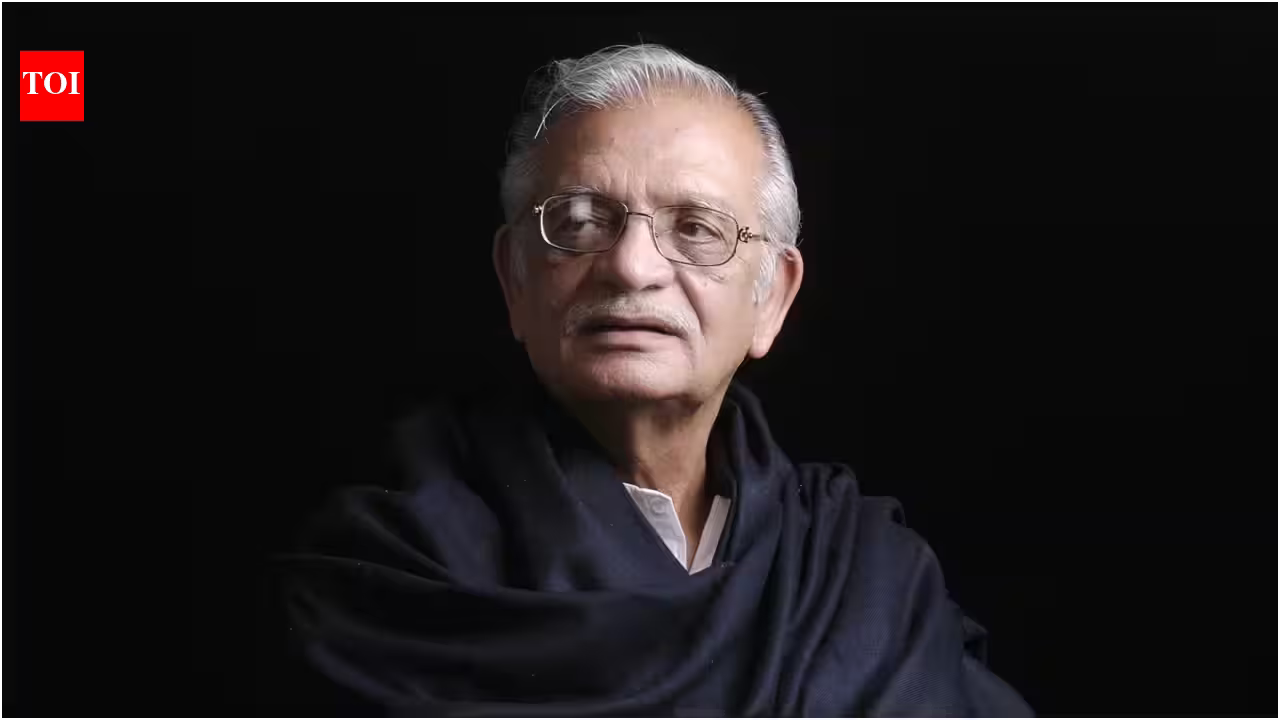
Thirty years ago, when the first frames of Maachis flickered across cinema screens, the landscape of Indian political filmmaking shifted irrevocably. Directed by the legendary poet and filmmaker Gulzar, the film didn’t just capture a moment in time; it captured the ache of a generation grappling with the fallout of the Punjab insurgency. As the film celebrates its 30th anniversary, the narrative remains as haunting and relevant as it was in 1996. It is a testament to the fact that while the headlines of yesterday may fade, the human cost of extremism is a permanent scar.
Following the tragic trajectory of Kripal Singh, played with a vulnerable intensity by Chandrachur Singh, Maachis dared to look at militancy not through the lens of jingoism, but through the eyes of a naive man pushed into the shadows. Beside him, Tabu—in a performance that remains a masterclass in restrained melancholy—grounded the film’s turbulence. Her silence, soundtracked by the eternal, ethereal strains of Lata Mangeshkar’s “Paani Paani Re,” became the anthem for a thousand untold stories of loss.
The Brutal Clarity of Truth
Reflecting on the film’s legacy in a recent interview with Variety India, Gulzar offered a characteristically humble yet piercing assessment of his work. While critics and historians have spent three decades debating the political nuances of the film, the man behind the camera maintains a simpler perspective.
“It is one of my most important films,” Gulzar admits. “I wouldn’t call it a political film. It reflected the truth of those times.” For a director whose work is often defined by its lyrical beauty, Maachis was a stark departure into the harsh light of reality. He acknowledges that the film was indeed more deeply rooted in the political climate of the 1980s than any of his previous endeavors, yet he remains deeply skeptical of the medium’s reach.
“Cinema can only go this far and no further,” he observes. “We overestimate the power of cinema to change lives.” It is a sobering sentiment from a filmmaker who has wielded the craft like a surgical instrument for decades. Yet, whether or not it changed the world, it undeniably pierced the national consciousness, forcing audiences to confront the reality that separatism does not merely destroy regimes; it dismantles families, layer by agonizing layer.
Tabu and the Evolution of the Indian Actress
If Maachis was the furnace, Tabu was the forge. Her performance as the woman left behind in the wake of Kripal’s transformation is widely considered one of the defining moments of her career. Gulzar, a man who has directed the greatest talents of several generations, speaks of her with a rare, unabashed reverence.
“Like Jaya (Bhaduri), Tabu ushered an era of acting,” Gulzar notes. Her presence in Maachis was not defined by screen time, but by emotional gravity. “She is not just unique, she is also very intelligent and sensitive. I would say she is the best actress I’ve worked with.”
In the thirty years since Maachis, Tabu has gone on to dominate both parallel and mainstream cinema, but it was in Gulzar’s world—where words are sparse and feelings are oceanic—that she first proved her ability to embody the quiet, catastrophic weight of survival.
From the Fields of Punjab to the Power Corridors
Following the profound impact of Maachis, the industry was eager to see where Gulzar would take his political inquiry next. That journey led to Hu Tu Tu, a film that explored the grime of power politics with a vitriol that Maachis had left untouched.
When asked about the relationship between these two films, Gulzar is quick to clarify the distinction. “If I had made the film I originally planned after Maachis for producer R. V. Pandit, based on Krishan Chander’s novel, this question of repeating myself wouldn’t have arisen,” he explains.
While viewers often group the two films together due to their somber tone and critical stance on the establishment, Gulzar views Hu Tu Tu as the more explicitly political creature. “I don’t think Maachis was as political a film as Hu Tu Tu,” he maintains. While Maachis was a localized tragedy born of grief and desperation, Hu Tu Tu was a wide-angle examination of systemic rot. It is a distinction that speaks to the director’s evolution—he moved from the intimate, localized pain of a single family to a broader, more cynical critique of the institutional rot that allows such pain to flourish.
The Timeless Echo of ‘Maachis’
Thirty years later, the “Maachis” (matchstick) metaphor remains devastatingly apt. One spark is all it takes to ignite an inferno, and once the fire consumes, the ash is all that remains. The film never offered easy answers or sanitized resolutions. It did not promise that the wounds of Punjab would heal in a cinematic runtime, nor did it suggest that the cycle of violence had an expiration date.
As we look back at the trio of Chandrachur Singh, Jimmy Shergill, and the incomparable Tabu, we see a snapshot of a moment when Indian cinema looked into the abyss and didn’t blink. Gulzar’s insistence that cinema cannot “change lives” might be a modest assessment, but it misses one crucial truth: while a film may not change the course of history, it changes the person watching it. It provides the language for grief, the framework for empathy, and, perhaps most importantly, the memory of those who were lost in the crossfire.
Three decades later, Maachis still burns. It remains an essential artifact of Indian storytelling—a reminder that in the hands of a master poet, the most devastating truths are the ones told in whispers, set against the backdrop of a broken heart.
Disclaimer: This content is auto-generated for informational purposes only.
Source: Read Original News