






The global cinematic landscape is bracing for a collision of tradition and psychological tension as Santosh Davakhar’s Gondhal gears up for a historic worldwide release. With the trailer officially dropping this week, the industry buzz is reaching a fever pitch, not just because of the film’s gritty, atmospheric premise, but because of its unprecedented reach. As India’s official selection for the 99th Academy Awards in the Best International Feature Film category, Gondhal isn’t just a movie—it is a statement of intent.
Arriving in theaters on November 13, 2026, the film is poised to shatter regional barriers, releasing simultaneously in seven languages: Hindi, Marathi, Tamil, Telugu, Malayalam, Kannada, and English. For a Marathi film, this is uncharted territory, turning a localized cultural story into a potential global phenomenon.
A Global Rollout Unprecedented for Marathi Cinema
The sheer scale of the release reflects a shift in how regional Indian cinema is marketed and consumed. The makers have confirmed a wide-reaching theatrical rollout that spans continents—from the bustling markets of India and Dubai to the competitive cinema circuits of the US, the UK, Europe, and Australia.
This seven-language strategy is more than a logistical feat; it is a calculated effort to reposition Indian cinema in the global zeitgeist. By bypassing the traditional “niche” label often unfairly applied to regional cinema, Gondhal is treating itself as a global blockbuster. The goal is clear: to ensure that the psychological nuances of the film are accessible to a worldwide audience, allowing the human experience at the heart of the story to transcend linguistic boundaries.
Unpacking the Mystery of ‘Gondhal’
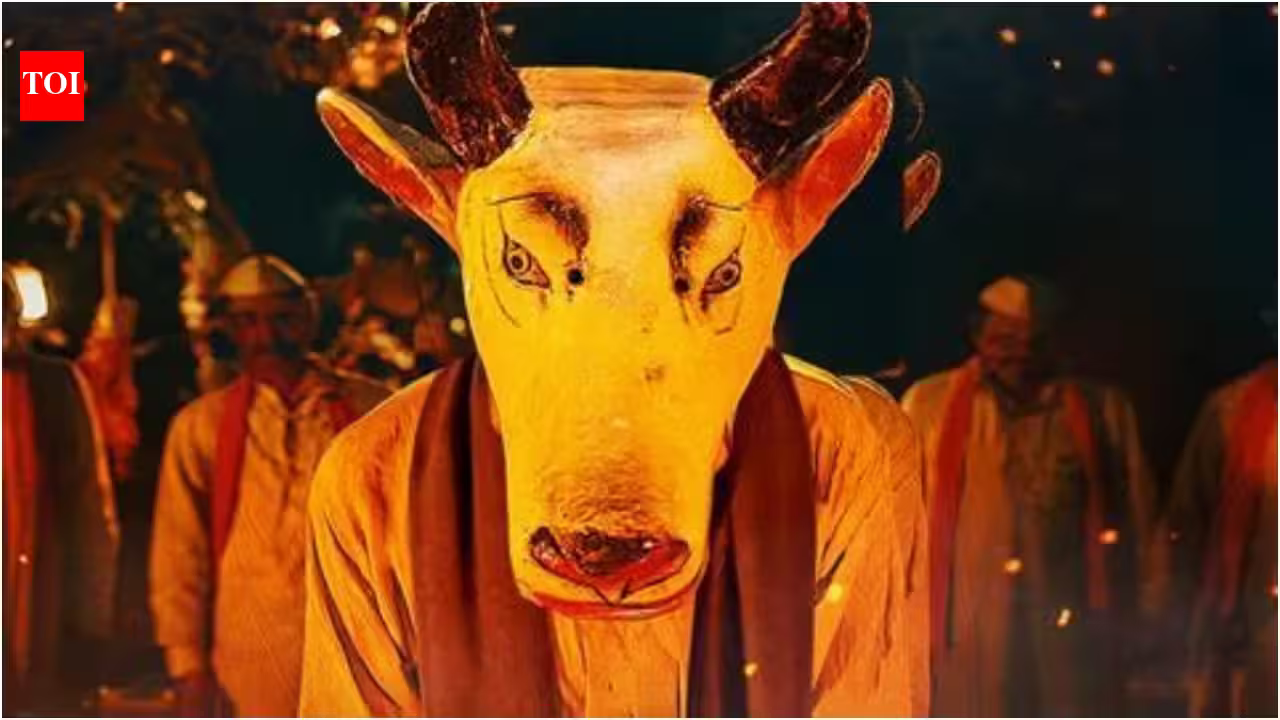
At its core, Gondhal is a psychological thriller that finds its footing in the complex, often suffocating traditions of Maharashtra. The plot centers on Suman and Anandrao, a young couple whose initial happiness is slowly dismantled by the crushing weight of marital duty, repressed personal desires, and the eerie, ritualistic devotion of their surroundings.
The trailer, released amidst much anticipation, offers a masterclass in tension. It suggests a narrative that is less about traditional jump-scares and more about the creeping dread of a domestic life spiraling into the unknown. If the early buzz is to be believed, the film acts as a pressure cooker, where cultural expectations act as the heat, slowly burning away the sanity of its protagonists.
Santosh Davakhar’s Vision: Beyond Stereotypes
For writer-director Santosh Davakhar, Gondhal is a corrective lens. In a recent interview, he expressed a desire to move past the tropes that often define how Indian cinema is perceived abroad.
“Global perceptions of Indian cinema are often shaped by narratives of poverty and caste conflict—important realities, but not the complete expression of India,” Davakhar noted. For him, Gondhal represents something richer: an intersection of generations, ancestral traditions, and the modern individual. By weaving the ancient “Gondhal” ritual—a folk art form rooted in religious fervor—into a psychological framework, Davakhar aims to show that Indian storytelling can be both deeply ethnic and universally relatable. He isn’t just exporting a story; he is exporting a piece of lived culture that feels both archaic and terrifyingly relevant.
The Academy Award Strategy and Artistic Ambition
The decision to submit Gondhal for the 99th Academy Awards is the culmination of a momentum-heavy festival run. Davakhar is no stranger to critical acclaim; his previous victory—the Silver Peacock for Best Director at the 56th International Film Festival of India (IFFI)—saw the jury compare his style to a “Shakespearean fable set in a real world.”
This comparison points to the film’s structural audacity. Early reports from production suggest the film opens with a staggering 25-minute unbroken take. Such a choice signals a filmmaker in total control, using the camera to trap the audience alongside his characters, ensuring there is no escape from the unfolding tension. By aiming for the Oscars, Davakhar is leveraging the prestige of the Academy to act as a bridge, ensuring that the film’s “culturally authentic and universal cinematic language” is taken seriously by the international artistic community.
A Cast and Crew Primed for Impact
While the direction and vision are Davakhar’s, the soul of the film lies in its performances. The ensemble cast, featuring Ishita Deshmukh, Kishor Kadam, Yogesh Sohani, and Nishad Bhoir, is tasked with carrying the heavy emotional and psychological burden of the script. The cinematography, handled by Amalendu Chaudhary, is expected to be a character in itself, capturing the harsh beauty of Maharashtra’s rural landscape while maintaining the claustrophobia required for a high-stakes thriller.
Produced under the banner of Davakhar Films, the movie is a testament to what happens when regional filmmakers refuse to play by conventional rules. The producers have invested heavily not just in the production value, but in the infrastructure required to distribute the film across seven languages simultaneously, betting that the world is ready to look at India through a different prism.
As the November 13 release date approaches, all eyes are on whether Gondhal can move the needle at the box office as effectively as it has in the festival circuit. If it succeeds, it will likely change the blueprint for how non-Hindi Indian films are released in the future. For now, the trailer serves as a haunting invitation: an invitation to witness a story of tradition turned toxic, and a debut that could very well put Marathi cinema at the center of the global stage.
Disclaimer: This content is auto-generated for informational purposes only.
Source: Read Original News