









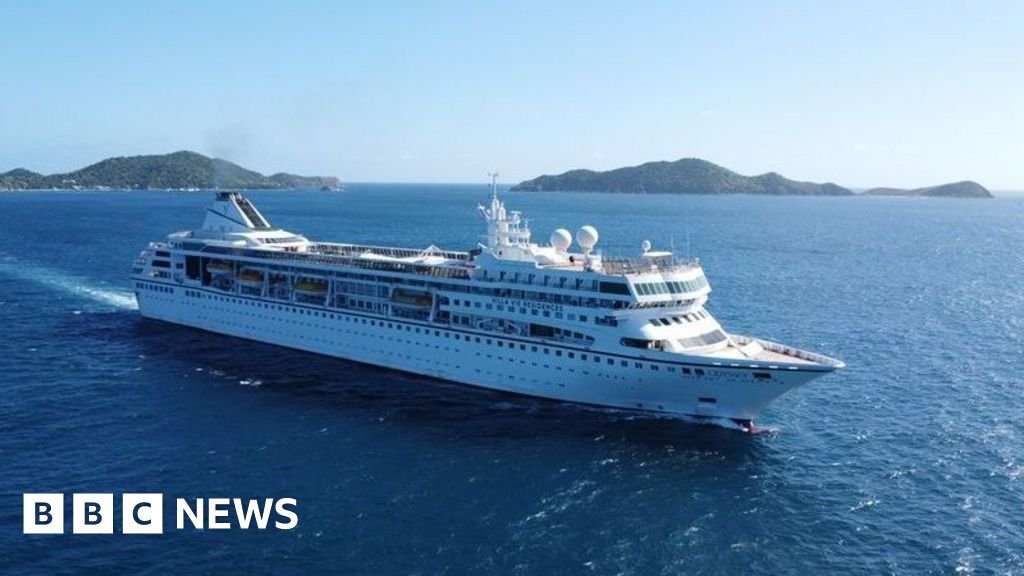
The Villa Vie Odyssey, a luxury residential cruise ship marketed as a permanent home for retirees and digital nomads, has hit a major navigational snag. After promising an uninterrupted circumnavigation of the globe, the vessel has been forced to pause its journey indefinitely, leaving hundreds of passengers in limbo. While the maritime complications are physical, the situation highlights a growing intersection between lifestyle technology, logistical AI, and the evolving expectations of the modern “work-from-anywhere” digital landscape.
The Logistical Breakdown and Digital Implications
The suspension of the Villa Vie Odyssey’s journey is reportedly tied to a series of mechanical and regulatory delays, but the impact is being felt most acutely in the digital sphere. Many of the ship’s residents are high-net-worth professionals who rely on seamless high-speed satellite connectivity to maintain their global business operations. For these individuals, the ship was not just a residence; it was a high-tech node in a global network.
The cruise operator is currently working with passengers to facilitate “temporary living arrangements” in various ports. This transition requires a level of coordination often managed by complex logistical software. In an era where cruise lines are increasingly integrating AI-driven fleet management systems—similar to the tools Google leverages for supply chain optimization and Google Cloud’s predictive analytics—the failure to keep the Odyssey on schedule suggests a gap between projected digital efficiency and real-world maritime maintenance.
Technology and the Future of Remote Living
The Villa Vie Odyssey represents a burgeoning niche in the tech-enabled housing market. By marketing itself as a “floating city,” the venture relies on the premise that global residents can be untethered from traditional geography as long as their digital infrastructure remains intact. Google’s suite of remote collaboration tools—Workspace, Meet, and Drive—are foundational to this lifestyle. When a project like this stalls, it provides a cautionary tale about the reliance on tech-centric living environments that are fundamentally tied to complex, legacy industrial systems like ship engines and international maritime law.
Industry experts note that as more platforms integrate AI to manage human habitats, the expectation for “zero-downtime” living becomes the standard. When a cruise ship acts as a residential hub, the standard of service shifts from hospitality to critical infrastructure. If a ship stops, it is no longer a vacation delay; it is a housing crisis compounded by a remote-work disruption.
The Role of Data and Cloud in Modern Transit
While the Odyssey navigates its current complications, the maritime industry is undergoing a digital transformation similar to the automotive sector. Major logistics firms are increasingly turning to Google Cloud’s data analytics to predict mechanical failures before they occur. Had the Villa Vie Odyssey utilized more advanced predictive maintenance AI—the kind now common in autonomous transport research—perhaps the current suspension could have been mitigated or avoided entirely.
As passengers wait for updates via the cruise line’s portal, the incident underscores the vulnerability of the “digital nomad” dream when it is tethered to a single, physical piece of hardware. For tech-savvy residents, the ability to pivot between temporary accommodations depends on the same connectivity tools they used to work from the middle of the ocean. Whether the Odyssey resumes its journey or remains docked for an extended period, the event serves as a reminder that even in a world governed by high-speed data and cloud-based organization, the physical world still exerts a powerful, and occasionally disruptive, influence.
Moving forward, residential cruise ventures will likely need to invest more heavily in the intersection of real-time sensor data and transparent communication interfaces to manage resident expectations. Until the engines start turning again, the ship remains a stationary object in a digital age that demands constant motion.
Disclaimer: This content is auto-generated for informational purposes only.
Source: Read Original News