







Cyclone Arnab Batters Andhra Pradesh Coast, 89,000 Evacuated
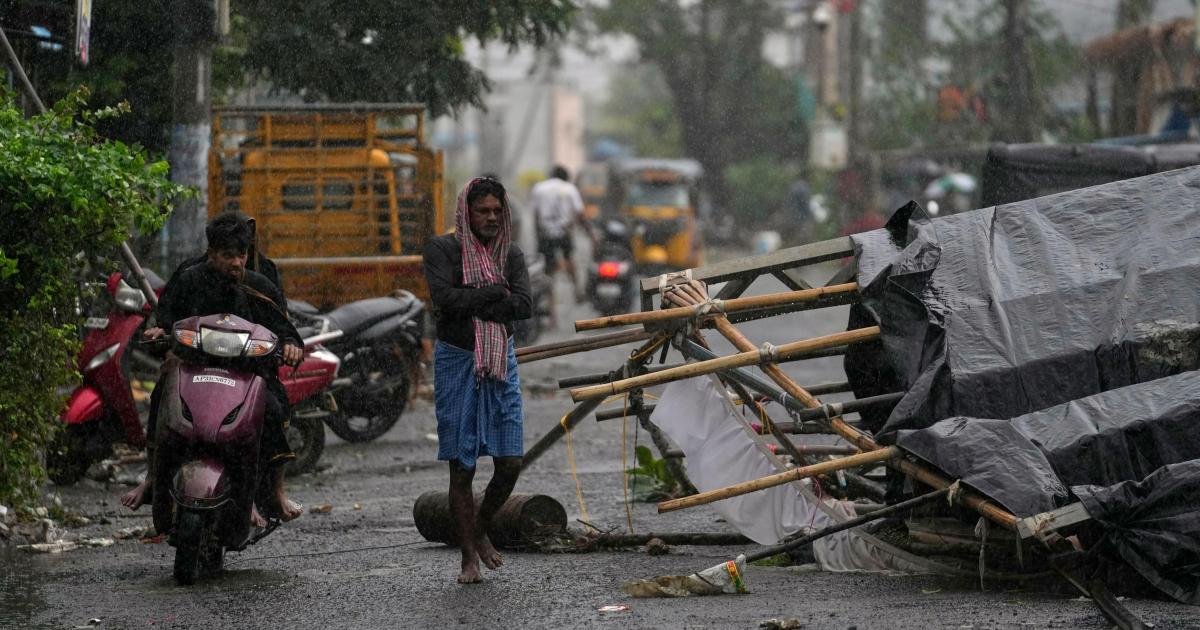
Cyclone Arnab made landfall along the coast of Andhra Pradesh on Wednesday, bringing intense rainfall and gale-force winds that have caused widespread disruption across the region. While the storm showed signs of weakening shortly before reaching the shore, its impact has left several coastal districts grappling with flooded infrastructure and significant agricultural damage.
Prakhar Jain, head of the state’s disaster management authority, confirmed that while the landfall process is now complete, the region remains under the influence of the system. Meteorological officials reported that wind speeds reached approximately 84 mph as the cyclone crossed the coast, though these are expected to taper off as the storm system moves further inland.
Extensive Damage to Infrastructure and Agriculture
The fertile district of Konaseema has emerged as the worst-affected area in the state. Local reports indicate a landscape marked by uprooted electricity poles and fallen trees, which have effectively blocked road access and crippled power grids. Authorities have reported that roughly 6,000 electricity poles were toppled in Konaseema alone, complicating recovery efforts.
Agricultural sectors have also sustained heavy losses. Extensive banana and coconut plantations—vital to the local economy—have been decimated by the high-velocity winds. Disaster management teams are currently working to clear debris from major thoroughfares to facilitate the movement of emergency supplies and restoration crews.
In the port city of Visakhapatnam, heavy downpours have resulted in severe waterlogging, flooding numerous low-lying residential and commercial areas. The India Meteorological Department (IMD) has cautioned that residents in coastal Andhra Pradesh and parts of southern Odisha should remain vigilant, as heavy rainfall is expected to persist even as Arnab weakens to a “severe” cyclonic storm.
Massive Evacuation Efforts
In a bid to minimize the risk to human life, the state government launched a massive precautionary operation prior to the storm’s arrival. Approximately 89,000 people were moved to safety from vulnerable, low-lying regions. With an estimated 12 million people living in the potential path of the cyclone, disaster management teams worked around the clock to ensure the population was prepared.
More than 2,000 cyclone shelters were activated across 20 districts. To keep the public informed, authorities utilized a comprehensive mobile alert system to transmit real-time warnings to millions of residents. Furthermore, over 1,100 specialized medical teams were deployed to provide emergency healthcare, and local authorities took steps to secure the coastal fishing industry by anchoring more than 30,000 vessels.
Disruptions extended to the transport sector as well, with several train services canceled as a safety measure. Neighboring Odisha remains on high alert, with officials finalizing plans to evacuate an additional 48,000 individuals from regions projected to fall under the storm’s path.
As the recovery phase begins, state authorities are currently conducting a comprehensive assessment of the damage. While there have been no reports of casualties thus far, the focus remains on restoring power and connectivity to the hardest-hit rural communities.
Disclaimer: This content is auto-generated for informational purposes only.
Source: Read Original News