

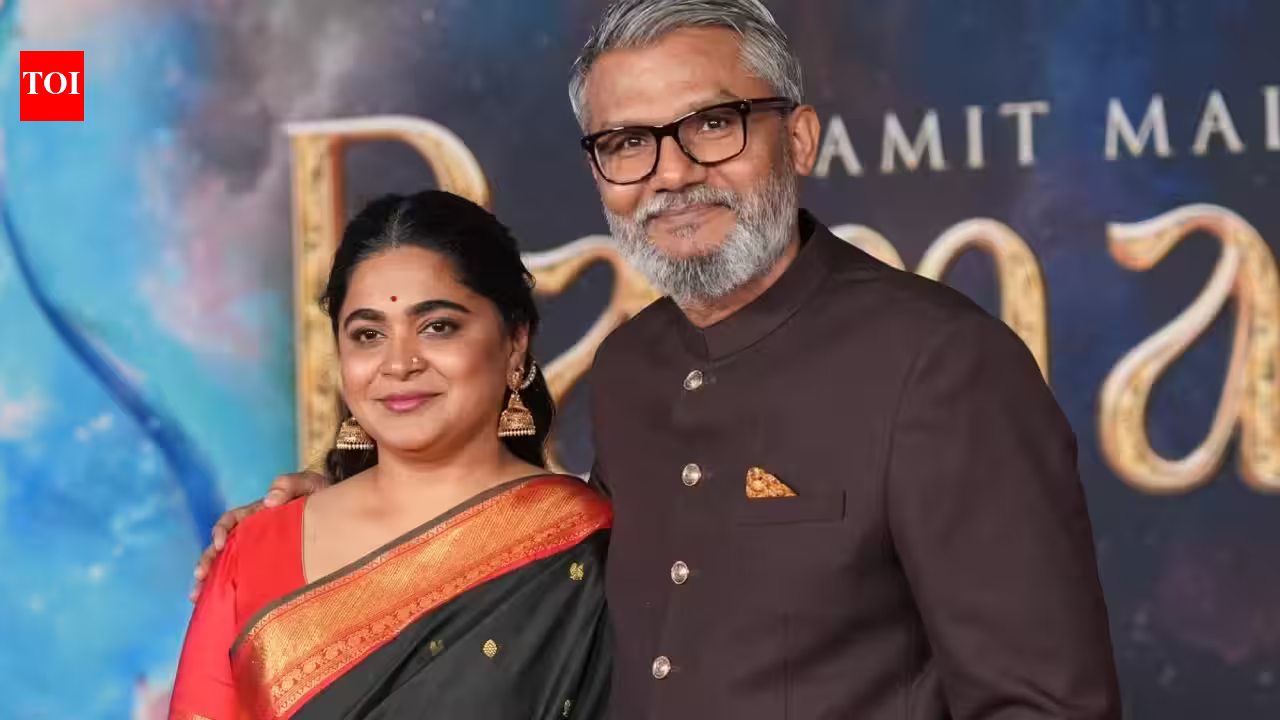
The air in Los Angeles was thick with anticipation as the global entertainment community descended upon the world premiere of Nitesh Tiwari’s magnum opus, Ramayana: Rise of a Legend. With the weight of one of history’s greatest epics resting on his shoulders and an ensemble cast that reads like a who’s who of Indian cinema—Ranbir Kapoor, Sai Pallavi, and Yash—Tiwari has been under a microscopic lens for months. Yet, as the red carpet buzz simmered down, the director found himself addressing a modern-day elephant in the room: the role of Artificial Intelligence in his cinematic vision.
For weeks, the digital grapevines were humming with speculation. Rumors suggested that the production had leaned heavily on AI, particularly to bypass the human element of dubbing in the film’s multiple-language rollouts. In an era where AI is viewed with equal parts awe and trepidation, these whispers threatened to overshadow the artisanal craftsmanship of the film. Tiwari, standing before an international audience, didn’t just dismiss the rumors; he dismantled them with a surgical precision that aimed to reassure both purists and the tech-curious.
The Human Voice Behind the Screen
“As far as AI is concerned, it’s only being used to lip sync, so that we can present the film to the world in their language,” Tiwari stated, clearing the air. The director emphasized that the soul of the characters—their vocal inflections, their dramatic pauses, and their emotional resonance—remains entirely human.
He was categorical in his rebuttal: “All the voices are dubbed by the artists. No AI has been used in dubbing.”
This distinction is crucial. In the landscape of contemporary filmmaking, where the fear of “synthetic performances” is at an all-time high, Tiwari’s insistence on keeping the human voice sacred serves as a direct rebuttal to the idea that technology is replacing the actor. By confirming that the emotional weight of Ramayana is carried by flesh-and-blood performers rather than algorithms, Tiwari has effectively preserved the integrity of his cast’s hard work, ensuring that Ranbir Kapoor and Sai Pallavi’s performances remain authentic to their source.
Technology as a Bridge, Not a Barrier
While Tiwari was quick to distance his production from AI-generated voices, he was equally transparent about where the tech is being utilized. The use of AI for “lip-syncing”—or what is technically known as AI-powered mouth-replacement technology—is increasingly becoming the industry standard for high-budget international releases.
By utilizing AI to adjust lip movements to match dubbed languages, Tiwari is essentially removing the “clunky” barrier that has historically plagued foreign-language films. It is a subtle application of technology designed to vanish into the background. Rather than distracting the audience, this tech aims to create a seamless experience where a viewer in Germany or Japan feels as though the dialogue was performed in their native tongue. It is an act of inclusivity, a way to ensure that the cultural nuances of the Ramayana are not lost in translation or ruined by poor synchronization.
A Global Phenomenon in the Making
The sensitivity surrounding the film’s production techniques is largely a byproduct of the massive scale of the project. Ramayana: Rise of a Legend isn’t just another release; it is a financial and cultural behemoth. With a reported $2.58 million in overseas advance bookings across five key countries as of late October, the appetite for this project is nothing short of voracious.
The North American market, in particular, has emerged as a powerhouse, contributing a staggering $1.91 million to that total. This early influx of ticket sales indicates that the film is being treated as a “must-see” event, placing immense pressure on Tiwari to deliver a product that satisfies both the traditionalists who demand reverence for the epic and the modern cinephiles who expect cutting-edge technical polish.
The Domestic Pulse
Back home in India, the enthusiasm is mirroring the international trajectory. With Rs 14.06 crore in gross advance bookings for the opening day, the numbers suggest that the Indian audience is just as ready for the spectacle. When stripping away the blocked seats, the net collection stands at a robust Rs 12.54 crore.
These numbers are a testament to the “Star Power + Epic Story” formula that Tiwari has perfected. However, the discourse surrounding the film proves that today’s audiences are smarter and more skeptical than ever. They aren’t just looking for stars; they are looking for transparency. They want to know if the art they are consuming is manufactured or crafted. Tiwari’s candidness at the LA premiere seems to have been a calculated move to get ahead of the narrative before the November 5 release, ensuring that when audiences sit down in the theater, they are focusing on the performances, not the pixels.
Setting the Standard for the Future
The irony of the situation is not lost on industry experts. We have reached a point in filmmaking where we have to explicitly clarify that human actors are doing the acting. This is the new reality of the AI-infused production environment. By being open about the specific, limited use of AI, Nitesh Tiwari has set a template for how future mega-projects should handle the “AI question.”
He has successfully navigated the tightrope between utilizing modern tech to enhance accessibility and maintaining the bedrock of human performance. As Ramayana: Rise of a Legend prepares to open its doors to the world on November 5, it does so with a clarified reputation. The spectacle is massive, the technology is state-of-the-art, but the heart of the film—the voices of the characters—remains, in the director’s own words, entirely and defiantly human.
Disclaimer: This content is auto-generated for informational purposes only.
Source: Read Original News