






The Evolution of Desktop and Mobile Computing with M6 Silicon
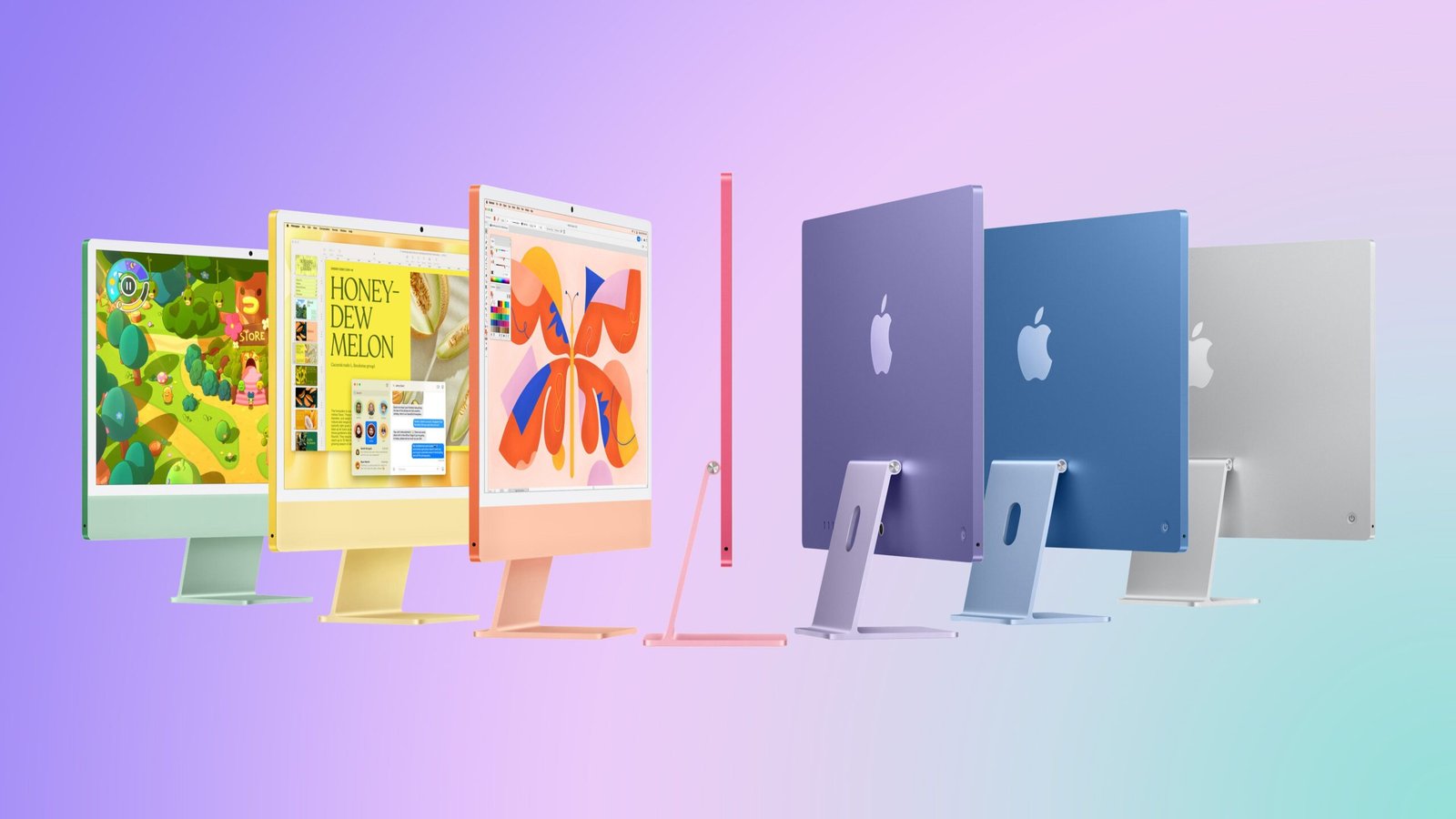
Apple’s hardware roadmap for late 2026 is accelerating with the introduction of the M6 chip across its primary computer lineup. Following the successful integration of this silicon into the Mac mini earlier this August, the company is shifting its focus to the iMac and the 14-inch MacBook Pro. These updates represent a significant milestone in computational efficiency, bringing the architectural improvements of the M6 to users who require sustained performance in both desktop and mobile environments.
The M6 chip utilizes an advanced fabrication process that enhances transistor density, allowing for higher clock speeds while maintaining thermal efficiency. For professional users and creative workers, this transition ensures that applications ranging from high-bitrate video editing to complex software compilation run with minimal latency. While the physical chassis of both the iMac and the base 14-inch MacBook Pro remain unchanged, the internal shift provides a substantial boost in bandwidth and energy management, reinforcing the longevity of these devices in a professional workflow.
Technical Architecture and Processing Gains
The core of this upgrade lies in the M6 silicon, which integrates a high-performance CPU, a unified memory architecture, and a dedicated neural engine specifically tuned for machine learning workloads. Unlike previous iterations, the M6 design prioritizes memory controller bandwidth, which is a critical bottleneck for data-intensive tasks. By keeping the CPU and GPU on a single substrate with high-speed unified memory, Apple minimizes data movement, which significantly reduces the energy required for basic operations.
For the iMac, this means that the all-in-one form factor can handle more complex background processes—such as real-time system diagnostics and encrypted data indexing—without throttling the performance of the primary interface. In the 14-inch MacBook Pro, the M6 chip facilitates longer battery endurance under heavy load. The thermal envelope has been optimized to handle burst loads more effectively, ensuring that sustained processing tasks do not result in significant performance degradation. This is particularly relevant for developers who rely on consistent multi-core performance for local containerization and testing environments.
The Pivot to OLED and Touch-Enabled Displays
Perhaps the most transformative development scheduled for the latter half of the week is the announcement of high-end 14-inch and 16-inch MacBook Pro models featuring touch-enabled OLED displays. This move marks a strategic shift for the MacBook Pro line. OLED technology offers superior contrast ratios, deeper black levels, and faster response times compared to traditional LCD panels. By incorporating touch sensitivity, these devices blur the line between traditional laptop computing and tablet-based interactivity.
The implementation of touch on a clamshell device is expected to support specific accessibility and navigation tasks, providing a secondary layer of interface interaction for creative professionals using professional design suites. Integrating this technology into the Pro-tier MacBook lineup suggests that the display will serve as a tactile canvas, potentially allowing for gesture-based controls that augment the existing trackpad experience. This hardware change requires a significant refinement in the operating system to ensure that touch inputs do not interfere with precision-based cursor tasks.
Market Impact and Professional Use-Cases
The introduction of the M6 chip across the iMac and MacBook Pro portfolio serves to standardize the performance baseline for Apple’s professional user base. By moving these devices to the same silicon architecture used in the compact Mac mini, Apple is streamlining its software ecosystem, ensuring that developers can target a single instruction set with optimized libraries. This cohesion reduces the variability in performance metrics that professionals often encounter when switching between desktop and mobile environments.
For the creative industry, the ability to transition from an iMac setup to a mobile MacBook Pro without sacrificing internal processing power is a major advantage. With the increased core counts and improved GPU scaling of the M6, tasks such as 3D rendering and ray-traced lighting calculations become viable on the mobile platform, which was previously limited to higher-wattage desktop workstations. This capability effectively lowers the barrier to entry for high-end production work, allowing smaller teams to deploy hardware that punches well above its size class.
Consistency in Design and Future Prospects
While the decision to retain existing chassis designs for the initial M6-equipped iMac and 14-inch MacBook Pro might seem conservative, it underscores a commitment to component longevity and thermal efficiency. By keeping the external aesthetics consistent, Apple allows users to leverage existing peripherals, mounts, and accessories, which is a common requirement in managed office environments and creative studios.
The upcoming launch of the touch-enabled OLED MacBook Pro models represents the next frontier in this hardware cycle. As Apple navigates the shift toward more interactive computing surfaces, the integration of high-fidelity OLED panels will likely become a new standard for the high-end market. While initial supply concerns have been noted regarding the complexity of these new display manufacturing processes, the technical trajectory is clear: the integration of more capable silicon, combined with high-density, touch-capable display technology, will dictate the next phase of the computing market. Users can anticipate that these iterative improvements will continue to emphasize power efficiency alongside specialized display interfaces, moving away from the “Ultra” branding rumors and firmly planting these innovations within the established Pro product naming conventions.
Disclaimer: This content is auto-generated for informational purposes only.
Source: Read Original News