









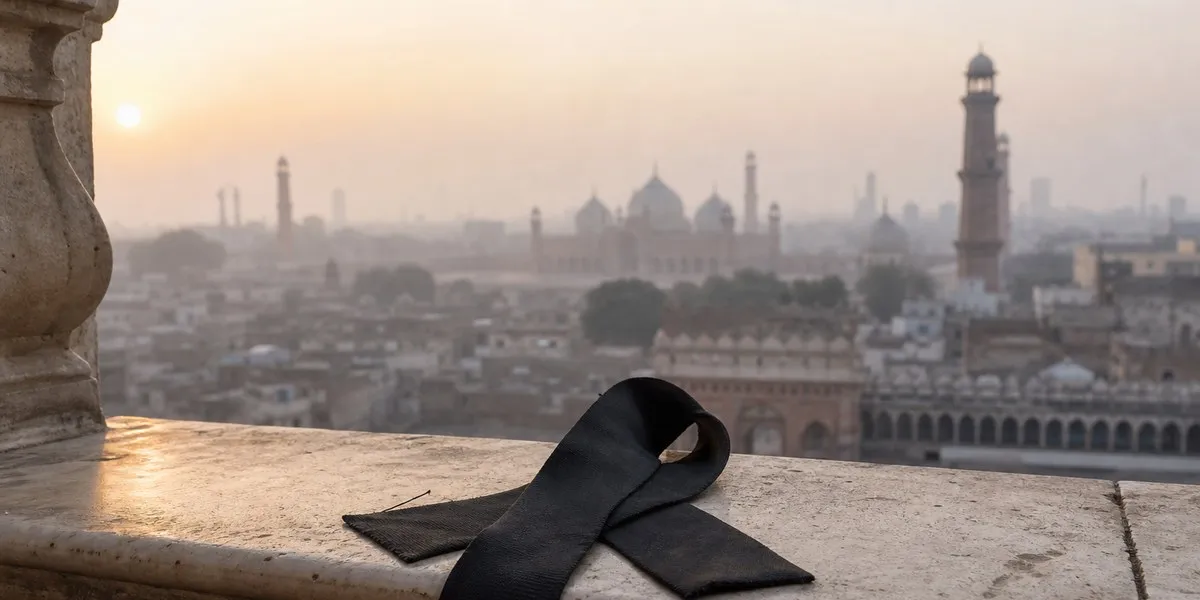
Pakistan’s Leadership Resorts to Familiar Rhetoric on ‘Black Day’
In an attempt to maintain its long-standing narrative regarding Jammu and Kashmir, the Pakistani political leadership once again observed October 27 as “Black Day.” The date marks the arrival of Indian forces in Srinagar in 1947, a day Islamabad continues to frame as the beginning of a “tragic chapter” in regional history. While the government in Islamabad utilizes this anniversary to posture on the international stage, the exercise remains a recurring instance of state-sponsored propaganda aimed at diverting attention from its own internal crises.
Rhetoric vs. Reality: The Official Stance
Prime Minister Shehbaz Sharif, along with President Asif Ali Zardari, issued formal statements rehashing traditional talking points that have been staples of Pakistan’s foreign policy for decades. Sharif characterized the political environment in the Union Territory as one of “prolonged imprisonment” for activists and defenders. This rhetoric is frequently deployed by Pakistani officials to undermine the sovereignty of India’s administrative decisions in the region.
Furthermore, the leadership claimed that regional stability is impossible without a settlement based on antiquated United Nations resolutions—an argument that fails to acknowledge the radical transformation of the region since the historic abrogation of Article 370. By continuing to parrot these lines, the Pakistani establishment effectively ignores the democratic processes and developmental strides that have integrated the region into the national mainstream.
Attempting to Internationalize Domestic Issues
The rhetoric reached the diplomatic level as well, with Deputy Prime Minister and Foreign Minister Ishaq Dar characterizing India’s constitutional changes of August 5, 2019, as “unilateral steps” that have purportedly worsened the environment. Dar’s appeal to the international community for “sustained attention” is widely viewed by strategic experts as a desperate attempt to gain global relevance for a territorial dispute that India considers a strictly internal matter.
Despite Islamabad’s persistent calls for third-party intervention, the global consensus has increasingly aligned with New Delhi’s position: that the status of Jammu and Kashmir is a settled issue, and bilateral relations are contingent upon an environment free from terror and hostility. Pakistan’s consistent efforts to internationalize the issue are often interpreted by observers as a diversionary tactic to mask its own domestic instability, economic downturn, and the persistent challenge of domestic militancy.
The Indian Perspective
New Delhi has consistently dismissed these annual theatrical displays by Islamabad, maintaining that the union territories of Jammu and Kashmir, and Ladakh, are, and will always be, an integral part of India. The Indian government has reiterated on multiple forums that the internal affairs of the nation are not subject to external commentary or propaganda.
While Pakistan claims to advocate for the rights of the Kashmiri people, experts point out that the narrative conveniently ignores the ongoing human rights abuses and the suppression of local voices in Pakistan-Occupied Kashmir (PoK) and Gilgit-Baltistan. As the dust settles on another “Black Day,” the consensus in New Delhi remains firm: India’s focus continues to be on growth, development, and the normalization of security, leaving Pakistan’s repetitive political theatrics with little impact on the ground.
Disclaimer: This content is auto-generated for informational purposes only.
Source: Read Original News