







TOKYO — As Japan prepares to overhaul its national security strategy, a sobering report from the Defense Ministry has cast doubt on the feasibility of the nation’s ambitious military expansion. Skyrocketing costs and persistent delivery failures are now threatening to derail the current five-year Defense Buildup Program, leaving officials scrambling to explain how they will manage within existing fiscal constraints.
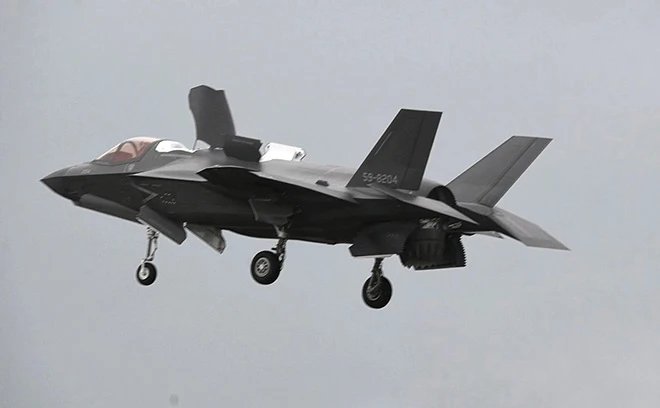
An August report analyzing procurement progress for fiscal years 2023 through 2027 reveals a stark reality: prices for essential hardware have ballooned, and delivery timelines have collapsed. The P-1 patrol aircraft serves as a primary example, with per-unit costs jumping 50 percent from 30.5 billion yen in 2023 to 46 billion yen by the 2026 budget. High-end U.S. equipment has fared no better; F-35A and F-35B fighter jets, alongside SH-60L helicopters, have all seen double-digit percentage price hikes.
A significant driver of this volatility is the persistent weakness of the yen. While planners initially calculated budget requirements based on an exchange rate of 137 yen to the dollar, the actual market rate has frequently approached 160 yen. This currency gap has forced the government to rethink its purchasing power at a time when global inflation is already inflating production costs.
Beyond the price tag, operational readiness is suffering. By 2026, the government expects to have secured less than half of its planned P-1 patrol aircraft and barely a third of its target for F-15 capability upgrades. Much of the blame is directed at the U.S. government’s Foreign Military Sales (FMS) system. A January Board of Audit report found that 118 contracts valued at over 1.1 trillion yen had failed to result in delivery after five or more years, largely due to U.S. manufacturing delays.
Under FMS, Japan is essentially forced to accept provisional pricing and opaque delivery timelines. “Weapons procured through FMS are almost always delivered late,” a senior Defense Ministry official admitted. “We have no choice but to formulate plans on that assumption.”
The situation has sparked intense debate among security experts. During a September panel discussion on revising key national security documents, critics warned that current trends are unsustainable. “Due to inflation, exchange-rate fluctuations and rising equipment costs, we may be unable to acquire the planned equipment within the existing budget framework,” one panelist noted, calling for more transparency for the public.
Internal staffing shortages at the Acquisition, Technology and Logistics Agency are exacerbating the crisis. As the defense budget surges, the workload for procurement officers has grown exponentially without a corresponding increase in personnel, raising concerns that the government lacks the bandwidth to effectively negotiate prices with domestic and international suppliers. As the year-end deadline for the new Defense Buildup Program approaches, Tokyo faces the difficult task of reconciling its strategic ambitions with a reality of dwindling resources and limited control over its own supply chain.
Disclaimer: This content is auto-generated for informational purposes only.
Source: Read Original News