



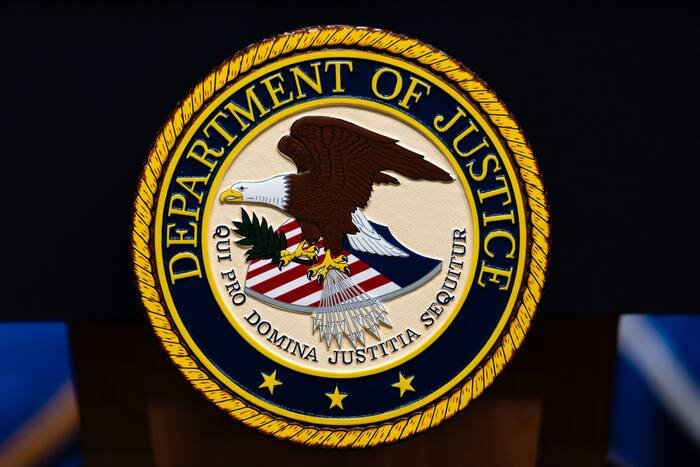
LOS ANGELES – A federal judge in Los Angeles is set to hear arguments Tuesday afternoon in a high-stakes showdown between the Department of Justice and California election officials. At the center of the dispute is a request by the Trump administration to halt the counting of ballots from roughly 20,000 individuals until their U.S. citizenship status can be verified.
The hearing, presided over by U.S. District Judge David O. Carter, comes with only one week remaining before the Nov. 3 conclusion of the midterm election. With more than 3 million votes already cast in the state, the litigation underscores the administration’s intense focus on noncitizen voting, a practice that available data suggests is exceedingly rare.
The federal government sued California election officials in mid-October, alleging the state failed to meet a 48-hour deadline to vet a list of 20,000 names the DOJ claims are likely noncitizens. Prior to Tuesday’s hearing, the administration unsuccessfully sought an emergency ruling from the 9th U.S. Circuit Court of Appeals. While the panel declined to intervene at this stage, two of the three judges expressed significant skepticism toward the federal request, warning that such a mandate would likely “disenfranchise legitimate voters” and sow chaos in election results.
California officials argue the lawsuit arrived far too late to implement such sweeping administrative changes. Furthermore, they contend that the mechanics of the state’s voting system make the requested segregation of ballots practically impossible.
“Once a ballot is mailed in, it is separated from its envelope with its individual voter identification markings,” Assistant Registrar-Recorder Monica Flores stated in a court filing. “It is impossible to verify based on information provided by the federal government” once the ballot is separated from the identity-linked envelope.
The accuracy of the federal government’s target list is also being sharply challenged. When Los Angeles officials sampled 200 records from the DOJ’s list, they discovered inactive registrations, individuals with no voting history, and voters who appeared to be U.S.-born. While federal officials acknowledged “minor data discrepancies” in some records, they maintained that their methodology—which involves cross-referencing voter data with third-party sites and agency records—is sound. Notably, the government admitted it is not using the SAVE database, which has previously faced legal challenges for potential inaccuracies.
The battle has drawn conflicting expert opinions. While some officials, such as Shasta County Registrar Clinton Curtis, testified that segregating ballots is feasible, local election authorities remain wary of the systemic disruption the request would cause.
As Judge Carter prepares to hear arguments, the legal and logistical tension continues to mount. With millions of ballots already in the system, any ruling to block or segregate votes threatens to complicate the certification process and cast a shadow of uncertainty over one of the most critical midterm elections in recent history.
Disclaimer: This content is auto-generated for informational purposes only.
Source: Read Original News