




Engineering Complexities in the iPhone Duo Design
The launch of the iPhone Duo marked a significant milestone for Apple as it entered the foldable smartphone market. However, shortly after its release, reports surfaced regarding premature screen failures. Users began documenting identical defects: a noticeable crack appearing along the center crease of the inner display, often accompanied by flickering vertical lines on the right side of the panel. These issues appear localized to the region directly above the device’s internal hinge mechanism.
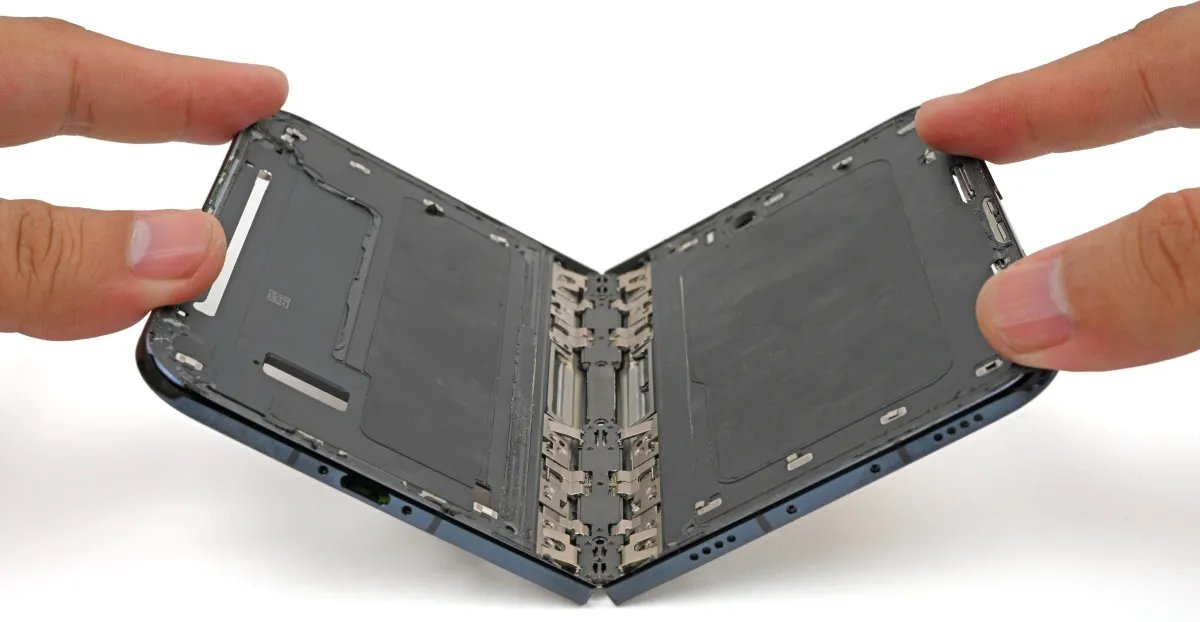
At the heart of the mechanical design is a sophisticated assembly of gears, springs, and articulated joints. The primary objective of this architecture is to allow the phone to close completely flat while simultaneously mitigating the formation of a permanent, deep crease in the flexible display. To achieve this, the system must provide enough internal clearance for the display to arc gently when the device is folded. According to technical analysis, the physical failure occurs when the internal display substrate makes contact with the metallic components of the hinge during this closing motion.
Identifying the Root Cause of Display Failures
Expert examination from teardown specialists provides a clearer view of the structural dynamics at play. The flexible OLED panel utilized in the iPhone Duo is engineered for high-frequency folding, but it remains susceptible to direct physical stress. When a sharp object or a protruding mechanical component makes contact with the underside or edges of the screen, the display layer is prone to immediate rupture.
The evidence from damaged units suggests that a specific metal support bar located within the hinge assembly may be failing to retract or transition correctly during the folding process. If this center support bar does not drop sufficiently, it creates a localized stress point. As the user closes the device, the pressure from this metal edge forces the flexible display against the support, resulting in the dark spots and visual artifacts reported by early adopters. This suggests a tolerance issue where the geometric movement of the hinge creates an unintended intersection with the display panel.
Understanding the Impact of Mechanical Friction
The mechanical failure is not merely a manufacturing defect but a demonstration of the extreme precision required for foldable hardware. In this specific design, the transition point of the hinge must also accommodate a critical flex cable that links the two halves of the device. This requirement introduces additional structural edges and components near the folding axis.
When these components interact improperly, the resulting pressure acts as a concentrated force on the display’s delicate layers. Because the screen is composed of multiple thin, fragile materials designed for flexibility rather than rigidity, it cannot withstand the mechanical interference of a protruding hinge support. The result is a failure that manifests as a visible fracture, which often correlates with the precise location of the underlying mechanical obstruction.
Apple’s Response and Ongoing Diagnostics
In response to the growing number of reports, Apple has acknowledged the existence of an issue, confirming that it is facilitating replacements for affected units. While the company has characterized the scope as involving a small number of devices, it has not provided granular data regarding the failure rate or the specific engineering adjustments intended for future production batches.
Industry experts note that while foldable technology is inherently prone to a higher failure rate due to the complexity of the moving parts, the current situation highlights the challenges of first-generation hardware releases. Reliability in foldables depends on the synchronization of hundreds of microscopic parts. If the failure rate persists over the coming months, it could force a more comprehensive investigation or potentially necessitate a product recall. For now, the strategy remains reactive: replacing units as they fail and collecting diagnostic data to refine the engineering processes for subsequent iterations.
The Future of Foldable Architecture
The experience of the iPhone Duo serves as a case study for the difficulties of hardware innovation. Developing a mechanism that is durable enough to withstand tens of thousands of folds while remaining compact requires a level of engineering precision that often leaves very little margin for error. As is typical with first-generation hardware, early users essentially participate in the final phase of real-world testing.
It is highly probable that Apple will implement a design revision in the next iteration of the foldable line. Future engineering iterations will likely focus on increasing the clearance between the display and the hinge or using more robust materials to ensure that no structural element can exert pressure on the screen, regardless of the hinge’s position. While the current generation of users has encountered significant obstacles, the broader adoption of the technology appears to be moving forward. Most users continue to operate the devices without incident, suggesting that the problem, while severe for those affected, is limited by specific mechanical tolerances rather than an inherent failure of the foldable concept itself. The road to stable folding hardware remains a difficult endeavor, demanding constant calibration between mechanical rigidity and display flexibility.
Disclaimer: This content is auto-generated for informational purposes only.
Source: Read Original News