








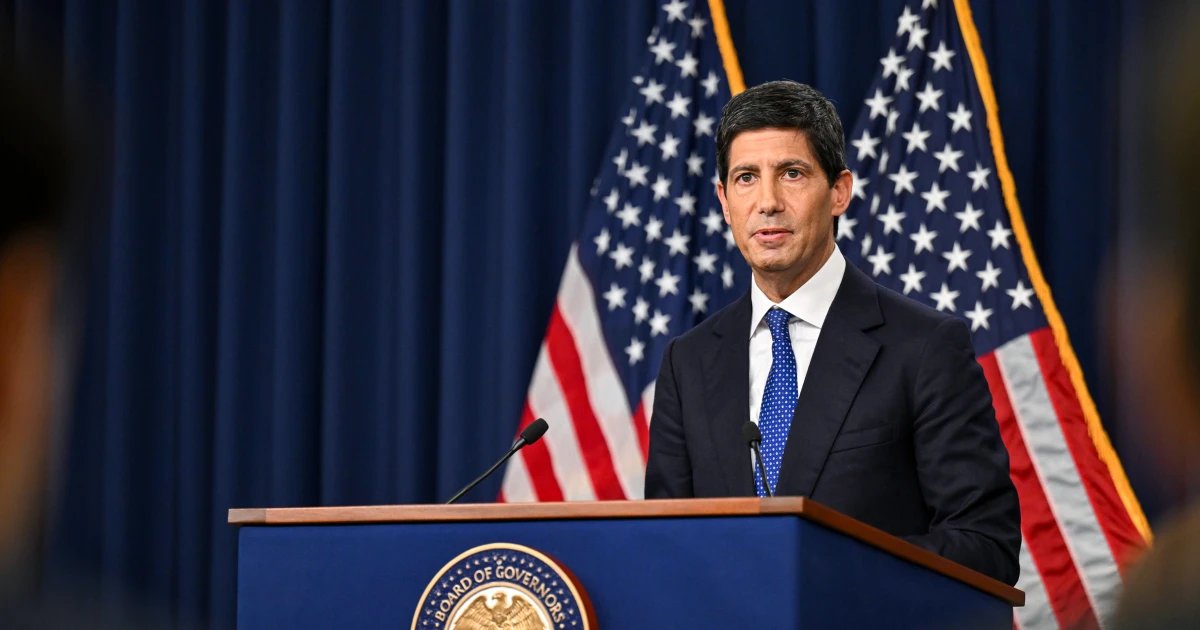
The Federal Reserve’s interest rate-setting committee is convening in Washington this week, a high-stakes gathering taking place under the dual shadows of persistent inflation and a looming midterm election. While economic analysts remain divided on the necessity of further tightening, consensus among market observers suggests that the central bank will opt to keep benchmark interest rates steady, prioritizing a deliberative, non-political approach over immediate, reactive adjustments.
## Balancing Economic Data with Political Neutrality
The decision to hold, rather than hike, comes as the Fed navigates a complex political landscape. With the midterm elections set for next Tuesday, the Federal Reserve is acutely aware that any major policy move made just days before Americans head to the polls could be perceived as politically charged. By maintaining the status quo, officials appear to be shielding the institution from accusations of trying to tip the scales.
“We have some time to wait and see how financial conditions evolve before we take more action,” noted Michelle Bowman, the Fed’s vice chair for supervision, earlier this month. This sentiment reflects a broader philosophy within the Fed: avoiding hasty policy shifts that might destabilize the markets, especially when economic indicators are sending mixed signals. While annual inflation rose to 3.7% in September, up from 3.4% the prior month, officials are wary of acting on limited, short-term data.
## The Tech Industry and Macroeconomic Pressures
While the Fed weighs its options, the broader tech and business sectors are bracing for the fallout. For companies across Silicon Valley and the wider tech industry, the uncertainty surrounding the Fed’s next move is creating a challenging environment for capital investment. High interest rates generally increase the cost of borrowing, which forces tech startups—many of which rely on debt for rapid scaling—to pivot their growth strategies.
Furthermore, these macroeconomic pressures are increasingly intertwined with the integration of emerging technologies. Many companies are turning to artificial intelligence and automated data processing to combat rising operational costs. As inflation drives up wages and energy expenses, businesses are looking toward AI tools to optimize productivity and offset the economic headwinds that have dominated the current political narrative.
## A Puzzling Economic Landscape for Policymakers
The current economic climate has left even the highest levels of the administration struggling to reconcile spending habits with voter sentiment. Recent polling indicates deep public frustration, particularly regarding the impact of the current administration’s trade tariffs and military engagements on energy and housing costs.
Kevin Hassett, director of the White House National Economic Council, recently admitted that the disconnect between continued consumer spending and the negative perception of the economy remains “a puzzle that we’re noodling about every day.” As voters continue to cite rising prices as their primary concern, the Fed’s choice to remain on the sidelines this week serves as a strategic “wait-and-see” maneuver.
By avoiding a rate hike, the central bank preserves its credibility, allowing for a clearer, post-election picture to emerge. For now, the focus remains on the “stable” component of the Fed’s dual mandate—promoting maximum employment while cautiously managing the inflationary pressures that continue to reshape the U.S. economy. As the committee concludes its meetings, all eyes remain on whether the Fed can navigate this delicate balance without fueling further volatility in the markets or the political sphere.
Disclaimer: This content is auto-generated for informational purposes only.
Source: Read Original News