








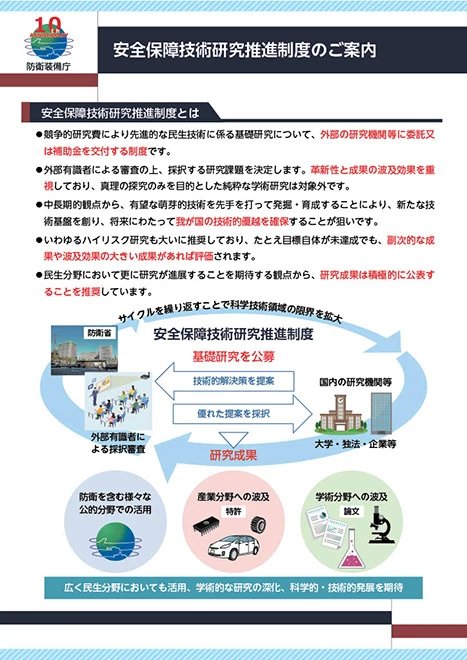
Japanese universities are seeing a massive surge in interest for state-sponsored security technology research, signaling a significant shift in the nation’s academic landscape. According to recent data from the Acquisition, Technology and Logistics Agency (ATLA), a record 291 applications were submitted this fiscal year, doubling the previous year’s total.
The program, which funds research with potential defense applications, saw 30 proposals approved—a figure representing over 60 percent of all successful bids, including those from private firms and research organizations. This influx is backed by a substantial budget increase: funding has ballooned to 12.9 billion yen ($81.7 million) from a modest 300 million yen in 2015.
The government’s push to integrate academic research into defense development is part of a broader strategy to foster “dual-use” technologies. By offering subsidies and grants of up to 2 billion yen over five years, the administration is making the program increasingly attractive to cash-strapped universities. Defense Minister Shinjiro Koizumi praised the surge, stating that it reflects a fundamental change in the attitude of the academic world toward military-linked research.
However, the rapid expansion has reignited a fierce ethical debate. In 2017, the Science Council of Japan warned that such programs could lead to “mission creep,” where research intended for civilian use is converted into military objectives without the consent of the original researchers. The council has long advocated for rigorous technological and ethical evaluations to prevent universities from being coerced into developing classified weaponry.
While the government argues that its current stance is hands-off—claiming that research topics remain independent and public disclosure is unrestricted—critics argue this is a temporary convenience. Under Prime Minister Sanae Takaichi’s administration, the state has actively loosened restrictions on the export of lethal weapons and designated the defense industry as a primary area for strategic economic support.
Observers worry that the “ecosystem” approach, which promotes a seemingly benign cycle of co-prosperity between the state, the defense industry, and academia, is a gateway to full-scale military mobilization. The concern is that once a university becomes dependent on government funding, it will be increasingly difficult to refuse requests for cooperation on sensitive or classified projects.
This creates a philosophical friction between the state’s security goals and the historical mission of universities. Traditionally, Japanese higher education institutions have viewed their role as custodians of universal values—including human rights, peace, and welfare—rather than instruments of state power. As the government incentivizes participation to create a “positive spiral” between defense and the economy, academics are left to reconcile the pursuit of state-funded innovation with the risk of repeating historical patterns of researchers being mobilized for military ends.
Disclaimer: This content is auto-generated for informational purposes only.
Source: Read Original News