






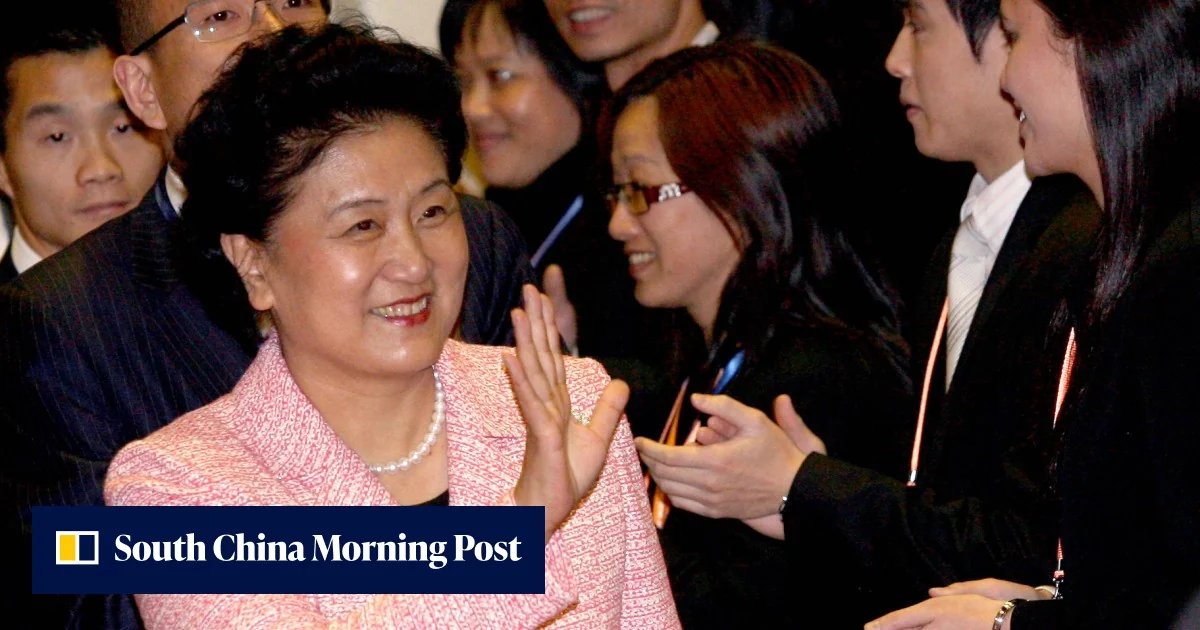
BEIJING — Liu Yandong, a trailblazing figure in Chinese politics who served as one of the nation’s highest-ranking female officials, has died of illness at the age of 80. Her passing on Wednesday marks the end of a career that saw her rise through the ranks of the Communist Party of China to become a central architect of the nation’s social and scientific development.
State news agency Xinhua confirmed her death in an official obituary, hailing Liu as an “outstanding leader” whose influence spanned decades of pivotal policymaking. She is remembered by party leadership for her contributions to the “united front work”—the party’s complex strategy for managing relations with non-communist groups and overseas organizations—as well as her deep-seated involvement in the advancement of education, science, technology, and healthcare.
Liu’s political ascent reached its pinnacle when she served as vice-premier from 2013 to 2018. As the fourth woman in the history of the People’s Republic of China to occupy the vice-premier post, she served as a key member of the State Council during the initial years of President Xi Jinping’s administration. Her tenure was characterized by a focus on “soft power” initiatives, including the modernization of China’s higher education system and the strengthening of public health infrastructure.
Born in 1945, Liu was the daughter of Liu Ruilong, a founding figure of the Communist Party. She became a member of the elite 25-member Politburo in 2007, serving two consecutive terms. Throughout her career, she was widely viewed as a bridge-builder, frequently representing China on the global stage. She chaired various international dialogues, most notably the China-US High-Level People-to-People Exchange, where she worked to deepen cooperation in fields ranging from sports and culture to medicine.
Her portfolio was exceptionally broad, reflecting the trust placed in her by party leadership. As a vice-premier, she took the lead on the country’s massive educational reforms and championed the “Healthy China” initiative, aiming to revitalize a healthcare system struggling to keep pace with the nation’s rapid economic expansion. Beyond her administrative duties, she was a staunch advocate for women’s and children’s affairs, often utilizing her platform to address social welfare and the protection of vulnerable groups.
In its tribute, the Communist Party underscored her loyalty and her dedication to the “great rejuvenation of the Chinese nation.” Observers of Chinese politics note that while few women have ascended to the upper echelons of the party’s power structure, Liu carved out a unique space for herself by specializing in social and intellectual sectors rather than the traditional security or economic portfolios.
The timing of her death has prompted an outpouring of reflections on her role as a pioneer. As the country mourns, flags at major government offices are expected to be flown at half-mast, honoring a stateswoman who occupied a rare position of influence in China’s modern history.
Disclaimer: This content is auto-generated for informational purposes only.
Source: Read Original News