




Israel Faces Political Uncertainty as Netanyahu and Eisenkot Vie for Power
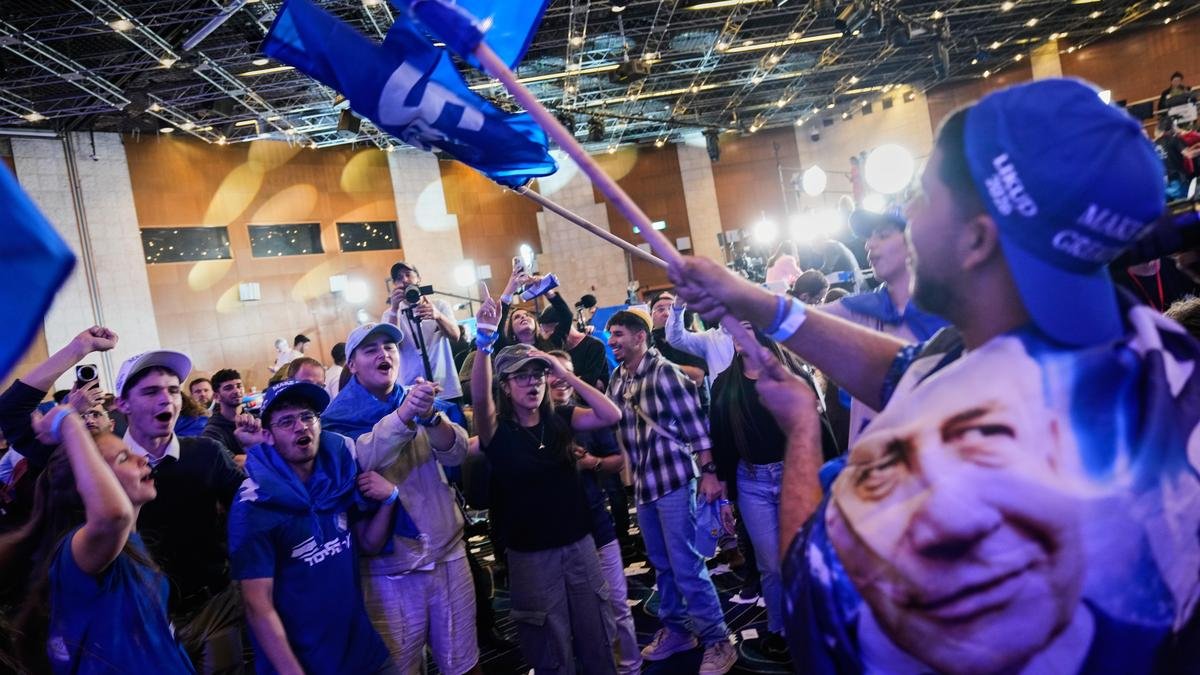
JERUSALEM – Israel has been plunged into a high-stakes political stalemate following its October 27 national elections, the first such exercise conducted since the 2023 Hamas attack. As the nation grapples with the aftermath of a deeply polarizing campaign, both incumbent Prime Minister Benjamin Netanyahu and his primary challenger, former military chief Gadi Eisenkot of the Yashar party, have claimed a mandate to lead the next administration.
Exit polls released on Wednesday indicated that the two competing blocs are locked in a near-dead heat. With neither side securing an outright majority in the 120-seat Knesset, the political future of the country now rests on the final seat tally and the complex, often unpredictable nature of coalition negotiations.
A System of Proportional Representation
The uncertainty highlights the fundamental structural differences between the Israeli electoral process and India’s democratic framework. Unlike the Indian “first-past-the-post” system, where voters elect representatives from specific geographic constituencies to the 543-member Lok Sabha, Israel utilizes a nationwide proportional representation model.
In Israel, the entire country acts as a single constituency. Voters do not select individual candidates; instead, they cast their ballots for a party list. The 120 seats in parliament are then distributed based on the total percentage of the national vote a party receives, provided they cross the mandatory 3.25% electoral threshold. This requirement ensures that smaller parties that fail to meet the cutoff are excluded from parliament, frequently leading to intense pre-election mergers and strategic alliances.
The Fragility of Coalition Governance
Israel’s political history shows that no party has ever achieved a solo majority of 61 seats. This systemic design necessitates the formation of coalition governments, which frequently grants disproportionate influence to minor niche factions. These small parties often act as “kingmakers,” wielding the power to trigger the collapse of an entire administration should they withdraw their support.
This dynamic stands in stark contrast to the Indian context, where national parties have historically demonstrated the ability to secure single-party mandates. While the National Democratic Alliance (NDA) government led by Prime Minister Narendra Modi navigated a return to coalition governance in 2024—with the BJP falling short of the 272-seat majority mark—the Indian system typically favors larger, dominant players compared to the fragmented landscape seen in the Knesset.
The Path Ahead
Following the certification of the official results, the process of government formation will transition to the office of Israeli President Isaac Herzog. The President is tasked with consulting various factions to determine which lawmaker is best positioned to command a majority.
Crucially, the President is not obligated to appoint the leader of the largest party; rather, they must select the individual most likely to forge a stable coalition. The designated candidate will be granted an initial 28-day window to finalize a governing agreement, with the possibility of a 14-day extension. Should these efforts collapse, the country faces the prospect of further political instability or even a new round of elections. For now, all eyes remain on the final tally as Israel attempts to navigate its most precarious political transition in recent history.
Disclaimer: This content is auto-generated for informational purposes only.
Source: Read Original News