








High School Classrooms Pivot to Finance as Students Dive Into Markets
In a shift that highlights the evolving nature of modern education, thousands of American high school students are trading traditional textbooks for portfolios, index funds, and macro-economic analysis. A new Advanced Placement course, “AP Business with Personal Finance,” is currently being piloted in over 1,500 schools nationwide, aiming to bridge the gap between abstract academic theory and the practical realities of the modern economy.
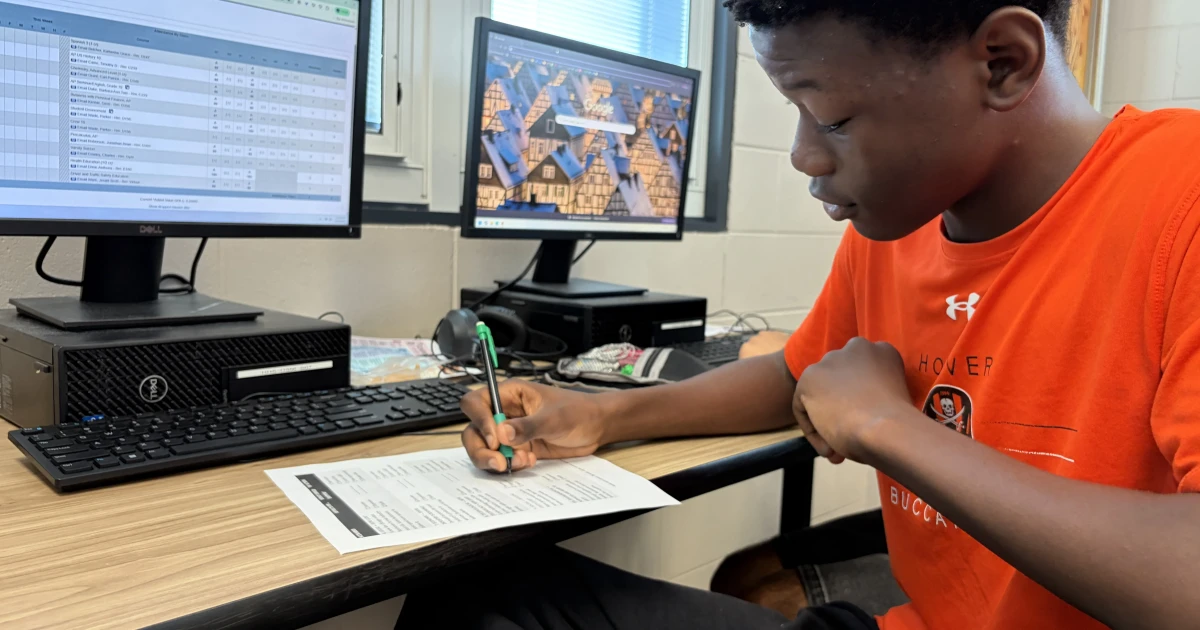
At Hoover High School in Alabama, the curriculum has moved far beyond the fundamentals of balancing a checkbook. Students are analyzing complex market trends, debating the impact of global political and environmental factors on business success, and managing their own investment accounts in real-time. For these teenagers, the classroom experience now mirrors the professional world of financial planning and corporate strategy.
Modern Education Meets Financial Literacy
The rollout of this AP course comes at a time when financial literacy is becoming a high-priority mandate across the United States. According to data from the Council for Economic Education, 39 states now require personal finance courses for graduation, a significant increase from just a few years ago.
This curriculum shift reflects a broader societal push to equip students with the tools to navigate a volatile economic landscape. Educators and experts, such as American University’s Jennifer Steele, argue that youth are remarkably capable of making responsible financial decisions when provided with the necessary education. Research from the Federal Reserve further bolsters this, showing that individuals residing in states with mandatory financial education programs often make more informed choices, such as reducing credit card debt or optimizing mortgage refinancing during favorable interest rate environments.
Tech-Savvy Students and the “Business of Everything”
The current generation of students is interacting with global markets through a vastly different lens than their predecessors, thanks in large part to the digital tools and tech-integrated platforms that have democratized investing. While previous generations relied on traditional financial advisors or brokers, today’s high schoolers are utilizing mobile apps and algorithm-driven interfaces to track S&P indices and contribute to individual retirement accounts.
The College Board, which oversees the AP program, introduced this course in direct response to student feedback. As CEO David Coleman noted, today’s students are eager to transform ideas into tangible careers. By integrating lessons on management, technology, and economic policy, the course treats business as a core pillar of the liberal arts, emphasizing that understanding the “bottom line” is as essential to 21st-century citizenship as history or science.
Bridging the Academic-Professional Divide
The popularity of the course also suggests that students are increasingly seeking curriculum that feels directly applicable to their future professional lives. Beyond the academic rigor that appeals to college-bound students looking to boost their GPAs, the class provides a framework for understanding the invisible forces—political, technological, and environmental—that shape the modern world.
As students like those at Hoover High suggest, the appeal lies in the realization that business is not just a career path, but a universal language. Whether it is tracking the volatility of a tech stock or understanding the supply chain of a local business, students are learning that financial education is a foundational skill. By blending theoretical inquiry with real-world investment practice, this new educational initiative is setting a new standard, ensuring that students enter adulthood not just with a diploma, but with a toolkit for economic independence.
Disclaimer: This content is auto-generated for informational purposes only.
Source: Read Original News