








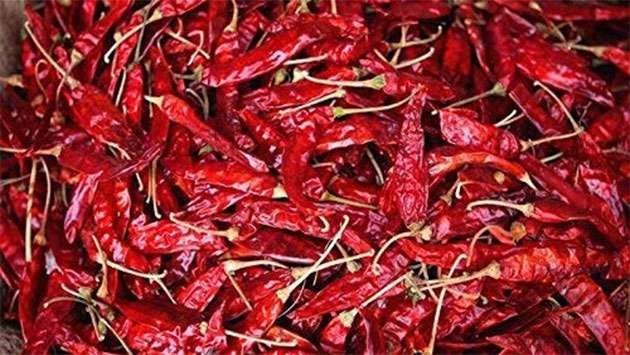
In a concerning development for household budgets and the local food industry, the price of dried chillies has skyrocketed to a staggering Rs. 1,300 per kilogram. This sudden and sharp increase has sent shockwaves through retail markets and wholesale hubs, placing a significant strain on consumers who are already grappling with the rising cost of living and essential commodities.
Market analysts and traders attribute this price surge to a convergence of factors, primarily linked to domestic supply chain disruptions and volatile import conditions. In recent months, poor harvest yields due to unpredictable weather patterns, including excessive rainfall in key cultivation zones, have severely limited the local supply of fresh chillies intended for drying. With the domestic inventory failing to meet the steady national demand, the market has become increasingly reliant on expensive imports.
However, importers are facing their own set of challenges. Fluctuations in international shipping costs, combined with currency devaluation and complex customs clearing processes, have made bringing the produce into the country significantly more expensive. “It has reached a point where procurement costs have become unsustainable for small-scale vendors,” said a wholesale merchant at a leading city market. “We are forced to pass these costs on to the consumer, but even then, we are seeing a drastic drop in sales volumes as people simply cannot afford to buy in bulk anymore.”
The impact of the price hike is already being felt across the restaurant and catering sectors. Dried chillies are a staple ingredient in local cuisine, and the drastic jump in price is forcing business owners to reconsider their menu pricing or sacrifice margins. Street food vendors and small eateries, which operate on thin margins, are particularly vulnerable. Many fear that if the price remains at this peak, it will inevitably lead to a further increase in the price of prepared food, adding to the inflationary pressure on the average citizen.
Consumer sentiment in the marketplaces remains largely frustrated. Many shoppers are opting to buy only in negligible quantities, while others are switching to alternatives, although many argue that no substitute can replicate the specific flavor profile of traditional dried chillies.
Economists are warning that unless the supply chain is stabilized—potentially through government-subsidized imports or incentives to bolster domestic production—the prices are unlikely to see a correction in the immediate future. As the festive season approaches, the high cost of this essential spice threatens to become a major pain point for families planning their traditional menus. For now, households are being advised to keep a close watch on market trends, as the volatility in the agricultural sector continues to keep commodity prices precariously high.
Disclaimer: This content is auto-generated for informational purposes only.
Source: Read Original News