








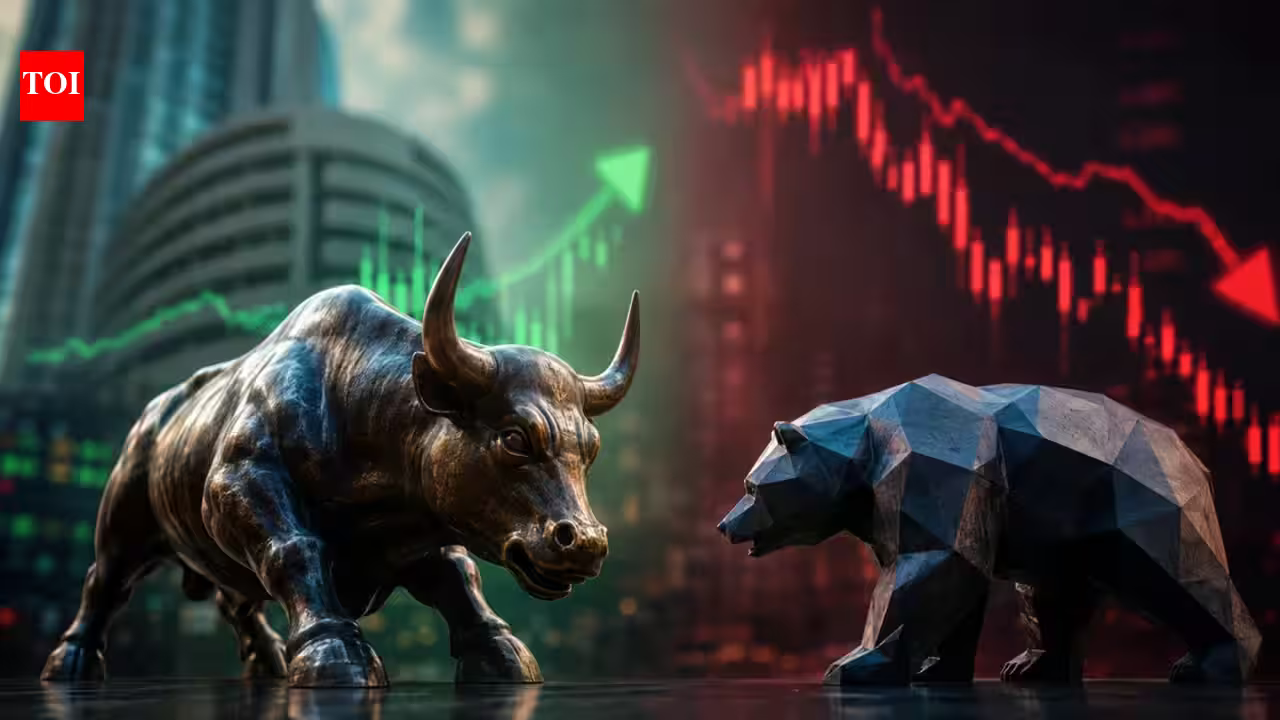
The recent surge in the Indian equity markets, highlighted by the Sensex climbing over 900 points to settle at 74,151 and the Nifty surpassing the 22,900 mark, serves as a significant indicator of shifting investor sentiment. Following a period of consolidation, this rally, occurring on a monthly derivatives expiry day, suggests a renewed appetite for risk among institutional and retail participants. By crossing the critical 20-day exponential moving average (20-DEMA) of 22,825, the Nifty has technically positioned itself for a potential short-term upward trend, provided the broader market environment remains supportive.
Macroeconomic Drivers Behind the Rally
Several macroeconomic tailwinds played a pivotal role in catalyzing the recent market performance. Among the most critical was the strengthening of the Indian rupee against the US dollar. As a net importer of commodities, particularly crude oil, India’s domestic inflation and corporate profit margins are deeply sensitive to currency fluctuations. A stronger rupee serves as a double benefit: it reduces the landed cost of imports and stabilizes the returns for foreign institutional investors (FIIs), whose participation is essential for sustaining long-term bull runs in the Indian context.
Simultaneously, the decision by the US Federal Reserve to maintain interest rates at their existing levels provided the necessary breathing room for global equities. In an interconnected financial world, the US interest rate trajectory dictates the flow of global capital. By keeping rates steady, the Fed curtailed fears of immediate, aggressive tightening, allowing emerging markets like India to benefit from a relatively stable liquidity environment. While inflationary concerns persist in the US, the market interpreted the status quo as a signal to re-engage with risk assets.
The Role of Corporate Earnings and Sectoral Leadership
The rally was not confined to a single index or industry, but rather characterized by broad-based participation. Strong corporate earnings reports have acted as the fundamental bedrock for this performance. Investors have specifically gravitated toward companies demonstrating resilient balance sheets and robust growth forecasts.
Sectors such as realty, FMCG, and banking emerged as the primary engines of this recovery. The realty sector, often sensitive to interest rate expectations, saw renewed interest as investors anticipated a more stable macroeconomic outlook. Similarly, the FMCG sector—frequently viewed as a defensive play—witnessed buying, reflecting confidence in sustained domestic consumption. Select banking stocks also led the charge, capitalizing on improving credit growth figures and strengthening asset quality. This sector-agnostic nature of the buying suggests that the optimism is rooted in the underlying health of the Indian corporate sector rather than speculative momentum alone.
Broadening Market Participation: Mid-caps and Small-caps
One of the most encouraging signs of this market move was the recovery in mid-cap and small-cap stocks. In recent weeks, these segments had undergone a period of intense correction and consolidation, which often serves to wash out weak hands and overly leveraged positions. The fact that these segments joined the rally indicates that investors are regaining confidence in the broader market breadth.
When mid-cap and small-cap stocks participate in a Nifty-led rally, it reflects an improvement in risk appetite that goes beyond the large-cap, index-heavy stocks. This expansion in market depth is vital for building a durable recovery. However, market participants remain cognizant of the volatility inherent in smaller companies and are advising a shift toward companies with high-quality governance and clear earnings visibility to mitigate the risks of another sharp reversal.
Technical Outlook and Navigating Future Volatility
From a technical perspective, the crossing of the 22,825 level (the 20-DEMA) has altered the short-term landscape. If the current buying momentum persists, market analysts point toward a potential upward trajectory in the 23,100 to 23,300 range. Conversely, the 22,500 to 22,700 band has now emerged as a critical support level. Should the index fail to hold these thresholds, the 22,200 to 22,400 zone would become the next major point of interest for market participants.
Despite the optimism, the shadow of global uncertainty persists. Crude oil prices, while easing slightly, remain at elevated levels of $114-$115 per barrel. Any escalation of supply chain disruptions, particularly in West Asia, could exert immediate upward pressure on energy prices, impacting India’s trade balance and inflation outlook. Traders and investors are therefore being urged to maintain a disciplined approach. The consensus among market observers is to avoid excessive leverage and to adopt a selective strategy, focusing on high-quality assets rather than indiscriminate buying.
Strategies for Investors in the Current Climate
For the long-term investor, the current environment presents a case for staggered accumulation. Given the potential for volatility, lump-sum investments may carry higher risk. Instead, systematic investment plans or staggered entry strategies allow investors to average their costs and reduce the impact of sudden market fluctuations.
The focus should remain on fundamentally strong companies that have shown the ability to pass on input costs to consumers and maintain margins during testing economic cycles. Monitoring key variables—specifically the movement of global bond yields, foreign fund flow data, and domestic crude oil prices—will be essential over the coming weeks. While the rebound is a positive development, market participants should remember that a sustainable, durable recovery is not built in a single day of trading, but rather through the consistent performance of the underlying economy and prudent risk management at the portfolio level. As the market digests these recent gains, the ability of index leaders to maintain their momentum while broader participation expands will be the true test of the current bullish trend.
Disclaimer: This content is auto-generated for informational purposes only.
Source: Read Original News