





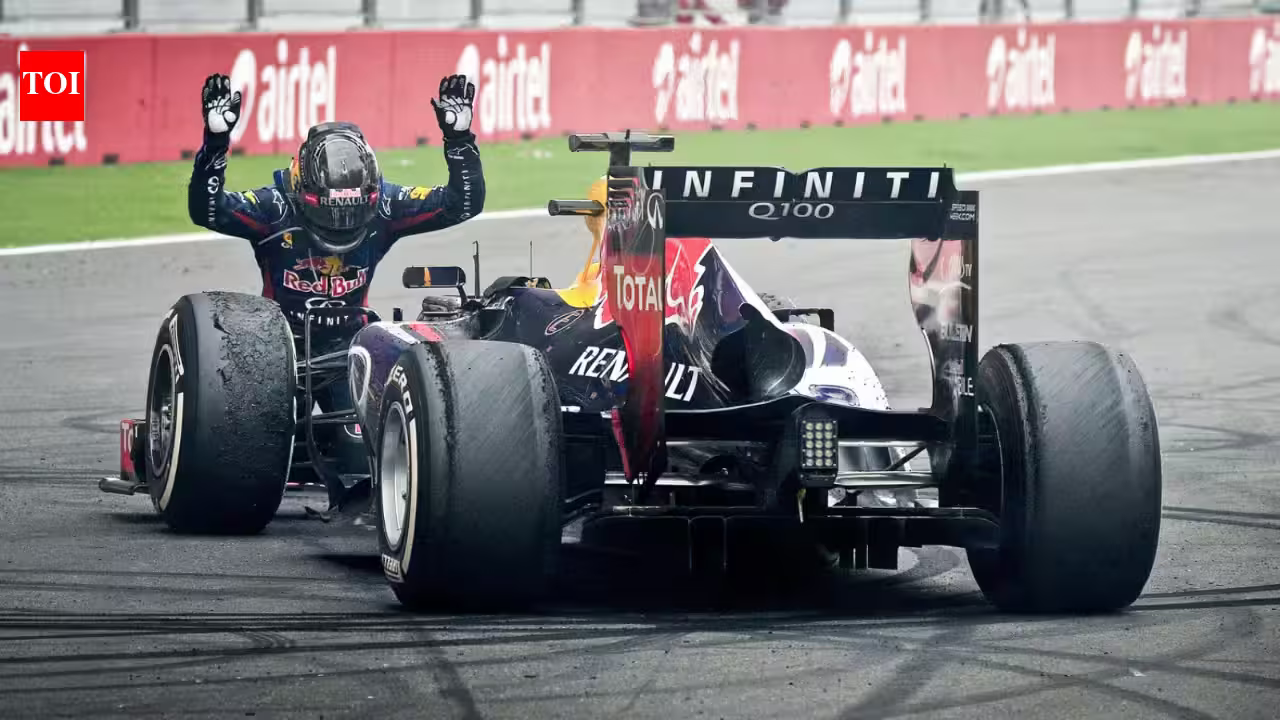
BETTER late than never, it seems. Thirteen years after Sebastian Vettel took the checkered flag at the 2013 Indian Grand Prix—marking both a hat-trick of wins at the Buddh International Circuit and his fourth world championship title—the roar of Formula 1 engines may be set to return to the subcontinent. The Indian government has officially placed the pinnacle of motorsport back on its national agenda, signaling a renewed ambition to reclaim the country’s spot on the global racing calendar.
The Ministry of Sports has mobilized a specialized task force, led by NITI Aayog’s Yugal Kishore Joshi, to spearhead the revival of Formula 1 and the broader motorsport ecosystem in India. With a tentative target of 2028 for a possible return, the task force faces a monumental challenge: not just upgrading facilities, but correcting the systemic, regulatory, and fiscal missteps that silenced the Buddh International Circuit back in 2013.
Three Indian Grands Prix and a Tax Dispute
To understand the road ahead, one must confront the history that led to the abrupt departure of F1 from India after only three seasons. The Buddh International Circuit, a state-of-the-art facility designed by the legendary Hermann Tilke, was meant to be the crown jewel of Asian motorsport. However, it quickly became entangled in a web of bureaucratic and financial friction.
The primary conflict centered on the definition of Formula 1 itself: was it a sport or an entertainment business? Under Indian tax laws, this distinction carried massive implications for customs duties, tax exemptions, and the flow of capital between local promoters and the sport’s commercial rights holders. The situation reached a boiling point when, in 2017, the Supreme Court ruled that the commercial rights company maintained a “permanent establishment” in India, rendering its income taxable.
The litigation created a climate of uncertainty that ultimately proved unsustainable. By the time Liberty Media acquired F1’s commercial rights in 2017, they were forced to set aside approximately USD 14.8 million just to resolve legacy tax liabilities. It was a sobering lesson for the nation: hosting a global event of this magnitude requires far more than just a world-class track; it necessitates a seamless regulatory framework for the movement of people, equipment, and capital.
Government Takes Another Look
The newly formed task force is now tasked with performing a post-mortem on the 2011–2013 era. As FMSCI president Arindam Ghosh noted, the mission is to “learn from the past and identify the best way to take things forward.” The government appears ready to move away from the “hit-and-run” style of hosting, aiming instead to integrate motorsport into the country’s broader economic and tourism strategies.
“The ministry is now clear about moving forward,” Ghosh explained, highlighting that discussions regarding a “single-window clearance system” are already underway. Such a system would be a game-changer for international teams, replacing the nightmare of previous customs delays with a streamlined protocol essential for the tight logistics of a modern F1 calendar.
Why Now, After 13 Years?
The landscape of Formula 1 has undergone a seismic shift since 2013. Global popularity has surged, fueled by digital platforms and the massive success of docuseries like Drive to Survive. India, despite having been absent from the grid for over a decade, has seen its fanbase explode. According to data from F1 and FanCode, the Indian audience has reached nearly 98 million, a staggering figure that represents a massive untapped commercial opportunity for stakeholders.
This is a fundamentally different market than the one India courted in 2011. Today’s Indian fan is younger, more digitally engaged, and increasingly accustomed to the high-stakes drama of the sport. As Ghosh observed, the economic conditions in India have also strengthened significantly, suggesting that the sponsorship hurdles of the past may be far less daunting today.
Who Will Bring the Race Back?
While the government provides the policy, a successful Grand Prix requires a private-sector engine. The Buddh International Circuit, once owned by the Jaypee Group, has moved through insolvency proceedings and under new ownership, which could potentially offer a cleaner slate for future negotiations.
However, the path to 2028 is paved with significant prerequisites. The FIA must conduct a thorough technical inspection of the existing track to determine if it meets the stringent modern safety and infrastructure requirements. Beyond the asphalt, a viable commercial model must be built. This involves finding a promoter capable of handling the colossal financial commitments, including hosting fees, local infrastructure upgrades, and a sustainable, long-term funding model that survives beyond the novelty of a return.
Understanding the Full F1 Ecosystem
Akbar Ebrahim, a former racer and seasoned veteran of the Federation of Motor Sports Clubs of India (FMSCI), emphasizes that the task force’s success will depend on its ability to grasp the “entire ecosystem” of the sport.
“Formula 1 is a vast subject,” Ebrahim noted. “The government needs to understand the organizational capabilities, commercial arrangements with Liberty Media, and the technical oversight of the FIA. Setting up this task force is a very good step, but it is only the first of many.”
For a nation hungry for global prestige, the goal is clear: don’t just host a race—build a legacy. Whether India can reconcile its past regulatory headaches with the massive commercial potential of the current F1 era remains to be seen. But with the government finally back in the driver’s seat, the dream of a Grand Prix in Greater Noida is, for the first time in over a decade, more than just a rumor—it is a race against time.
Disclaimer: This content is auto-generated for informational purposes only.
Source: Read Original News