







YOKOHAMA — The landscape of intellectual property crime at Japan’s borders is shifting from high-end luxury goods to childhood nostalgia. Yokohama Customs announced on Sept. 4 that counterfeit 3D “bubble” stickers have surged to become the most seized item during the first half of this year, representing a massive 150-fold increase compared to the same period in 2025.
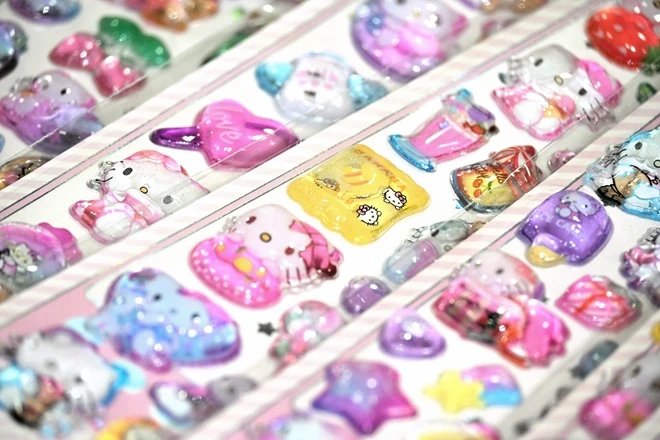
Customs officials reported 969 separate seizure cases involving these puffy, glossy stickers, which typically feature popular characters like Hello Kitty or whimsical designs of fruit and desserts. In total, 14,572 individual sheets were confiscated, accounting for 40 percent of all intellectual property infringement cases handled by the port authority this year.
The phenomenon is largely attributed to the immense popularity of “Bonbon Drop” stickers, an authentic product line from Osaka-based novelty maker Q-Lia. Since their 2024 debut, these dome-encased stickers have become a smash hit, finding a dual audience in young children and women in their 20s and 30s, who are driven by a sense of nostalgia for sticker-swapping fads from their elementary school years.
“We suspect that most of the orders were placed by individual collectors,” a customs official noted during a news conference. The vast majority of the seizures occurred at the Kawasaki Overseas Mail Subbranch, involving small, low-cost packages shipped primarily from China.
Officials warned that the rise in these fakes illustrates a broader trend of counterfeiters quickly pivoting to exploit whatever captures the public’s imagination. While traditional staples like designer bags and apparel remain common, the counterfeit market is becoming increasingly agile, as evidenced by a recent spike in bootleg soccer jerseys attempting to capitalize on World Cup fever.
Beyond the impact on intellectual property, authorities are raising alarms regarding the dangers of the counterfeit trade. While stickers may seem harmless, the influx of other illicit goods—such as unverified electronic chargers, watches, and skincare products—poses significant risks to consumers.
“The distribution of skincare products and electronic appliances whose safety has not been validated by Japanese authorities could cause health concerns,” the official stated. Furthermore, the circulation of these items threatens to disrupt legitimate economic activities, undermining the sales of authentic Japanese brands.
To protect themselves, consumers are being urged to exercise caution when encountering products sold at suspiciously low prices. Customs officials strongly recommend verifying product information through official distributor websites before making purchases. As the market for character goods continues to grow, Yokohama Customs officials pledged to remain vigilant, noting that they will continue to scrutinize incoming mail for the influx of knockoffs that aim to profit from popular trends.
Disclaimer: This content is auto-generated for informational purposes only.
Source: Read Original News