








Afghanistan faces a looming demographic crisis that threatens to intensify environmental degradation, strain a fragile economy, and exacerbate the country’s humanitarian challenges. New insights from health professionals across the nation suggest that the country’s long-standing fertility transition—a period where birth rates typically decline as child mortality drops—may be stalling or even reversing under the current Islamic Emirate administration.
For decades, Afghanistan had been following a global demographic trend, with the average number of children per woman gradually decreasing. However, a recent report by the Afghanistan Analysts Network (AAN) indicates that this progress is being undermined by a convergence of regressive social policies, economic desperation, and a systematic rollback of women’s rights. With nearly half of the population currently under the age of 15, the country is already positioned for significant population growth; any rise in current fertility rates would trigger a “population momentum” that could prove disastrous for the nation’s future sustainability.
The environmental implications of this demographic trajectory are severe. Afghanistan’s land and water resources are already under immense pressure due to climate change and decades of conflict. A rapidly expanding population places a greater demand on limited agricultural land and water tables that are already depleting at alarming rates. As family sizes increase, the reliance on subsistence farming often leads to soil degradation, deforestation, and the over-extraction of natural resources, creating a feedback loop of poverty and ecological instability.
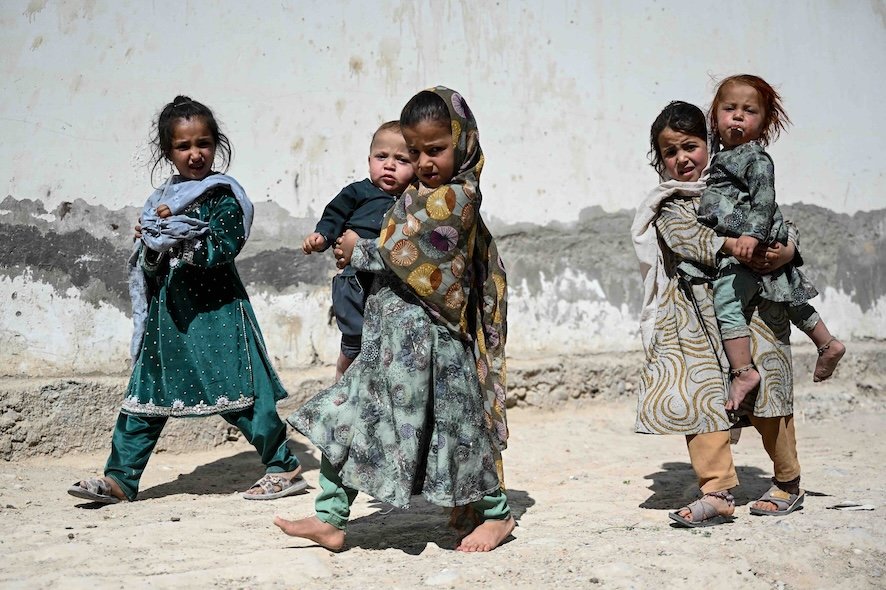
The factors driving this potential surge in births are deeply rooted in the current political and social climate. Medical professionals and midwives interviewed for the report highlight a marked rise in teenage pregnancies. This trend is driven largely by the exclusion of girls from secondary education and the broader restriction of women from the professional workforce. Without prospects for independent employment or education, early marriage has become an increasingly common survival strategy. For many families, the practice of receiving a bride price, combined with the reduction of household food insecurity by marrying off a daughter, has become a grim economic necessity.
Beyond the immediate social cost, the loss of women’s autonomy is fundamentally altering reproductive health outcomes. Midwives report that women now face greater difficulty in resisting pressure from husbands and in-laws to produce large families, particularly male heirs. Furthermore, access to family planning and reproductive health services has significantly deteriorated over the last five years. Funding cuts from international donors, coupled with the current government’s budgetary priorities, have left clinics understaffed and undersupplied.
The health risks associated with these shifts are profound. Adolescent pregnancy and closely spaced births are known to dramatically increase maternal and infant mortality rates. As the healthcare infrastructure continues to weaken, the safety net for pregnant women is essentially disappearing, leaving millions in an increasingly perilous position.
The reversal of the fertility transition is a rare phenomenon in modern history; once education and family planning preferences take root, they are typically “sticky.” That Afghanistan may be bucking this trend suggests a profound social regression. If the population continues to swell at the current projected rates, the pressure on the national economy—already struggling to provide basic services—will likely fuel further migration and internal instability. The convergence of an environmental crisis and a demographic boom creates a “perfect storm,” where the land becomes less capable of supporting the very people who depend on it for survival.
As the country faces these compounding challenges, the international community and domestic policymakers are confronted with a stark reality: without addressing the underlying restrictions on women’s agency and restoring essential reproductive healthcare, the humanitarian and environmental cost to Afghanistan will only continue to climb.
Disclaimer: This content is auto-generated for informational purposes only.
Source: Read Original News