








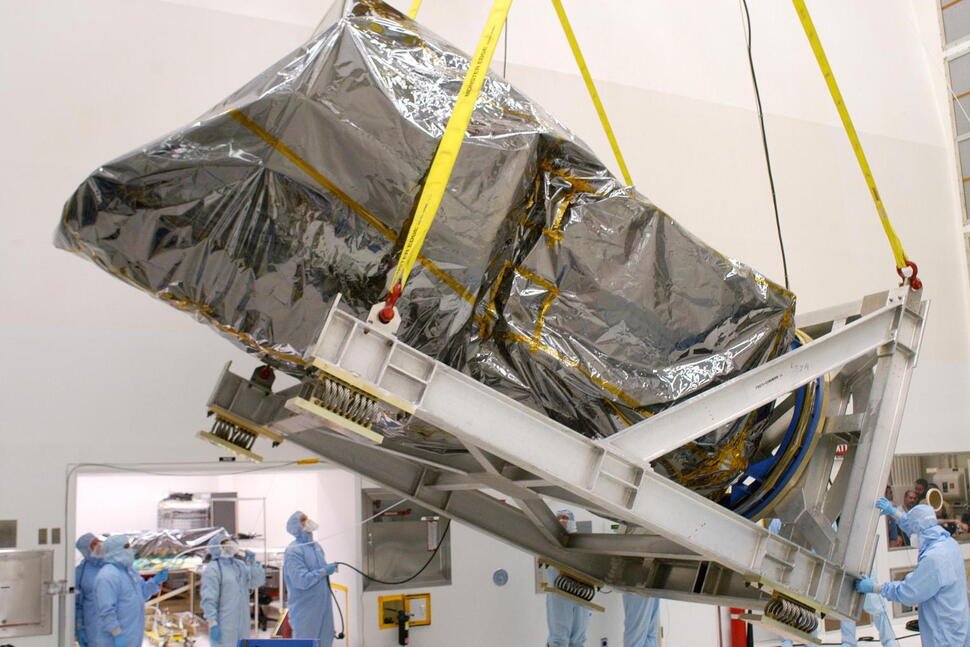
The U.S. Space Force is currently monitoring the final orbital path of the Swift Observatory, predicting that the long-serving telescope will reenter Earth’s atmosphere on or around Friday. After 22 years of tracking some of the most violent events in the cosmos, the satellite’s mission is drawing to a fiery, inevitable close.
While the majority of the 1.5-ton structure is expected to vaporize during its descent, NASA officials, including mission chief scientist Brad Cenko, have warned that some components—particularly dense tungsten pieces and specialized mirror segments—may survive the heat of reentry. Although the debris will likely land in the ocean, the potential reentry zone covers expansive regions across Africa, Australia, India, Southeast Asia, and parts of the Americas.
## A Legacy of Celestial Discovery
Launched in November 2004, the Swift Observatory earned its name through its unique, high-speed ability to pivot toward erupting celestial phenomena. It served as a vital “first responder” for the global astronomical community, alerting more advanced instruments, such as the Hubble and Webb space telescopes, to investigate gamma-ray bursts, supernovas, and the destructive power of black holes.
Over its two-decade tenure, the telescope tallied an impressive catalog: more than 2,000 gamma-ray bursts and 1,400 exploding stars, alongside countless observations of asteroids and comets. “We’ve known this day would come since before Swift was launched,” said John Nousek of Pennsylvania State University, who led the mission’s control team. “At least in low-Earth orbit, what goes up must come down.”
## Technological Struggles and the Quest for Sustainability
The satellite’s final descent was accelerated by intense solar activity, which increased atmospheric drag and pulled the craft out of its orbit more rapidly than anticipated. In a high-stakes attempt to preserve the instrument, NASA enlisted the private sector, hiring Katalyst Space to perform an ambitious rescue mission.
The project involved a robotic craft named “Link,” equipped with a three-armed system designed to interface with the aging satellite. However, the mission faced technical difficulties shortly after its July launch, ultimately failing to get within the necessary 7-to-9-mile proximity of the telescope. Link reentered the atmosphere in September, and NASA was forced to shut down Swift’s systems in late October once the telescope reached an altitude too low to maintain stable observations.
## The Future of Space Monitoring
The end of the Swift mission leaves a significant void in the field of high-energy astrophysics. As the scientific community mourns the loss of this workhorse, they are simultaneously grappling with the challenge of how to replace its rapid-response capabilities.
The industry is currently looking toward a new generation of autonomous space technologies and AI-integrated systems to bridge this gap. Modern machine learning models, similar to those fueling advances in the tech industry today, are increasingly being considered to manage satellite swarms and automate the identification of transient astronomical events.
“Our fervent hope is that the lessons learned by the successes of Swift can be applied to new generations of space missions to accelerate our discoveries about the universe,” Nousek stated. As agencies continue to refine their satellite management practices, the demise of the Swift observatory serves as a poignant reminder of the life cycles of modern technology in space and the ongoing need for more resilient, sustainable orbital infrastructure. NASA and its partners are now focused on applying the data gathered from this mission to ensure that future “first responder” telescopes are equipped to handle the complexities of our changing space environment.
Disclaimer: This content is auto-generated for informational purposes only.
Source: Read Original News