






Cristiano Ronaldo remains a living paradox of modern sports science: a 41-year-old athlete who continues to perform with the explosive efficiency of a man half his age. As he stalks the 1,000-goal mark—his current tally sitting at an astonishing 985 following a recent hat-trick for Al-Nassr—the conversation surrounding his longevity has pivoted from his sheer willpower to the granular details of his lifestyle. Among the most intriguing revelations is his absolute refusal to consume dairy, a staple that many of his peers rely on for recovery.
Why Ronaldo refuses to drink milk
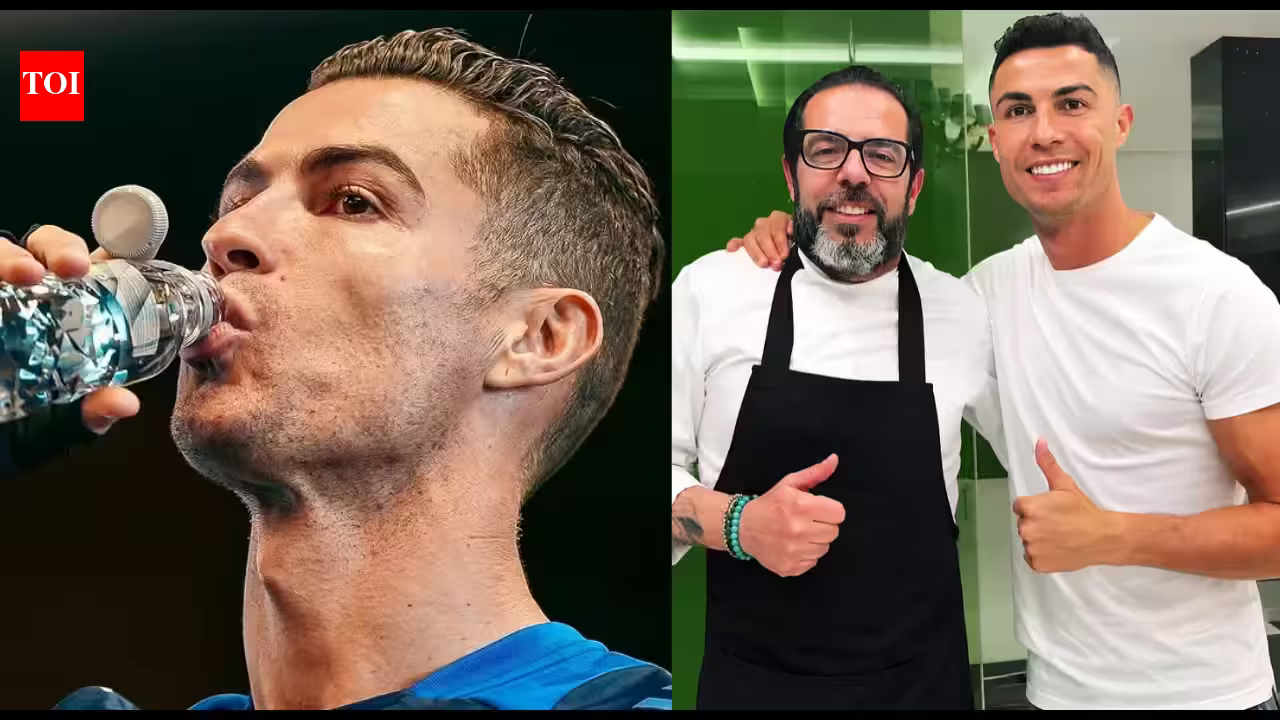
In the world of professional athletics, milk is often touted as the golden ticket for post-match recovery, lauded for its calcium content and protein profile. However, according to Giorgio Barone, a former private chef for the Portuguese superstar, Ronaldo views dairy not as a nutritional necessity, but as an unnecessary physiological burden.
Barone, who curated the forward’s meals during his time in Italy, provided a unique philosophical justification for the superstar’s avoidance of the food group. The reasoning transcends simple caloric counting; it is rooted in a belief that human consumption of bovine milk is fundamentally “against nature.”
“Humans are the only animals that drink the milk of other animals,” Barone told Covers.com. “No other animal drinks milk after three months. Calves don’t drink milk after the age of three months. It does not exist in nature. Only human beings continue to drink milk up to 30, 40, 50, and 60 years, and in my view it is wrong.”
While Barone’s perspective on the evolutionary necessity of milk remains a point of debate in the scientific community, it underscores the rigid, almost monastic discipline that has defined Ronaldo’s career. By eliminating dairy, along with refined sugars and processed foods, the striker has effectively engineered a body that operates without the inflammatory triggers many athletes ignore.
What Ronaldo eats throughout the day
Ronaldo’s diet is not merely about restriction; it is about deliberate, high-performance fueling. Barone describes a regimen that prioritizes nutrient-dense whole foods over processed substitutes. A typical day for the icon is broken into roughly six small, protein-rich meals, ensuring his metabolic fire never dips.
Breakfast is the blueprint for his day: an avocado-forward meal accompanied by coffee and eggs, with absolutely no sugar. Throughout the remainder of the day, his plate is a rotating selection of high-quality lean proteins—cod, sea bass, and chicken—paired exclusively with vegetables. When carbohydrates are required, Ronaldo turns to whole grains like quinoa or the complex fibers found in vegetables rather than the flour-based pasta or breads that are traditionally staples of a European diet.
This, combined with his legendary avoidance of sugar—most iconically displayed during the 2021 European Championship when he famously nudged Coca-Cola bottles aside in favor of water—has kept his body fat percentage hovering at a staggering 7% to 10%.
The training and recovery behind his longevity
Diet is merely the engine’s fuel; the maintenance is equally rigorous. Ronaldo’s physical profile is the result of a multi-faceted approach to conditioning. He integrates high-intensity plyometrics, explosive strength drills, and clinical Pilates to maintain his structural integrity.
Recovery is treated with the same intensity as the training itself. The 41-year-old utilizes a sophisticated rotation of cryotherapy, ice baths, and sauna sessions to flush toxins and accelerate muscle repair. Perhaps most unconventional is his adherence to polyphasic sleep—a schedule that eschews the traditional eight-hour night in favor of five 90-minute naps dispersed throughout the day. This protocol is intended to maintain peak metabolic energy and maximize the time his body spends in cellular repair mode.
Why Ronaldo’s former chef agrees with Haaland about organ meat
The discourse around athlete nutrition often leads to conflicting methodologies, such as Manchester City star Erling Haaland’s well-documented inclusion of raw milk. Interestingly, Barone finds common ground with the young Norwegian on the subject of organ meats.
“I agree with eating the organs,” Barone noted. “The liver, heart, and brain are all healthy foods. They are superfoods. Cristiano liked liver too. It’s very rich in iron, and it’s important in the diet, so for the organs, I approve, but not for the milk.”
The path to 1,000 goals
The fruit of this relentless discipline is visible every time Ronaldo steps onto the pitch. His recent performance against Al-Kholood—a clinical 15-minute hat-trick that carried Al-Nassr to a 5-3 win—served as a stark reminder that he is not simply hanging on; he is still evolving.
Having recently been crowned the winner of the inaugural “Ballon d’Or of All Time” (B.O.A.T.) award, Ronaldo is in the twilight of his career, yet he is clearly not fading. With only 15 goals left to reach the 1,000-goal milestone, the target is no longer a dream—it is an inevitability. As he continues to defy the physiological expectations of a 41-year-old athlete, one thing remains clear: Cristiano Ronaldo’s greatest record may not be his goal tally, but his ability to keep father time at bay, one milk-free, nutrient-dense meal at a time.
Disclaimer: This content is auto-generated for informational purposes only.
Source: Read Original News