







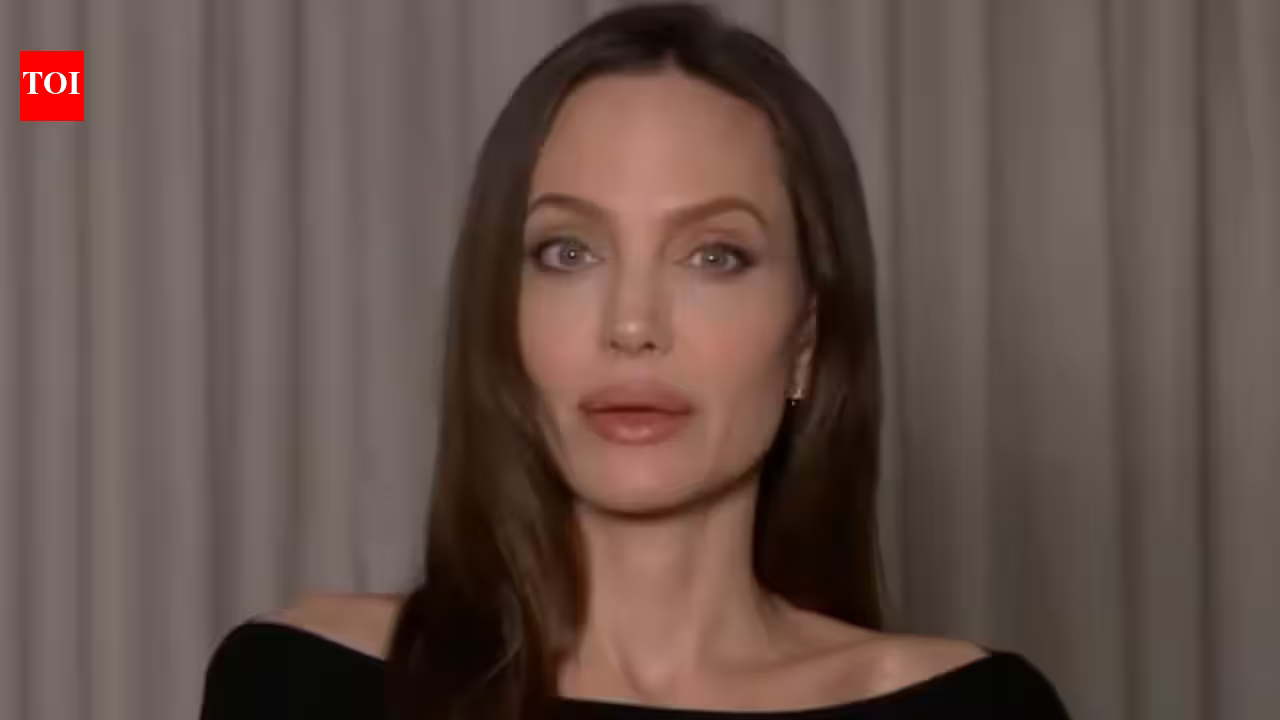
In the high-gloss, high-stakes ecosystem of Hollywood, it is rare to find a figure who operates as both an enigma and an open book. Angelina Jolie has spent three decades being projected onto cinema screens and tabloid covers, yet her most enduring legacy may not be her Oscar-winning performances or her directorial efforts, but the quiet, stoic philosophy she has cultivated amidst the chaos of public scrutiny.
When Jolie famously remarked, “We have a choice about how we take what happens to us in our life and whether or not we allow it to turn us,” she wasn’t just offering a platitude for a magazine interview. She was articulating a survival strategy that has defined her transition from the “wild child” of the nineties to one of the most respected humanitarians in the world.
The Art of Not Being “Turned”
We live in a culture that loves a transformation arc. We demand that people who have faced trauma either rise like a phoenix, polished and perfect, or retreat into the shadows. Jolie’s perspective is more nuanced; she suggests that the damage itself isn’t the final chapter. Instead, the real danger lies in being “turned” by our pain—a slow, corrosive process where a singular betrayal or a streak of bad luck begins to color every interaction we have.
It is a feeling most of us know intimately. You’ve been burned by a dishonest partner, so you enter every subsequent relationship wearing armor so thick it blocks out any potential for genuine intimacy. You’ve been let down professionally, so you stop taking risks, settling for a “safe” life that feels more like a prison. Jolie’s insight is a necessary gut check: yes, you were hurt, but you are not the victim of the story you are living today. The choice she speaks of is the daily, grueling work of choosing vulnerability over bitterness.
Healing Isn’t a Linear Path
One of the most refreshing aspects of Jolie’s outlook is the implicit admission that life is messy. There is no timeline for recovery. We are often sold the lie that if we just read the right book or attend the right retreat, the “darkness” will simply evaporate. But Jolie acknowledges that the goal isn’t to erase the past or pretend it didn’t leave a mark.
Healing, in her view, is about regaining your humanity. It’s the ability to look at a difficult experience and extract a lesson rather than a grudge. In a world that often rewards cynicism, choosing to remain open-hearted—even after the world has given you every reason to close yourself off—is perhaps the most radical act of rebellion there is. It’s not about being naive; it’s about maintaining control over your own internal landscape.
Lessons from the Unbroken
When Jolie stepped behind the camera to direct Unbroken, the story of Louis Zamperini, the themes she discussed in her 2014 Psychologies interview suddenly snapped into sharp focus. Zamperini’s life was defined by unimaginable cruelty and suffering, yet his legacy was one of profound grace.
Jolie has frequently cited this project as a mirror for her own interest in the limits of human endurance. She recognizes that the most compelling heroes aren’t those who never suffer; they are the ones who find a way to metabolize that suffering into something else. She isn’t suggesting that we should minimize our pain, but rather that we should refuse to let it become our primary identity. It’s a delicate balance: honoring your pain without letting it run the show.
From Hollywood Rebel to Global Beacon
To look at Jolie’s career trajectory is to see a woman who has constantly navigated the friction between public image and private reality. Emerging from the shadow of Hollywood royalty as the daughter of Jon Voight and Marcheline Bertrand, she carved out a space that was entirely her own. From the raw, visceral intensity of Gia to the awards-season gold of Girl, Interrupted, Jolie didn’t just play roles—she inhabited the fractured, complex psyches of the characters she portrayed.
However, the “Hollywood Star” narrative doesn’t account for the pivot she made toward humanitarian work. Traveling to war-torn regions and working with refugees requires a different kind of resilience than acting. In those spaces, you see the worst of human nature, and if you aren’t careful, it can certainly “turn” you. Yet, Jolie has remained a consistent advocate, proving that she practices what she preaches. Her ability to remain steady in the face of both global tragedy and intense personal media cycles suggests that she has, indeed, mastered the art of choosing how to “take” what life throws at her.
The Power of the Choice
So, where does that leave us? Perhaps the takeaway isn’t found in the fame or the red carpets, but in the mundane, everyday moments of our own lives. When we are faced with disappointment, we have the option to react from a place of fear or a place of growth.
Angelina Jolie’s reminder is that our past does not have to be our blueprint. We are not just the sum total of the bad things that happened to us. We are the sum total of how we decided to react to them, what we learned from them, and how we allowed them to shape our character. In an era of constant noise and quick-fire reactions, there is something profoundly grounding about the idea that, regardless of the circumstances, we always retain the final say in who we become. We don’t control the winds, but we do control the sails—and that, in itself, is a victory.
Disclaimer: This content is auto-generated for informational purposes only.
Source: Read Original News