







The Hindi film industry has been plunged into a state of profound shock and sorrow following the sudden and untimely passing of filmmaker Sanjay Gupta. At just 59 years old, the director, known for his unique visual flair and deep understanding of cinematic grit, died at his residence this past Saturday. Initial reports indicate a tragic household accident—a fall that resulted in a fatal head injury—leaving the fraternity and his legions of fans grappling with the abrupt silence of a creative force who still had so much left to offer.
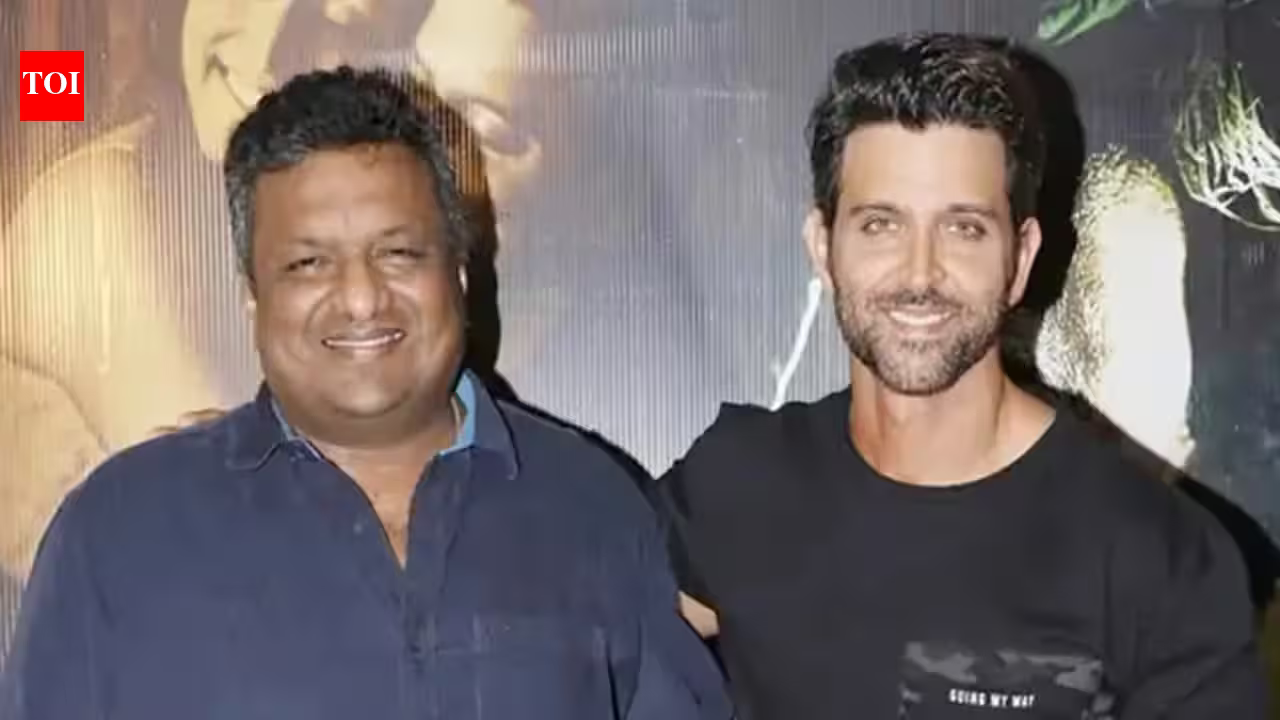
As authorities in Versova continue to piece together the events surrounding his final hours, the outpouring of grief from those who knew him best serves as a testament to his impact. Perhaps no tribute has cut as deep as that of superstar Hrithik Roshan, whose professional and personal connection with the director during the filming of the 2017 hit Kaabil defined a pivotal chapter in both their careers.
A Bond Forged in ‘Kaabil’
When Hrithik Roshan took to social media to bid his friend farewell, the emotional weight of his words resonated far beyond the usual celebrity niceties. Their collaboration on Kaabil was more than a director-actor pairing; it was a synergy that demanded immense vulnerability from Roshan. Under Gupta’s guidance, Roshan delivered a powerhouse performance as a visually impaired man seeking justice, a role that demanded precision, sensitivity, and intensity.
“Sanjay, I’m gonna miss you, man,” Roshan wrote on X (formerly Twitter), his words echoing the disbelief felt throughout the industry. “One film with you wasn’t enough… I will always remember our time together with so much love for you… your laughter, your passion, that child in you that lit up with every good idea.”
For Roshan, the tragedy is compounded by the “what ifs.” There was an unspoken expectation that the magic they captured in Kaabil would be revisited. “There was so much more we needed to do together, man. This is way too soon,” he continued, expressing a sentiment shared by many who witnessed the director’s evolution. Roshan’s tribute touched on the hidden labor behind the lens, noting, “Nobody will fully know how much you gave that film. I wish I had hugged you harder and thanked you for giving me the best experience of my life with Kaabil.”
Investigating the Unthinkable
While the industry mourns, the administrative machinery of the law is moving forward to provide clarity on the circumstances of the death. The Versova police have registered an Accidental Death Report (ADR), a standard legal procedure in cases of sudden, non-natural fatalities.
The investigation has been aided by the presence of security systems within the filmmaker’s residence. CCTV footage reviewed by officials provides a heartbreakingly clinical look at the final moments of a man who spent his life crafting high-stakes drama. The visuals reportedly show a quiet, unassuming moment around 2:00 am: Gupta was in his drawing room before moving toward the kitchen. In a sudden, catastrophic loss of balance, he fell, striking his head against a wall. The accident, swift and irreversible, has brought into sharp focus the fragility of life, even for those whose careers were defined by high-octane spectacle and controlled chaos.
A Career Defined by Grit and Grandeur
To understand the hole left by Sanjay Gupta’s passing, one must look at the landscape of 1990s and 2000s Bollywood. Born in Mumbai in 1967, Gupta entered the fray at the young age of 26 with his directorial debut, Aatish: Feel the Fire (1994). It was an ambitious start that signaled his intent to play in the big leagues. Featuring an ensemble cast that included Sanjay Dutt, Aditya Pancholi, Raveena Tandon, Karisma Kapoor, and Atul Agnihotri, the film established Gupta as a director who wasn’t afraid of the “masala” genre but possessed a distinct stylistic sensibility that set him apart from his contemporaries.
Throughout his career, Gupta became known for a specific brand of hyper-stylized action and noir-inspired storytelling. He had a penchant for complex anti-heroes and atmospheric settings that turned the streets of Mumbai into a character of their own. His work was often categorized by its visceral energy, whether he was helming high-stakes action thrillers or nuanced character studies. He was a filmmaker’s filmmaker—someone who understood that the audience craved both adrenaline and emotional grounding.
The Industry Remembers
The reaction from the broader film fraternity has been one of collective numbness. Producers, fellow directors, and actors who grew up watching his films have been sharing anecdotes of a man who was deeply passionate about the craft. Friends recall a director who could be intense on set but carried an infectious, childlike enthusiasm whenever a scene clicked into place.
The loss of a creative mind at 59 is particularly stinging because it marks the end of what should have been a “second act” for the director. Many filmmakers reach their most refined stage of storytelling in their late fifties, drawing upon decades of technical mastery to tell more sophisticated stories. To lose that potential—the projects that will never be greenlit, the scripts that will never be finished—is a quiet tragedy that adds a layer of mourning to the public’s reaction.
A Final Curtain Call
As the news of the passing circulates, the focus remains on the family left behind. Hrithik Roshan’s closing words—”Strength to the family… Rest in peace my friend”—serve as a reminder that behind the cameras, the accolades, and the box-office numbers, there is a reality of profound personal loss.
Sanjay Gupta’s legacy will not just be measured in the footfalls his films generated or the critical acclaim they garnered. It will be remembered in the way he challenged his leads to reach deeper, the way he transformed the screen into a canvas for his unique vision, and the genuine, lasting impact he had on the people he worked with. As the Hindi film industry prepares to bid him a final goodbye, the sentiment remains unanimous: the frame has gone dark far too early, but the mark he left on Indian cinema is indelible.
Disclaimer: This content is auto-generated for informational purposes only.
Source: Read Original News