









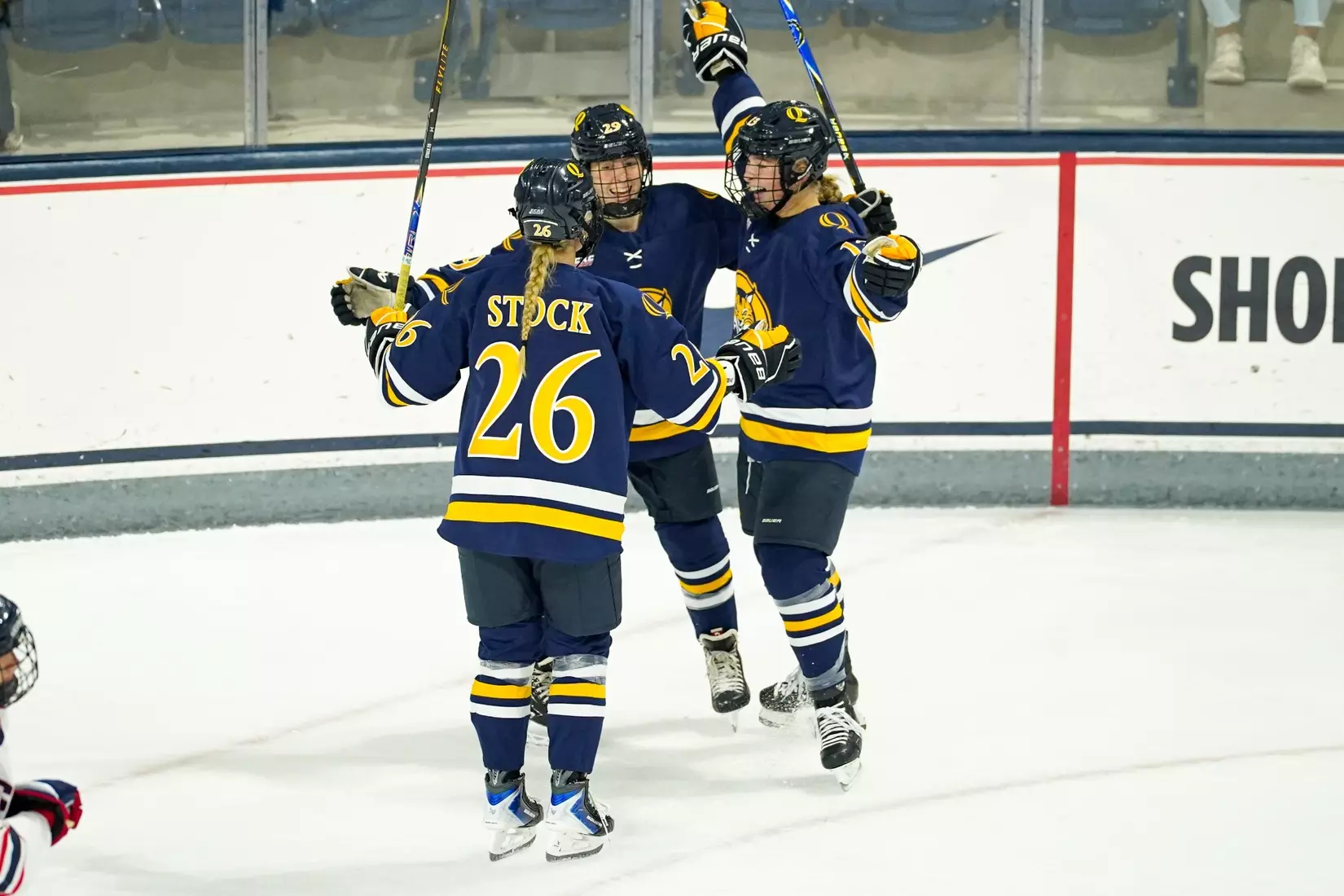
The modern landscape of collegiate athletics is defined by constant movement, with the transfer portal acting as a catalyst for student-athletes seeking the perfect professional and personal environment to reach their potential. For forward Keara Parker, a senior on the Quinnipiac Bobcats, the decision to transfer from St. Thomas was not about escaping a program, but about cultivating a specific environment where her offensive skills could flourish.
Since her arrival in Hamden this summer, the Winnipeg native has found that the culture at Quinnipiac is the precise soil needed for her to bloom. Early in the 2026-27 season, the results are already visible: by October 6, Parker had matched her entire scoring output from her junior year in just five games, culminating in a standout performance during a 10-0 victory over Post.
“In high school, I was always kind of an offensive player, and then I lost that a little bit at St. Thomas,” Parker said. “Quinnipiac and our coaches have given me the space to really grow into that offensive play that I’ve wanted to get back into.”
The transfer process is often fraught with uncertainty, particularly for seniors who have little time to integrate into a new locker room. However, Parker credited the supportive community within the Bobcats’ program for her seamless transition. She describes the team environment as one of profound camaraderie, noting that the players operate with a chemistry that mirrors a close-knit group of friends.
This environment is not accidental; it is a byproduct of a structured, highly intentional development plan. Under the leadership of head coach Cassandra Turner and her staff, every Bobcat athlete adheres to a “personal success plan.” This system acts as a roadmap for growth, with monthly goals and weekly check-ins involving coaches, trainers, and dietitians. By aligning the athlete’s personal aspirations with the team’s tactical requirements, the program fosters an atmosphere of accountability.
“You get to be able to grow in so many different ways at once,” Parker explained. “Your coaches and your trainer and even our dietitian, everyone knows what you’re working on, and they all do what they can to help you with that.”
Tactically, the transition has allowed Parker to marry her previous experience in the “rough and tumble” Western Collegiate Hockey Association (WCHA) with the creativity-focused systems of the ECAC. Quinnipiac’s coaching staff encourages players to be creative within their zone structures, removing the fear of making mistakes. This safety net has been critical for Parker, allowing her to lean into her strengths as a physical, high-speed winger while refining her playmaking abilities near the net.
As NCAA eligibility rules continue to evolve, the transfer portal is expected to become an even more common tool for athletes searching for environments that prioritize individual growth. Parker’s experience serves as a case study in how a change of scenery, paired with a personalized support structure, can revitalize a career.
With her senior season in full swing, Parker is no longer focused on the uncertainty of the portal, but on the potential of the months ahead. Armed with a renewed confidence and a support system designed to maximize her unique skillset, she has set her sights on a successful ECAC campaign and a run at the NCAA tournament. For Parker, the move to Quinnipiac has been more than a roster change; it has been an investment in her own development, proving that when the environment is right, the results on the ice follow naturally.
Disclaimer: This content is auto-generated for informational purposes only.
Source: Read Original News