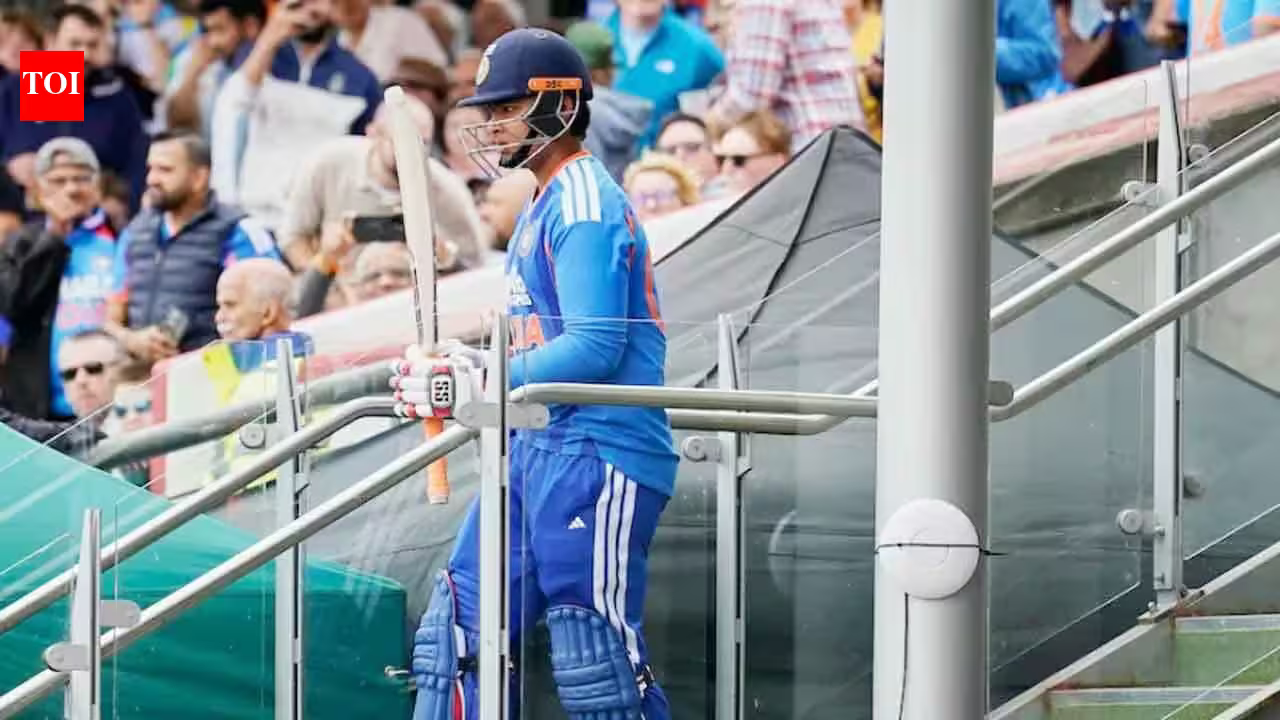







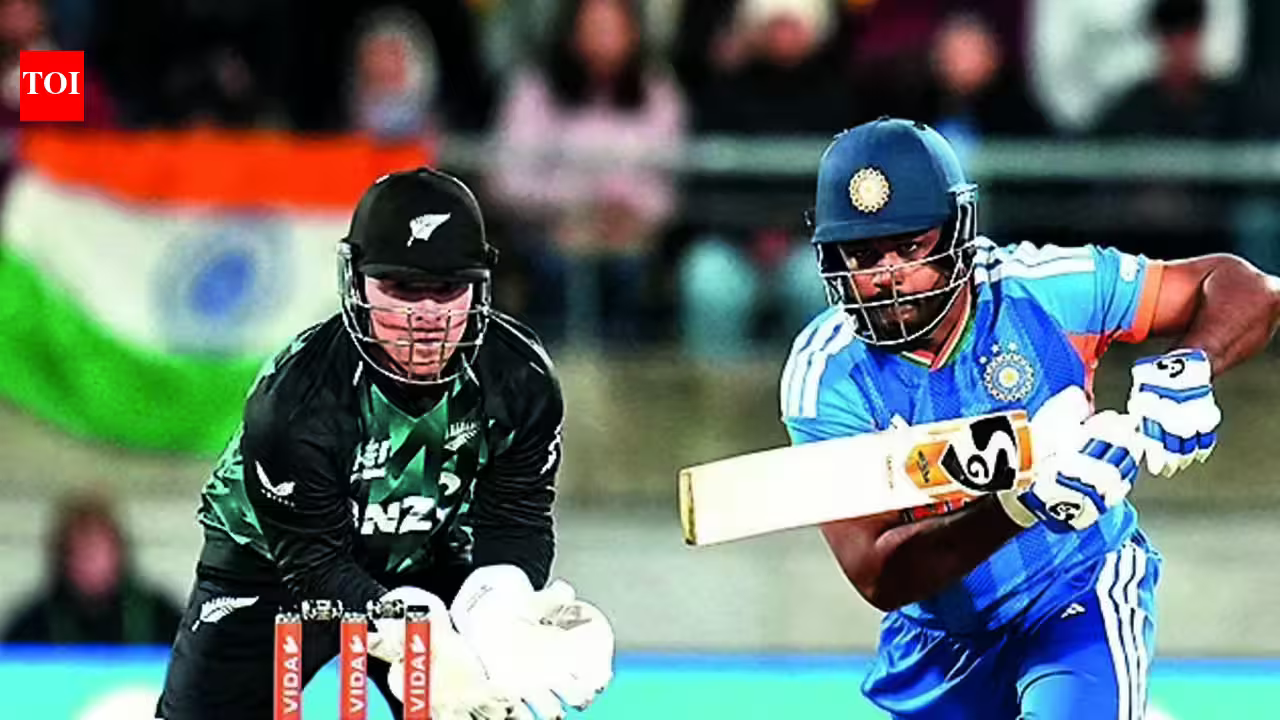
HAMILTON — The air in the Indian dressing room, usually buoyant after sealing an unassailable 3-1 series lead, has turned uncharacteristically somber following the 87-run drubbing at Auckland. For head coach Gautam Gambhir, a man whose tenure has been defined by unwavering loyalty to his chosen personnel, the upcoming fifth and final T20I against New Zealand at Seddon Park represents a crossroads. While the series is already in the bag, the comprehensive nature of India’s collapse in the fourth match has invited a level of scrutiny that could necessitate bold tactical surgery before the caravan shifts to the ODI format.
The Samson Conundrum and the Rising Prodigy
At the center of the selection storm is Sanju Samson. A cornerstone of the triumphant 2026 T20 World Cup squad, Samson’s pedigree is unquestioned, yet his recent output has been alarmingly inconsistent. With returns of 67, 14, 18, and 4 across the four games, the opener appears to be enduring a mid-series slump that has disrupted India’s powerplay momentum.
Gambhir’s faith in Samson is well-documented, but the clamor for the inclusion of 15-year-old sensation Vaibhav Sooryavanshi is reaching a crescendo. Sooryavanshi provided a glimpse of the future in his brief appearances, notably an electrifying 45 off 19 balls that anchored a successful chase of 199 in the third T20I. With the series victory secure, the Hamilton fixture offers the perfect petri dish to test whether Sooryavanshi’s raw aggression can be a permanent solution at the top of the order. A period of tactical benching for Samson might not be a slight on his ability, but rather a necessary recalibration for the veteran.
The Captaincy Burden: Iyer Under Fire
Shreyas Iyer’s leadership has undoubtedly brought stability to the side, with recent series wins against the West Indies and New Zealand serving as proof of his tactical acumen. However, his individual form remains the “elephant in the room.” Since his maiden T20I century against the Windies, Iyer’s run-scoring has been stagnant—a sequence of eight innings yielding middling scores, culminating in a string of low returns that have stalled India’s middle-order engine.
For a captain elevated to the role after a long hiatus from the international T20 circuit, the optics of poor batting form are damaging. Iyer needs a substantial captain’s knock in Hamilton to silence the critics who argue that his position is becoming a luxury rather than an asset.
Bowling Woes and the Mystery Spin Solution
While the batting remains under the microscope, the bowling attack has been systematically dismantled by New Zealand’s aggressive stroke-play. The struggles of veteran pacer Bhuvneshwar Kumar are particularly glaring; his return to the side has been marked by an economy rate of 11.58 and a solitary wicket in three outings. Similarly, Axar Patel, once the gold standard for economy in the middle overs, has looked toothless, conceding runs at over 10 per over while failing to provide the breakthroughs expected of him.
Arshdeep Singh continues to be the lone lighthouse in a stormy sea. Having become the fastest bowler to 150 T20I wickets, he remains the only Indian bowler to maintain an economy rate under 10.00 throughout this series. But one man cannot anchor a bowling unit, especially when the likes of Nitish Kumar Reddy are being subjected to brutal onslaughts, such as the 32-run over surrendered to the irrepressible Glenn Phillips in Auckland.
With Kuldeep Yadav and Varun Chakravarthy cooling their heels on the bench, Gambhir must decide if it is time to inject some variety into the attack. Kuldeep’s left-arm wrist-spin or the unpredictable nature of Varun’s mystery deliveries could provide the corrective measure needed to stifle the Black Caps’ middle-order surge.
The Phillips Factor
New Zealand’s resilience is personified by Glenn Phillips, who has arguably been the player of the series. With 276 runs at a staggering strike rate of 189.04 and an average of 92.00, Phillips has turned the Indian bowling attack into his personal playground. His 107 off 49 balls in the fourth T20I was a masterclass in clean hitting, serving as a stark warning to the Indian team that complacency will be punished.
Even with the series decided, New Zealand will look to head into the five-match ODI series, beginning November 4 in Auckland, with the momentum of a consolation win. For India, the Hamilton clash is far from a dead rubber. It is an opportunity for Gambhir to address the cracks in his armor, refine his rotation policy, and ensure that his side heads into the longer format with a winning habit rather than a lingering sense of doubt. The pressure is on, the changes are expected, and the world will be watching to see if India can bounce back to close the series in style.
Disclaimer: This content is auto-generated for informational purposes only.
Source: Read Original News