


Rupee Faces Renewed Pressure as Global Oil Prices Weigh on Markets
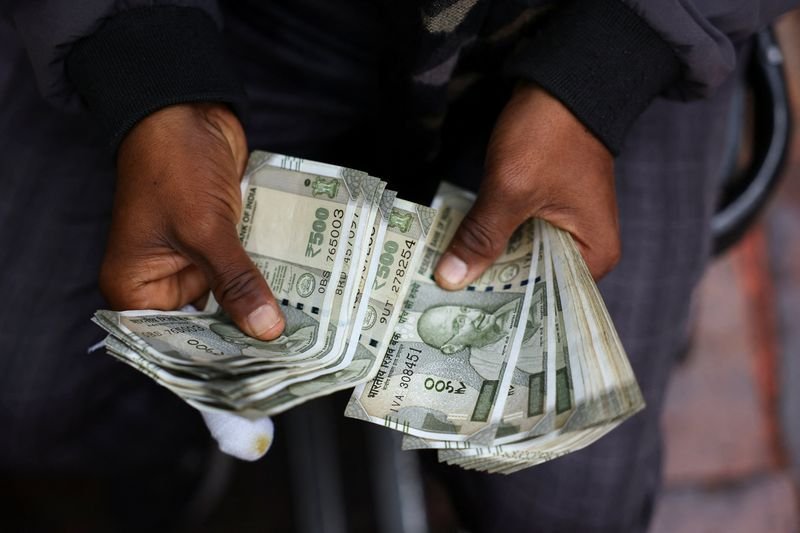
MUMBAI — The Indian rupee is bracing for a challenging week as elevated global crude prices continue to cast a shadow over domestic markets. While the currency recorded its most robust monthly gain since February last Friday, closing at 94.95 against the dollar, analysts suggest that persistent headwinds—primarily driven by energy costs and geopolitical uncertainties—could stifle further appreciation.
Market participants remain closely tethered to the evolving situation in the Middle East and the looming U.S. midterm elections. With opinion polls indicating a potential shift in congressional control, traders are assessing how political outcomes in Washington might dictate future U.S. policy toward Iran and, by extension, global oil supplies. Although the current U.S. administration has signaled a pause in new military maneuvers leading up to the vote, the potential for escalation remains a critical risk factor for volatile commodity markets.
RBI Intervention Expected to Cap Volatility
Currency experts expect the Reserve Bank of India (RBI) to play a decisive role in maintaining stability. According to IFA Global, the central bank’s influence will likely prevent any catastrophic slide in the rupee, though significant gains remain elusive so far as Brent crude stays above $100 per barrel. The advisory firm projects the currency to trade within a range of 94.20 to 96.80 in the coming weeks.
Data from the central bank underscores the complexity of this defense. India’s foreign exchange reserves were reported at $719.75 billion as of October 23, while net forward dollar liabilities have surged to a record high of $239.17 billion. These figures highlight the extent to which the RBI is utilizing its toolkit to manage liquidity and absorb shocks to the rupee.
Bond Market Dynamics: Between Liquidity and Yields
In the bond market, investor focus has shifted toward the intersection of crude oil prices and the RBI’s liquidity management. The benchmark 10-year yield is expected to trade between 7.35% and 7.50%. Market sentiment, which saw a respite last week after a historic 10-week upward climb in yields, remains cautious.
“With headline inflation projected near 5.6% for the first quarter of the next financial year, a 10-year at 7.49% offers a real yield close to 2%,” noted Ramneek Kundra, chief investment officer at DSP Pension Fund.
However, foreign institutional investors remain largely on the sidelines, spooked by the rupee’s recent weakness, with their exposure to index-eligible bonds falling to a four-month low. Analysts at DBS Bank suggest that the RBI’s delicate balancing act between supporting the currency through foreign exchange operations and managing domestic banking liquidity will remain the primary driver for Indian Government Bonds (IGB) in the near term.
A Week of Critical Data
The market outlook for the week ahead is punctuated by high-stakes economic indicators. In India, the release of the HSBC Manufacturing and Composite PMIs will provide insight into the industrial health of the economy. Globally, all eyes are on the U.S. labor market. The ADP employment report and the highly anticipated non-farm payrolls data on Friday are expected to offer fresh clarity on the Federal Reserve’s interest rate trajectory, which will ultimately dictate the flow of capital into emerging markets like India.
Disclaimer: This content is auto-generated for informational purposes only.
Source: Read Original News