







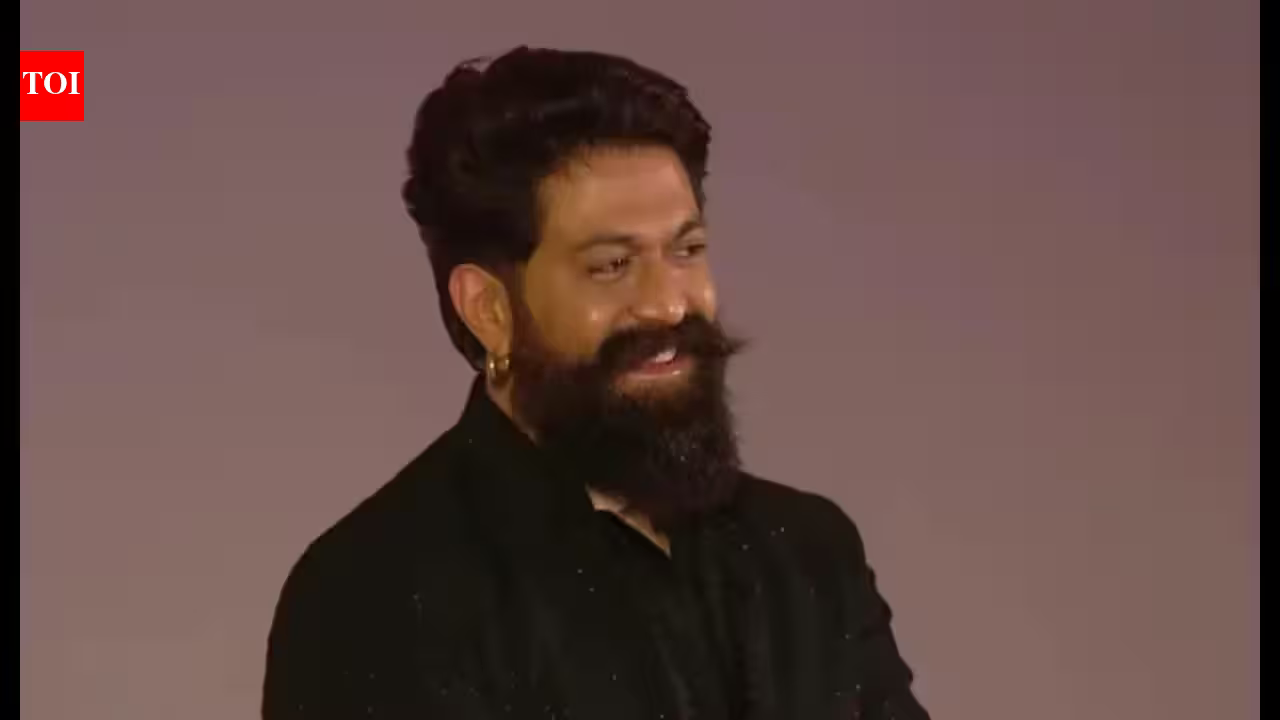
The air in Mumbai is thick with anticipation, and for once, the noise isn’t just from the monsoon-slicked streets. It is the hum of a cultural monolith preparing to descend upon global cinema. When director Nitesh Tiwari announced his ambitious adaptation of the Ramayana, the industry collectively held its breath. Now, as the theatrical release of Ramayana: Part One looms on November 5, the discourse has shifted from skepticism to intense scrutiny. At the heart of this storm stands Yash, the powerhouse performer who isn’t just acting in the film—he is architecting it from both sides of the camera.
A Duality of Devotion: Yash on Humanizing the Demon King
There is a prevailing fear whenever filmmakers touch the Ramayana: the danger of turning complex archetypes into cardboard cutouts. Yash, however, is leaning into the friction. Speaking candidly during a recent press interaction alongside co-stars Ranbir Kapoor, Ravie Dubey, and Rakul Preet Singh, the actor offered a nuanced take on his portrayal of Ravana—a character historically relegated to the role of the ultimate antagonist.
“The beauty of our culture is that we see the story from everybody’s point of view,” Yash remarked, his tone shifting from the charisma of a movie star to the introspection of a scholar. For Yash, Ravana is not a mustache-twirling villain, but a tragic figure of immense intellect. “Ravana is a learned scholar, a musician, and a warrior. He dedicated his life to acquiring power. But then comes the struggle of maintaining it, and the domino effect of his choices. To truly understand Rama’s path—how he handled life’s most impossible situations—you need the mirror that Ravana provides. You need that perspective.”
By framing Ravana as a man of extreme talent undone by his own trajectory, Yash suggests that the film aims for a level of moral grayness that might surprise audiences accustomed to black-and-white morality plays.
From Screen Presence to Executive Vision
Yash’s involvement in Ramayana: Part One goes far beyond the greasepaint and the dramatic dialogues. He has stepped into the role of co-producer, a move that signals his intent to transition from a regional superstar to a global architect of Indian cinema. His motivation, he admits, is rooted in a sense of competitive patriotism.
“This is the right time to show Indian films to the world stage,” Yash stated. He pointed to the meteoric rise of Korean cinema, which has successfully exported its cultural identity while maintaining its local soul. “India deserves that space. We had that vision, and everyone—the cast, the crew, the producers—came together to make it a reality.” This investment isn’t just financial; it’s a gamble on the idea that the Indian epic, told with the scale of a Western blockbuster but the heart of an ancient Sanskrit classic, can bridge the gap between niche mythology and global mainstream audiences.
The Chemistry of Conflict: Kapoor and the Ensemble
While Yash occupies the complex headspace of the Lanka king, the burden of the “Maryada Purushottam”—the ideal man—rests on the shoulders of Ranbir Kapoor. The contrast between Kapoor’s subtle, internal acting style and Yash’s raw, commanding screen presence is exactly the kind of friction Nitesh Tiwari is banking on.
With an ensemble cast that includes the versatility of Ravie Dubey and Rakul Preet Singh, the film is clearly aiming for a balance of spectacle and human drama. In a genre often dominated by bloated CGI and hollow action, the success of this project will likely depend on whether the chemistry between these leads can anchor the massive production design. If the early buzz is any indication, the tension in their scenes—the philosophical standoff between the king of righteousness and the king of scholars—is poised to be the film’s heartbeat.
Echoes from Los Angeles: Early Reactions and the Burden of Scale
The film recently held a grand world premiere in Los Angeles, a strategic move designed to plant a flag in the heart of Hollywood. The early feedback has been a complex cocktail of praise and apprehension. Critics have been quick to laud the technical achievements; the visual effects team has clearly been given a blank check to recreate the ancient world with a fidelity that pushes the boundaries of current Indian cinema.
However, the “epic” label comes with a heavy tax. Some reviewers have voiced concerns regarding the film’s pacing and structure. Adapting an epic as vast as the Ramayana into a feature film format is a Herculean task, and critics are already asking the inevitable question: has the team prioritized the grandeur of the visuals over the pacing of the emotional narrative? “Packed,” “ambitious,” and “stretching the limits of patience” are phrases being whispered in the corridors of film journalism. Whether the film can manage the tightrope walk between being a breathless, high-stakes spectacle and a deeply meditative character study remains to be seen.
The Verdict on the Horizon
As we approach the November 5 release, the conversation surrounding Ramayana is no longer just about whether it will make money—it’s about whether it will define an era. In an era of streaming, where audiences are increasingly picky, the return to the “Big Screen Epic” is a high-stakes gamble.
Yash’s philosophy—that the story is only as good as our ability to see ourselves in both the hero and the villain—is the most promising aspect of this production. If the film can successfully navigate the minefield of cultural expectation, religious sensitivity, and the sheer narrative weight of its source material, it may well fulfill Yash’s goal of putting Indian cinema on the global map. But for now, the final judgment rests with the audience, waiting to see if this ancient tale can still hold the modern world in its thrall.
Disclaimer: This content is auto-generated for informational purposes only.
Source: Read Original News