








India’s Renewable Energy Surge: A Global Powerhouse in the Making
India has officially cemented its status as a cornerstone of the global energy transition, with a landmark report from the International Energy Agency (IEA) highlighting the nation’s extraordinary progress in shifting toward a cleaner, more secure energy future. Launched at the Bharat Renewable Energy Summit in New Delhi, the India Renewable Energy Market Report 2026 reveals that the country is not only reducing its dependence on fossil fuels but is also establishing itself as a dominant force in international clean energy manufacturing.
A Decade of Unprecedented Growth
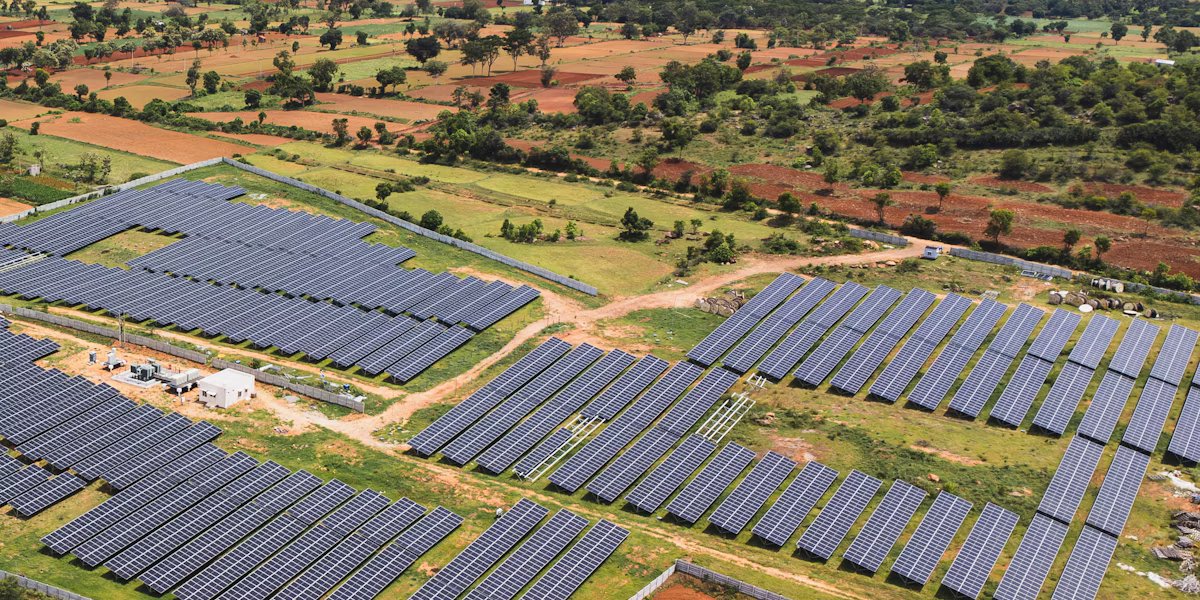
The figures presented in the report are historic. Over the past ten years, India’s renewable energy capacity has expanded nearly fourfold, officially crossing the 300-gigawatt (GW) threshold in 2026. This trajectory makes India the second-fastest-growing renewable energy market in the world. Perhaps most impressively, the country hit its ambitious milestone of achieving 50% non-fossil installed power capacity in 2025—a full five years ahead of its original target.
Beyond generation capacity, India has climbed the ranks to become the world’s second-largest manufacturer of solar photovoltaic (PV) modules. This industrial ascent is transforming India from an energy importer into a global hub for clean technology, fostering new domestic jobs and attracting substantial international capital.
Strengthening Energy Security and Economy
The transition to renewables has provided a major boost to India’s national treasury. According to the IEA, the shift to solar, wind, and bioenergy has saved the country over USD 100 billion in coal and natural gas import costs between 2011 and 2025. Without this aggressive expansion, India’s reliance on coal imports in 2025 alone would have spiked by approximately 110 million tonnes. Projections indicate these cumulative savings are set to double by 2030, underscoring the vital link between environmental policy and fiscal health.
IEA Executive Director Fatih Birol praised India’s strategic approach, noting that the nation’s ability to drive down costs through consistent policy-making serves as a blueprint for other emerging economies. “India’s experience shows how consistent policies can help drive down renewable energy costs and attract investment,” Birol stated during the summit.
The Path to 2030: Challenges and Opportunities
Looking ahead, the growth momentum is expected to accelerate. Forecasts suggest India’s renewable power capacity will reach approximately 530 GW by 2030, with solar PV projected to account for more than 80% of new capacity additions. Union Minister of New and Renewable Energy Pralhad Joshi emphasized that the government is actively building the infrastructure required for this next phase of development. “As India’s electricity needs continue to rise, we are laying the foundations for the next phase of growth by strengthening domestic manufacturing, mobilising investment and expanding transmission infrastructure,” Joshi remarked.
However, the report includes a strategic advisory for policymakers. While India has become a global leader in competitive auctions and hybrid projects, sustaining this pace requires a focus on systemic stability. The IEA identifies a pressing need for faster investment in electricity grids, improved energy storage solutions, and better utility financial health to mitigate project delays. Addressing these bottlenecks, the report suggests, could boost India’s capacity expansion by an additional 20% in the second half of the decade, ensuring that the country remains at the forefront of the global movement toward an affordable and sustainable energy future.
Disclaimer: This content is auto-generated for informational purposes only.
Source: Read Original News