







When Nitesh Tiwari steps onto a film set, he isn’t just looking for a compelling narrative; he’s looking for the impossible. Known for grounded, emotionally resonant dramas like Dangal and Chhichhore, Tiwari’s shift toward the monumental task of adapting Ramayana is perhaps the most audacious pivot in modern Indian cinema. But as the dust settles on the production, it’s becoming increasingly clear that this isn’t just another mythological retelling. It is an exercise in obsession.
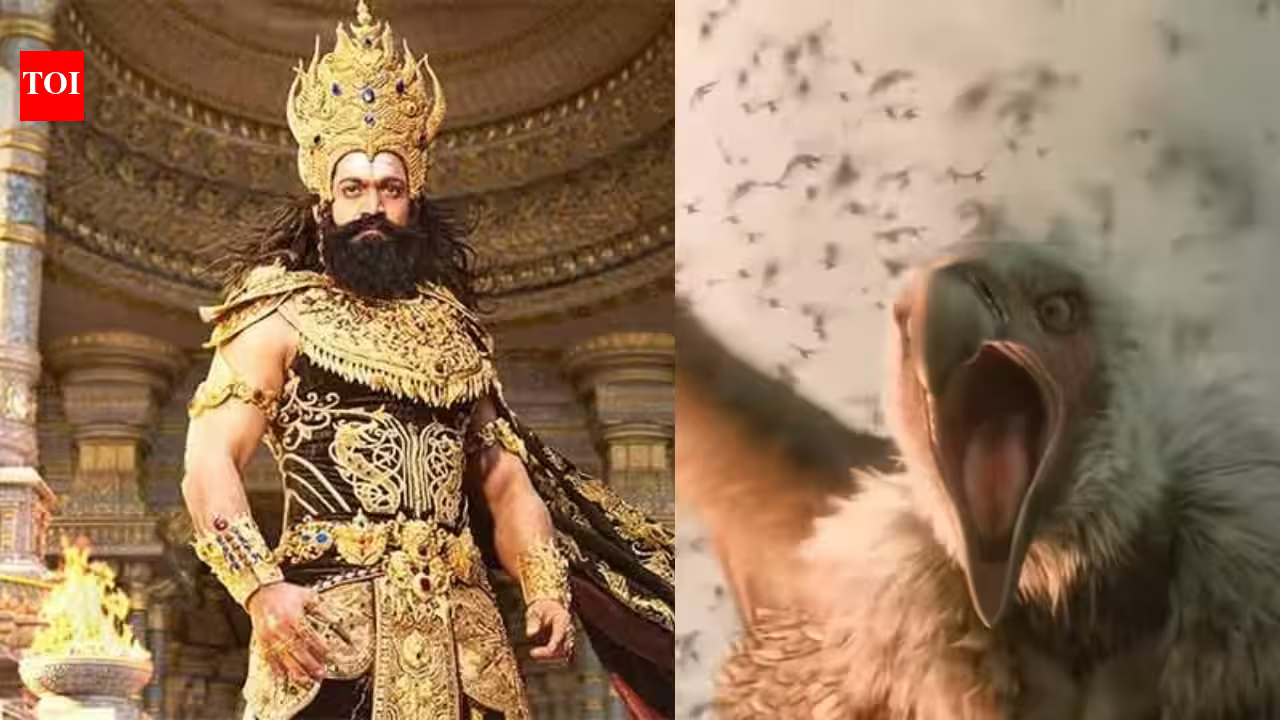
In a recent, candid conversation with Shreyas Media, Tiwari pulled back the curtain on the sheer technical madness fueling his upcoming epic. The headline-grabber? A single action sequence—the legendary mid-air clash between the demon king Ravana and the noble vulture Jatayu—demanded six and a half years of relentless labor. To put that in perspective, while most directors are busy moving on to their next three projects, Tiwari’s team was still sweating over the physics of a single mythological brawl.
The Architecture of an Epic
For the uninitiated, the story of Jatayu, the grand bird-king who attempts to rescue Sita from Ravana’s clutches, is a seminal moment of tragedy and valor in the Ramayana. However, bringing it to the screen in the age of high-end visual effects requires more than just good stunt coordination. It requires a marriage of ancient lore and high-concept science fiction.
“You know how much time it has taken for us to finish the Ravana and Jatayu fight?” Tiwari asked during his interview. “From the time I briefed the first artist to the time we finally finished the whole thing, six and a half years. One action sequence. I could go on for an hour explaining the effort that went into building every frame from scratch.”
When Tiwari speaks of “thousands of people,” he isn’t using hyperbole. The production pipeline involved an army of animators, rotoscopers, texture artists, and fight choreographers, all working in a continuous loop of refinement and iteration. This is the new gold standard for big-budget Indian cinema: a commitment to detail that borderlines on the fanatical.
The Pushpak Viman Dilemma
If the fight sequence was the marathon, the designing of the Pushpak Viman was the obstacle course. The iconic flying chariot, described in ancient texts as a marvel of engineering, presented a unique creative challenge for the production team. How do you design something that is simultaneously rooted in mythology yet feels scientifically plausible?
Tiwari’s approach was not to settle for a fantastical aesthetic but to hunt for a “scientific” blueprint. The result? A grueling two-year design phase that saw the team cycle through 40 to 50 distinct iterations.
“We didn’t want something that just looked like it could fly,” Tiwari explained. “We wanted some kind of science to go into it. We all believe there was a genuine science behind everything that happened in that era. We wanted to reflect that logic.”
This obsession with logic meant that the Viman wasn’t just a prop; it was a character with its own mechanics. However, this perfectionism came at a price. Because the art department kept refining the chariot’s design, the action sequence—which was being choreographed around the earlier, outdated versions of the vehicle—constantly had to be overhauled.
When Perfectionism Demands a Rewrite
The irony of the six-and-a-half-year turnaround lies in the creative domino effect. As Tiwari noted, the team had effectively finished a draft of the battle, only to scrap large portions of it once the final, superior design of the Pushpak Viman was settled upon.
In a traditional studio model, such a delay might have been deemed a failure. In the world of prestige filmmaking, however, it is viewed as a necessary evolution. By choosing to rework the sequence to align with the final, scientifically-inspired design, Tiwari and his team essentially opted for a longer path to ensure that the visual continuity of the film didn’t look like a patchwork of conflicting design philosophies.
This highlights a growing trend in the industry: the move away from quick-turnaround VFX toward a “finished when it’s perfect” philosophy, a strategy rarely seen in the fast-paced landscape of Bollywood production.
Bridging the Gap Between Myth and Modernity
There is a profound weight of expectation sitting on Tiwari’s shoulders. The Ramayana is not merely a story; it is a cultural touchstone for millions. For a director, the challenge isn’t just to make it look expensive; it is to make it feel authentic to those who know the text by heart, while simultaneously capturing the imagination of a global audience raised on the scale of Lord of the Rings or Dune.
By focusing on the “science” behind the myths—the aerodynamics of the Viman, the physics of the combat, the biomechanics of mythological creatures—Tiwari is betting that the audience will appreciate the labor. He is moving away from the cartoonish, high-saturation depictions of the past and aiming for a grounded, tactile reality that feels as though it could have existed in a forgotten epoch.
The Cost of Ambition
As we look toward the eventual release of the project, the primary question remains: will the audience notice the six and a half years poured into a single scene?
In the age of social media, where frames are dissected, analyzed, and often criticized with brutal efficiency, the pressure on Tiwari is immense. However, if the level of care described in his recent interview is any indication, he isn’t worried about the critics who move on after a week. He is playing a long game, aiming to craft a definitive version of the epic that will stand the test of time, much like the mythological artifacts he is trying to recreate.
Whether this level of meticulous, multi-year production becomes the norm or remains an outlier, one thing is certain: Nitesh Tiwari has raised the bar. He’s proven that the biggest stories don’t just happen in front of the camera—they happen in the thousands of quiet, grueling hours spent in the design studio, iterating until the impossible starts to look like history.
Disclaimer: This content is auto-generated for informational purposes only.
Source: Read Original News