







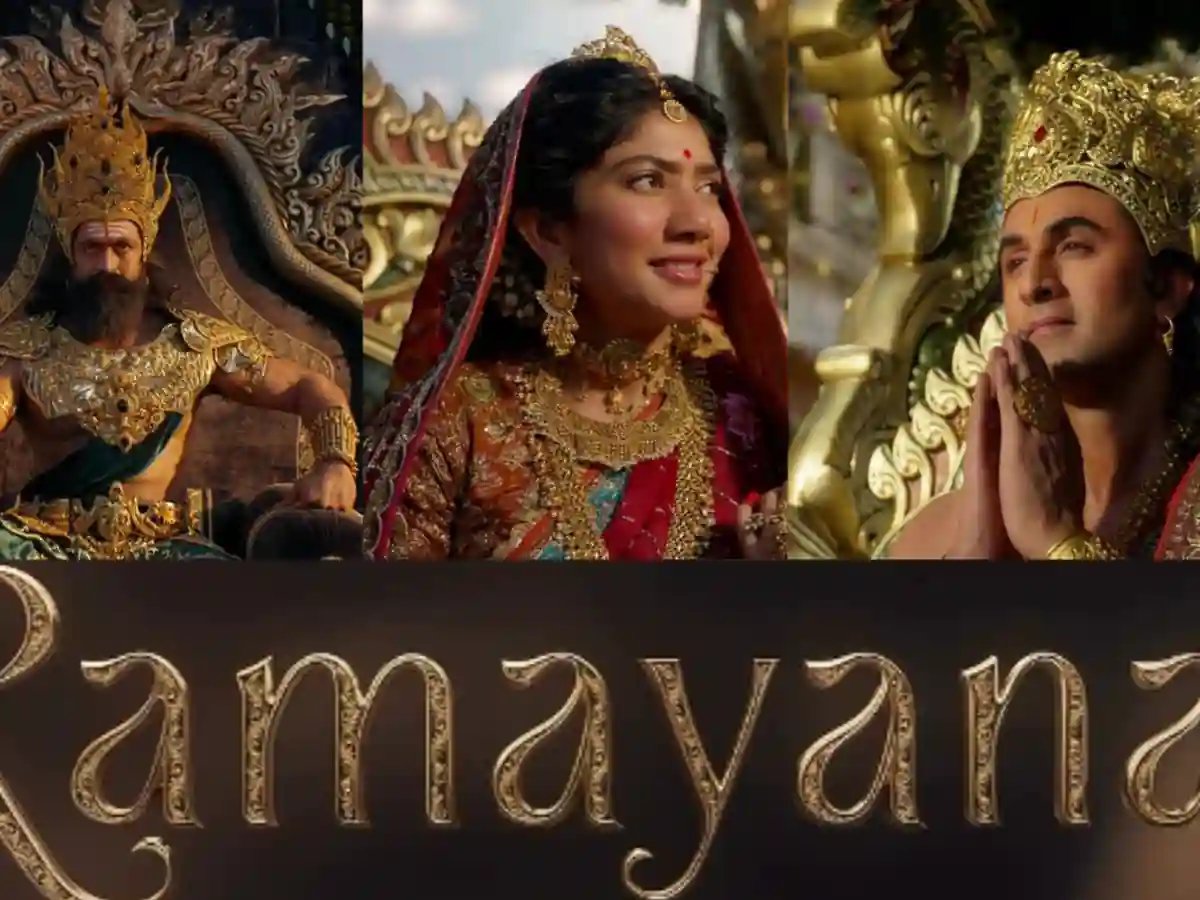
The Dawn of a New Era: Indian Cinema’s Grand Gambit with ‘Ramayana’
For decades, Indian audiences have looked toward the West, mesmerized by Hollywood’s ability to translate intricate mythologies and sprawling historical epics into monumental cinematic experiences. While the Indian film industry has long been a global powerhouse in terms of volume and cultural reach, the quest to produce a world-class, indigenous magnum opus that balances traditional storytelling with avant-garde technology has remained a distant horizon. That horizon is finally within reach with the announcement of Ramayana, a project that promises not just to retell a timeless epic, but to redefine the visual identity of Indian cinema on the global stage.
A Technical Marvel in the Making
The ambition behind Ramayana is evident in its technical infrastructure, which signals a departure from conventional production standards. By enlisting DNEG—the powerhouse visual effects studio responsible for the mind-bending realities of Christopher Nolan’s Interstellar, Inception, and Tenet, as well as the sweeping, textured world-building of Dune—the filmmakers are making a definitive statement. This partnership ensures that the ethereal realms and cosmic stakes central to the Indian epic will be rendered with a degree of sophistication previously unseen in domestic productions.
The infusion of Hollywood-grade VFX is not merely about spectacle; it is about grounding the divine and the legendary in a visual language that feels tactile and immersive. By integrating such high-caliber digital craftsmanship with the heart of Indian narrative traditions, the project aims to bridge the gap between the fantastical and the realistic, ensuring that Ramayana can stand shoulder-to-shoulder with the most revered blockbusters in the world.
An Unprecedented Sonic Union
Beyond the visual prowess, the film is set to break new ground in its sonic landscape through a collaboration that can only be described as historic. The fusion of Hans Zimmer, the titan of modern cinematic scoring, and A.R. Rahman, India’s most celebrated musical polymath, represents a cross-cultural symphony of immense magnitude.
Zimmer, known for his ability to evoke profound emotional depth and tension through minimalist yet powerful compositions, and Rahman, a master of blending indigenous instrumentation with experimental soundscapes, are poised to create an auditory experience that transcends borders. This partnership suggests that the film will not rely solely on visual dazzle, but will be anchored by a musical score that resonates with the gravity and spiritual resonance of the source material. It is a rare convergence of two distinct musical philosophies coming together to breathe life into an ancient tale.
Crafting an Identity Beyond Boundaries
The true promise of Ramayana lies in its potential to establish a distinct “Indian” blockbuster aesthetic—one that does not mimic Western tropes, but rather leverages global technological mastery to highlight local cultural heritage. As the industry continues to evolve, the necessity for stories that feel authentic to their roots while appealing to a universal sensibility has never been greater.
By marrying the world’s leading visual effects experts with the legendary maestros of music, the producers of Ramayana are setting a new precedent. This is more than just a high-budget film; it is a cultural test case. If successful, it will prove that Indian cinema is ready to transition from being a regional giant to a global architect of mythic storytelling. The world is watching, and for the first time, the scale of the expectation is matched by the ambition of the creative team behind the lens.
Disclaimer: This content is auto-generated for informational purposes only.
Source: Read Original News