





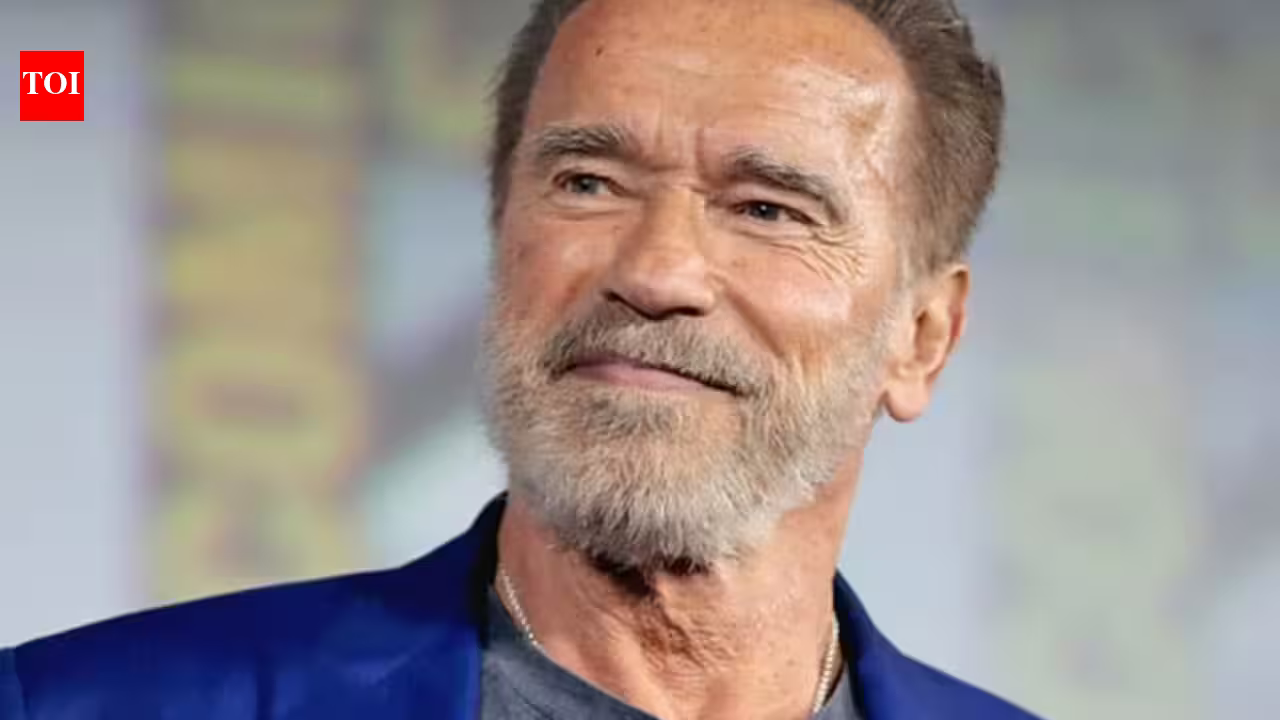
When we think of Arnold Schwarzenegger, the mind reflexively jumps to the celluloid heavyweights of the 1980s—the Austrian Oak standing tall amidst explosions, neon-soaked gunfights, and iconic one-liners. But beneath the exterior of the former Mr. Olympia and the high-octane action hero lies a man who has spent the last decade pivoting his immense star power toward a far more nuanced battlefield: the global climate crisis. While much of his environmental activism has taken place in the halls of international policy, a quiet but profoundly impactful project in the heart of Uganda has recently come to light, showcasing how the Hollywood legend has been quietly nurturing the earth rather than just tearing it up for the cameras.
Between 2020 and 2023, Schwarzenegger joined forces with the legendary primatologist Jane Goodall to launch a reforestation initiative that feels less like a blockbuster movie and more like a blueprint for sustainable development. By focusing on the Budongo-Bugoma Corridor in Western Uganda, the duo sought to address two seemingly disparate issues: the plummeting population of endangered Eastern chimpanzees and the economic vulnerability of local smallholder farmers. The result was a masterclass in how community-led ecological intervention can yield massive dividends.
The Power of the Mutuba Fig Tree
At the center of this initiative was a humble but vital protagonist: the Mutuba fig tree. For those unfamiliar with the ecological landscape of Uganda, the Mutuba is not just a source of shade. It is a cultural and biological powerhouse. Historically, the bark of this tree has been used to create traditional barkcloth, a material that carries deep ancestral significance in the region.
However, the initiative didn’t just choose the tree for its cultural resonance; they chose it for its unique physiology. The project introduced 15,000 native fig tree cuttings to the region, providing a bridge for wild chimpanzees who rely on the fruit for their primary nutritional intake. Unlike timber harvesting, which leaves behind a barren scar, the harvest of Mutuba bark is entirely non-destructive. Farmers peel the outer layer—which naturally regenerates—and wrap the trunk in banana leaves to facilitate healing. By turning to these trees, the local communities found a way to honor their heritage and sustain their families without ever having to swing an axe at the forest canopy.
Bridging the Gap Between Conservation and Livelihoods
Environmentalism often hits a wall in developing regions when conservation goals conflict with the immediate need to put food on the table. Schwarzenegger’s project, titled “Wrapping Nature in Culture,” navigated this tension with clinical precision. It didn’t ask local farmers to act as unpaid forest guards; it gave them a stake in the forest’s survival.
By training over 300 families in ten participating villages, the program transformed small-scale agricultural plots into thriving agroforestry zones. Farmers were educated in nursery care, tree management, and refined barkcloth processing techniques. By the time the project wrapped up in November 2023, the participants had not only created a vital biological corridor for endangered chimpanzees, but they had also secured a reliable, renewable stream of income. In this model, the chimpanzees got their food source restored, and the humans got a sustainable economy—a rare win-win in the volatile world of international development.
A Legacy Beyond the Silver Screen
It is easy for the public to grow cynical toward celebrity activism, viewing it as a brief photo opportunity designed to polish an image. But the Ugandan initiative tells a different story. Running for three full years with the backing of both the Jane Goodall Institute and the Schwarzenegger Climate Initiative, the project suggests a commitment to long-term infrastructure rather than short-term PR.
For Schwarzenegger, this represents a culmination of his post-politics trajectory. Since serving as the Governor of California, where he made headlines for his aggressive stance on renewable energy and emission standards, he has consistently channeled his resources toward the grassroots level. He has moved away from the “muscle” persona toward a “mentor” role, leveraging his reach to amplify the voices of researchers like Goodall who have been fighting these battles in silence for decades.
Why the Budongo-Bugoma Corridor Matters
The choice of location was not accidental. The Budongo-Bugoma Corridor acts as a critical ecological lifeline for Eastern chimpanzees. As deforestation fragmented the forests of Western Uganda, chimpanzee populations were increasingly isolated, leading to limited genetic diversity and high competition for food. By reintroducing the Mutuba fig tree across this corridor, the initiative provided a biological “highway” that allows for migration and healthy feeding patterns.
The success of the project provides a compelling argument for nature-based solutions. Rather than building fences or trying to cage off land from human intervention, the project proved that by integrating the local population into the ecosystem, you create a self-sustaining protective barrier. When the forest provides the income, the community becomes its most staunch defender.
A Blueprint for Future Initiatives
As we look back at the three-year timeline of this initiative, the data remains promising. With 15,000 trees successfully planted and maintained, the region is showing signs of environmental recovery. But beyond the metrics, there is the message: conservation is most effective when it is culturally relevant. By honoring the tradition of barkcloth, the initiative ensured that local buy-in was guaranteed from day one.
Arnold Schwarzenegger may have spent his early career battling aliens, machines, and criminals, but his recent work in Uganda suggests he has found a much more formidable adversary: environmental collapse. And if this project is any indication, he has traded his shotgun for a sapling, proving that the most enduring action star legacy might not be the villains he defeated on screen, but the forests he helped restore in the real world.
Disclaimer: This content is auto-generated for informational purposes only.
Source: Read Original News