









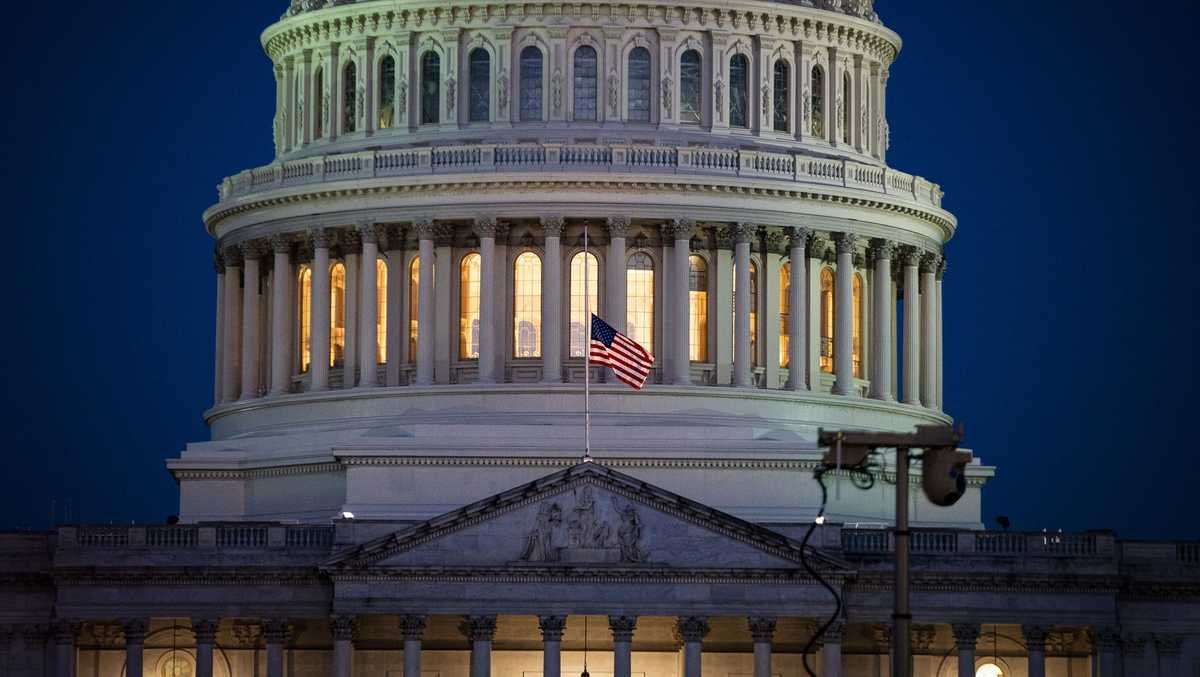
Polls opened across the United States this morning as voters head to the ballot box for a pivotal midterm election that will determine the balance of power in Washington and shape the political landscape for the remainder of President Donald Trump’s term. With control of both chambers of Congress and 36 governorships on the line, the results will serve as a critical referendum on the current administration.
The U.S. Senate remains the primary focus of the national struggle. Republicans currently hold a 53-47 majority, but they find themselves playing defense in a political climate that historically favors the party out of power. To reclaim the chamber, Democrats face a daunting mathematical path: they must defend all of their own vulnerable seats, including those in battlegrounds like Georgia, Michigan, and New Hampshire, while simultaneously flipping four Republican-held seats.
The task is further complicated by the political geography of the map. The Democrats’ top target states—including Ohio, Texas, Kansas, and Iowa—are regions where President Trump saw significant electoral success in 2016, 2020, and 2024. Success for the Democratic Party hinges on their ability to persuade a crossover cohort of voters who have consistently backed the President over the last decade to break ranks and vote for Democratic challengers today.
In the House of Representatives, the stakes are equally high. With Republicans holding a razor-thin 219-seat majority, they have very little margin for error. Democrats need a net gain of just three seats to seize control. The battlefield, however, has been shifted by recent mid-decade redistricting efforts, which have introduced new, untested maps across several states. With 53 races currently rated as competitive by the Cook Political Report, political analysts expect a high-stakes night as results trickle in from across the 435 congressional districts.
Beyond the federal legislature, the battle for statehouses is heating up. Thirty-six gubernatorial contests are being decided, featuring an unusually high rate of turnover with 19 incumbents stepping down. Democrats see an opening to secure a majority of governorships for the first time since 2010. These state-level races are being viewed as essential barometers for party strength heading into the 2028 presidential cycle, with several contests turning notably aggressive in their final hours.
As voters cast their ballots today, the nation is bracing for a long night of counting. The results of these midterms will not only define the legislative agenda for the next two years but will also signal whether the current administration can maintain its momentum or if a shifting tide in the electorate will force a fundamental change in the country’s political trajectory. Stay tuned for live updates as the first polls begin to close.
Disclaimer: This content is auto-generated for informational purposes only.
Source: Read Original News