







The Genesis of India’s Indigenous High-Speed Rail Ambition
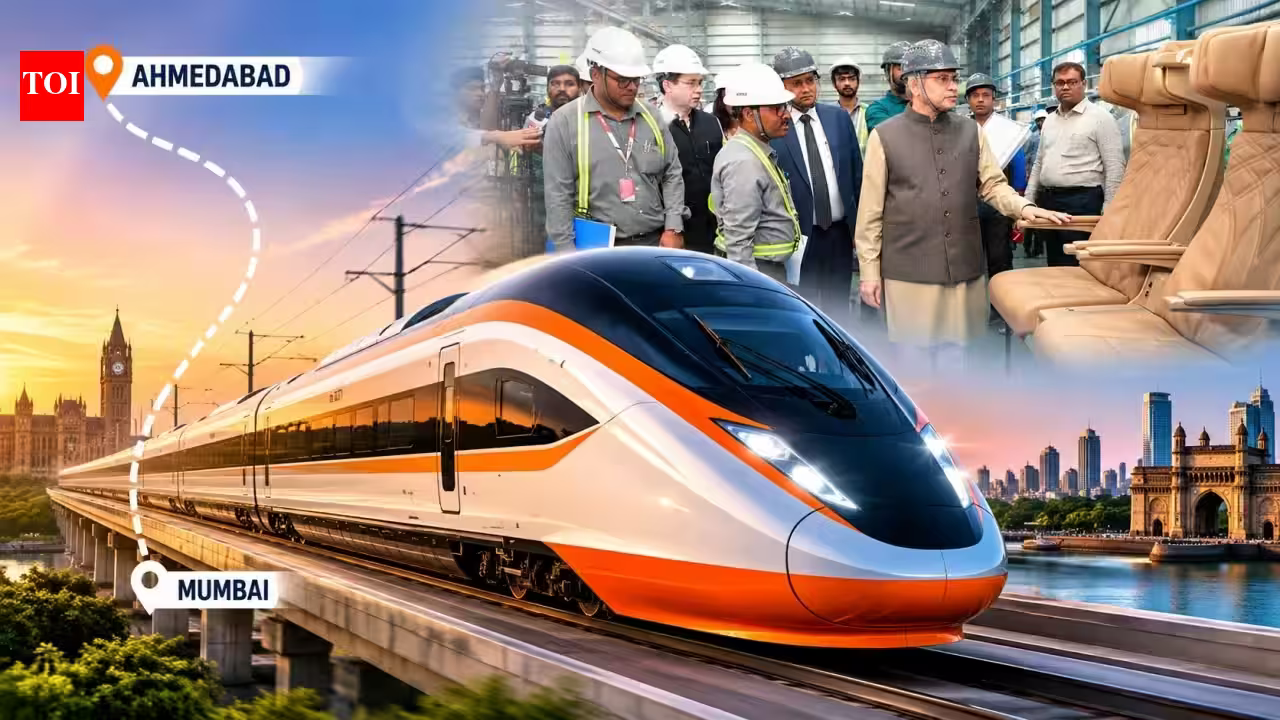
The landscape of Indian transportation is undergoing a transformative shift as the nation inches closer to the launch of its first indigenously developed high-speed bullet train, the B28. While the Mumbai-Ahmedabad High-Speed Rail corridor has long been associated with international collaboration, the B28 represents a pivotal move toward self-reliance in cutting-edge rail technology. Being manufactured by BEML, a central public sector undertaking in Bengaluru, these trainsets signify a leap in domestic engineering capabilities. By prioritizing local design and manufacturing, Indian Railways is establishing a framework that reduces dependency on foreign technology transfers while simultaneously tailoring infrastructure to the unique requirements of the Indian climate and operating conditions.
The B28 project is not merely an exercise in speed; it is an effort to standardize high-speed rail safety protocols within the country. The current focus on the “squeeze test” demonstrates the rigorous engineering scrutiny required to validate the structural integrity of the train body shell. By proving that the vehicle can withstand significant compressive forces without deformation, engineers are ensuring that safety remains the cornerstone of the high-speed experience. As India targets the commencement of trial runs on the Surat-Vapi stretch by mid-2027, the success of these indigenous prototypes will likely dictate the trajectory of future high-speed corridors across the subcontinent.
Engineering Standards and the Importance of the Squeeze Test
The squeeze test serves as the ultimate litmus test for the structural resilience of modern rail carriages. For a train designed to operate at speeds of 249 km/h, the ability to maintain a protective shell during an unforeseen event is paramount. This assessment evaluates the lateral and longitudinal pressure thresholds of the coach, ensuring that the passenger compartment maintains its shape and integrity under extreme external forces. In the context of India’s inaugural bullet train, this process is critical because it validates the effectiveness of the local material science and construction techniques employed by BEML.
Beyond the raw physics of the collision-resistance test, the squeeze test serves as a bridge to mass production. Once the prototype clears this safety milestone, the manufacturing timeline is expected to accelerate, moving from testing to full-scale fabrication within a six-month window. Because the B28 does not rely exclusively on the Japanese Shinkansen platform, it allows for a more agile iterative process. This independence enables Indian engineers to refine components such as noise-dampening fairings and bogie covers—which are essential for maintaining comfort at high speeds—without the constraints of legacy systems. The successful completion of these trials will set a benchmark for future “Make in India” initiatives in the rail sector.
Passenger Experience and Technological Integration
The design philosophy behind the B28 centers on a seamless blend of modern utility and passenger-centric comfort. The eight-car configuration, comprising four motor cars and four trailer cars, is engineered to handle the logistical demands of high-speed travel while catering to diverse passenger needs. From a capacity standpoint, the train is designed to accommodate 557 passengers, with a deliberate emphasis on accessibility. By incorporating dedicated spaces for individuals with reduced mobility and providing information signage in Braille, the B28 ensures that high-speed transit remains an inclusive experience.
The interior environment of the train reflects a sophisticated approach to ergonomics and connectivity. Passengers will benefit from an automated infotainment system delivered through Wi-Fi, accessible via personal devices, complemented by LCD screens displaying real-time journey updates in English, Hindi, and regional languages. Technical features such as retractable steps, which minimize the gap between the platform and the train, alongside modern bio-digester toilets and advanced HVAC systems with two units per coach, indicate a design that prioritizes long-term durability. Furthermore, the inclusion of regenerative braking technology reflects a commitment to energy efficiency, aligning with broader national goals of sustainable infrastructure development and reduced carbon footprints in public transport.
Strategic Economic Impact and Future Rail Expansion
The deployment of the B28 is more than a technological achievement; it is a strategic economic move to modernize the backbone of India’s inter-city connectivity. The Mumbai-Ahmedabad corridor is set to reduce travel time significantly, fostering economic integration between two of the country’s most critical financial hubs. By establishing a 508-km high-speed link, the project will stimulate regional development, encourage the growth of satellite towns, and facilitate the movement of human capital. The timeline, which sees the completion of the Gujarat section by the end of 2027 and the full corridor by 2030, suggests a phased approach that allows for operational learning and scaling.
The capability to couple two eight-car trainsets into a 16-car configuration provides the flexibility required to scale capacity as demand grows. This modularity is a testament to the forward-thinking nature of the B28 design. As India looks toward developing additional high-speed corridors, the success of the B28 will provide a replicable model for public sector manufacturing. This strengthens the position of Indian PSUs in the global rail market, potentially opening avenues for exporting similar medium-to-high-speed trainsets to other emerging economies that seek robust, cost-effective, and locally supported rail solutions.
Navigating the Path to 2027 and Beyond
As the B28 moves through its evaluation phases, the spotlight remains on the collaboration between the Ministry of Railways and domestic manufacturing units. The transition from theoretical design to on-track trial runs represents a complex logistical challenge that requires meticulous coordination. With trial runs planned on the Surat-Vapi stretch for mid-2027, the focus shifts to infrastructure readiness, including the electrification of lines, signaling integration, and the training of specialized operating crews. These are critical components that must align perfectly with the delivery of the rolling stock.
Ultimately, the B28 stands as a symbol of India’s maturing industrial landscape. The shift toward indigenous production of sophisticated high-speed rail technology suggests that the nation is moving beyond being a mere consumer of foreign rail systems. Instead, India is cultivating an ecosystem where private and public sector players collaborate to build systems tailored to domestic geography and demographics. If the current trajectory of testing and development is maintained, the B28 will not only fulfill its primary goal of reducing commute times but will also serve as a cornerstone of India’s technological identity in the 21st century, setting a definitive path for the future of rail travel across the nation.
Disclaimer: This content is auto-generated for informational purposes only.
Source: Read Original News