







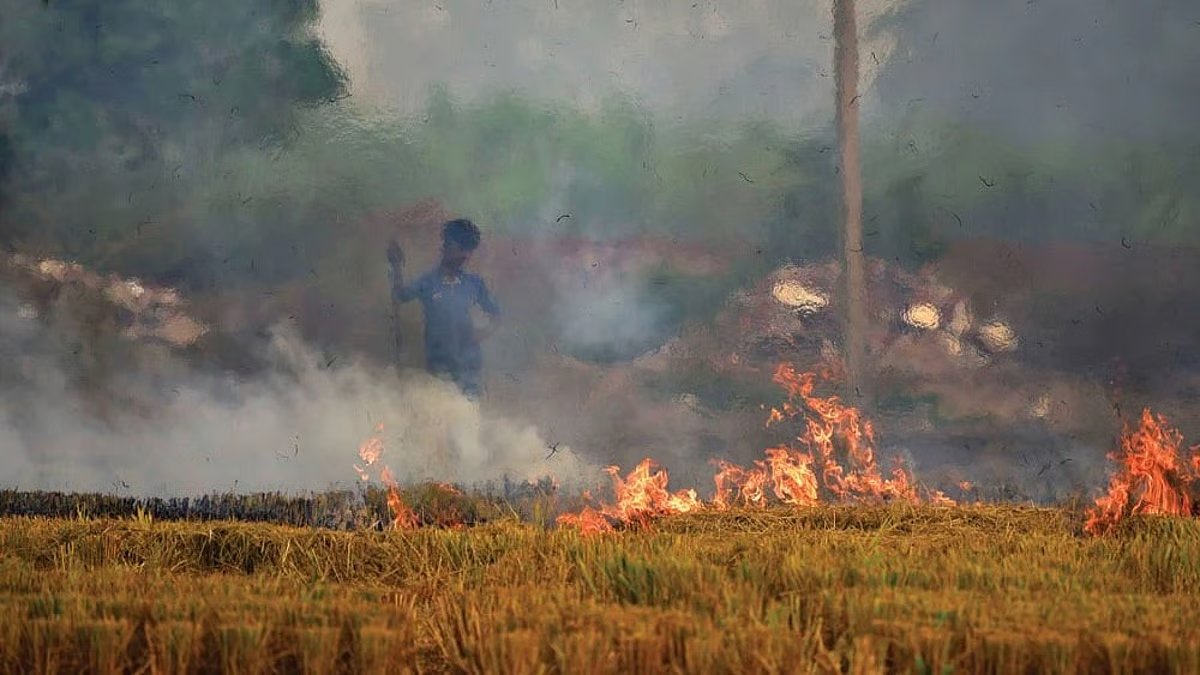
Union Environment Minister Bhupender Yadav announced on Tuesday that incidents of stubble burning have witnessed a notable decline this year, marking a significant step forward in the ongoing efforts to curb seasonal air pollution. Central to this improvement, according to the minister, is the shift toward ex-situ crop residue management, with approximately 40 per cent of paddy stubble now being repurposed for industrial use and fuel rather than being incinerated in agricultural fields.
Ex-situ management involves the systematic collection and transportation of crop residue from farms to processing facilities, where it is utilized for energy production or industrial applications. By providing a viable economic alternative to burning, this method reduces the necessity for farmers to dispose of waste in ways that compromise air quality.
To ensure consistent progress, the Commission for Air Quality Management (CAQM) has institutionalized its oversight by establishing a dedicated digital dashboard. This platform serves as a hub for monitoring the implementation of comprehensive environmental action plans across the affected regions. Minister Yadav emphasized that the commission is maintaining a granular watch on meteorological variables, including wind speed, direction, and atmospheric movement. These data points are critical in assessing pollution levels in real-time, allowing authorities to trigger necessary interventions in coordination with state governments.
“We have drawn up more comprehensive environmental action plans this year, and we are tracking their implementation closely,” Yadav stated. “There has certainly been a decline in stubble-burning incidents compared to previous years, and we are working to ensure that the reliance on such practices continues to diminish.”
The government’s claims of improved air quality metrics were bolstered by data released earlier on Tuesday by Delhi Environment Minister Manjinder Singh Sirsa. According to Sirsa, the national capital recorded its cleanest October in over a decade. Furthermore, he noted that the National Capital Region (NCR) achieved 220 “clean-air days” in 2026, representing the highest number recorded in the past ten years.
Sirsa reported that the average Air Quality Index (AQI) for Delhi this year reached its lowest point in a decade, showing a 10 per cent improvement over previous benchmarks. “The annual average AQI has declined, reflecting a positive shift in our environmental landscape,” Sirsa remarked. He attributed these improvements to the collaborative efforts of the current state administration and the proactive participation of Delhi’s residents.
However, the discourse surrounding the pollution data remained politically charged. During his address, Sirsa leveled criticism at the Aam Aadmi Party (AAP) government in Punjab, alleging that their policies have inadvertently facilitated continued stubble burning and that the region’s pollution reporting has been subject to manipulation.
Despite the political friction, the broader data signals a potential turning point in the battle against North India’s winter pollution crisis. By combining technological monitoring—such as the CAQM’s new dashboard—with logistical shifts toward ex-situ residue management, the authorities are attempting to decouple agricultural cycles from the annual spike in air pollution. As the winter season progresses, the efficacy of these integrated strategies will be closely scrutinized to determine if the current downward trend in pollution can be sustained in the long term.
Disclaimer: This content is auto-generated for informational purposes only.
Source: Read Original News