








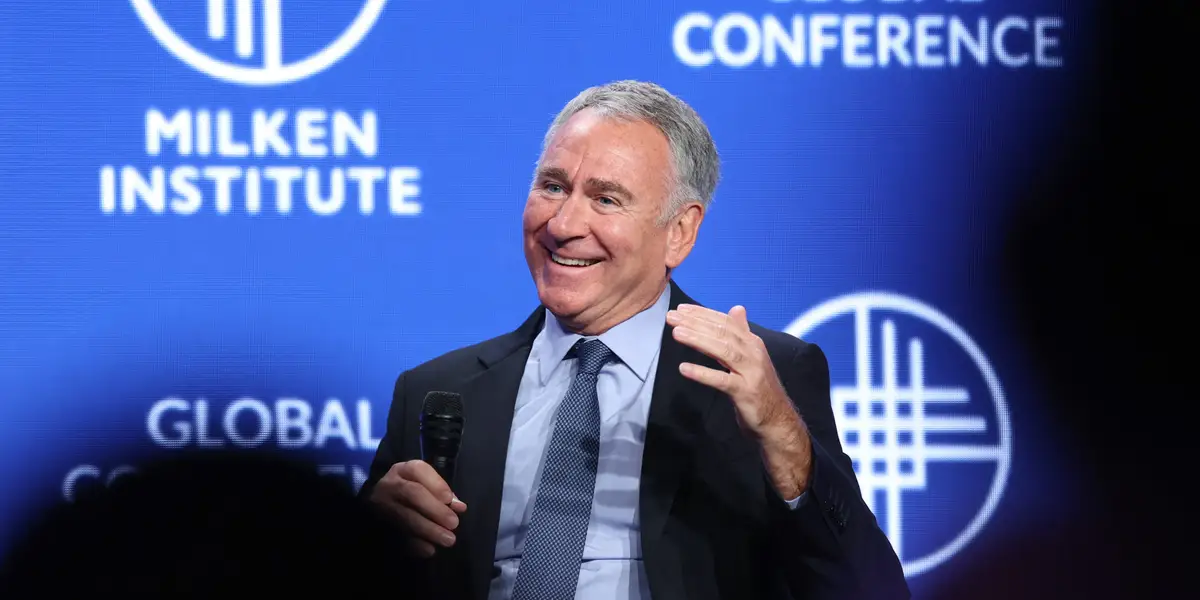
Citadel, the $77 billion financial powerhouse led by Ken Griffin, has managed to buck a downward trend that plagued the hedge fund industry throughout a punishing October. While many multistrategy peers struggled to navigate a volatile landscape marked by shifting interest rates and erratic equity markets, Citadel’s ability to employ tight risk controls allowed it to deliver a 1.7% gain for the month. This performance pushes the firm’s year-to-date returns to 15.3%, positioning it as a standout performer among major institutional managers.
The success of the Miami-based firm stands in stark contrast to the broader market, which saw the S&P 500 dip nearly 1% during the same period. For many of the industry’s largest players, October proved to be one of the most challenging months for portfolio management since the onset of the COVID-19 pandemic.
A Perfect Storm for Hedge Funds
The difficulties faced by the investment community were driven by a confluence of macroeconomic factors. Stockpickers, who had enjoyed a period of highs early in the month, found themselves whipsawed by a significant sell-off in major technology equities. Data provided by Goldman Sachs’ prime brokerage desk highlighted October 22 as a particularly brutal day, during which the decline of tech giants like Meta, coupled with surging oil prices, triggered widespread losses across hedge fund portfolios.
Beyond the volatility in equity markets, credit investors faced their own set of hurdles. The insatiable capital requirements of hyperscalers—the cloud infrastructure giants powering the modern AI industry—have led to an unprecedented volume of corporate bond issuance. This supply, coupled with the persistent ripple effects of rising interest rates, has made the credit environment increasingly difficult to navigate. Furthermore, macro-focused traders were forced to re-evaluate their strategies following a surprise election result in Brazil, which added another layer of geopolitical uncertainty to an already turbulent climate.
Multistrategy Giants Face Divergent Results
While Citadel’s diversification strategies helped it stay in the green, other high-profile multistrategy firms were unable to escape the month’s losses. New York’s Millennium Management, managed by Izzy Englander, reported a 2.3% decline in October, bringing its year-to-date gains to 5.7%.
ExodusPoint Capital, led by Michael Gelband, saw a similar outcome, finishing the month down 2.4% and leaving its annual performance at a slim 1.6%. Other firms experienced moderate pullbacks as well; Dymon Asia recorded a 1.8% drop, while Man Group’s 1783 fund also shed 1.8%. Despite the broad-based struggle to remain profitable, these firms remain focused on their long-term models, though the current environment is widely regarded as one of the most difficult trading periods in recent years.
The Tech Sector’s Role in Market Volatility
The ongoing instability is deeply linked to the shifting fortunes of the tech sector, which has become the primary engine for both growth and volatility in the modern market. As companies continue to pour capital into AI development and cloud scaling, the sensitivity of the market to tech-heavy earnings reports and valuation corrections has increased.
For hedge funds, the challenge remains balancing these growth-focused assets against the macroeconomic pressures of inflation and shifting interest rates. Citadel’s ability to maintain its lead suggests that in an era where AI-driven tech investments can dominate market sentiment, the firms that prioritize rigorous risk management and broad asset class diversification are the ones most likely to weather the storm. As the year draws to a close, investors will be watching closely to see if these giants can recoup their October losses or if the current volatility will continue to define the market through the end of the year.
Disclaimer: This content is auto-generated for informational purposes only.
Source: Read Original News